Webflow is rebuilding around code. Here is what that actually means
August 1, 2026
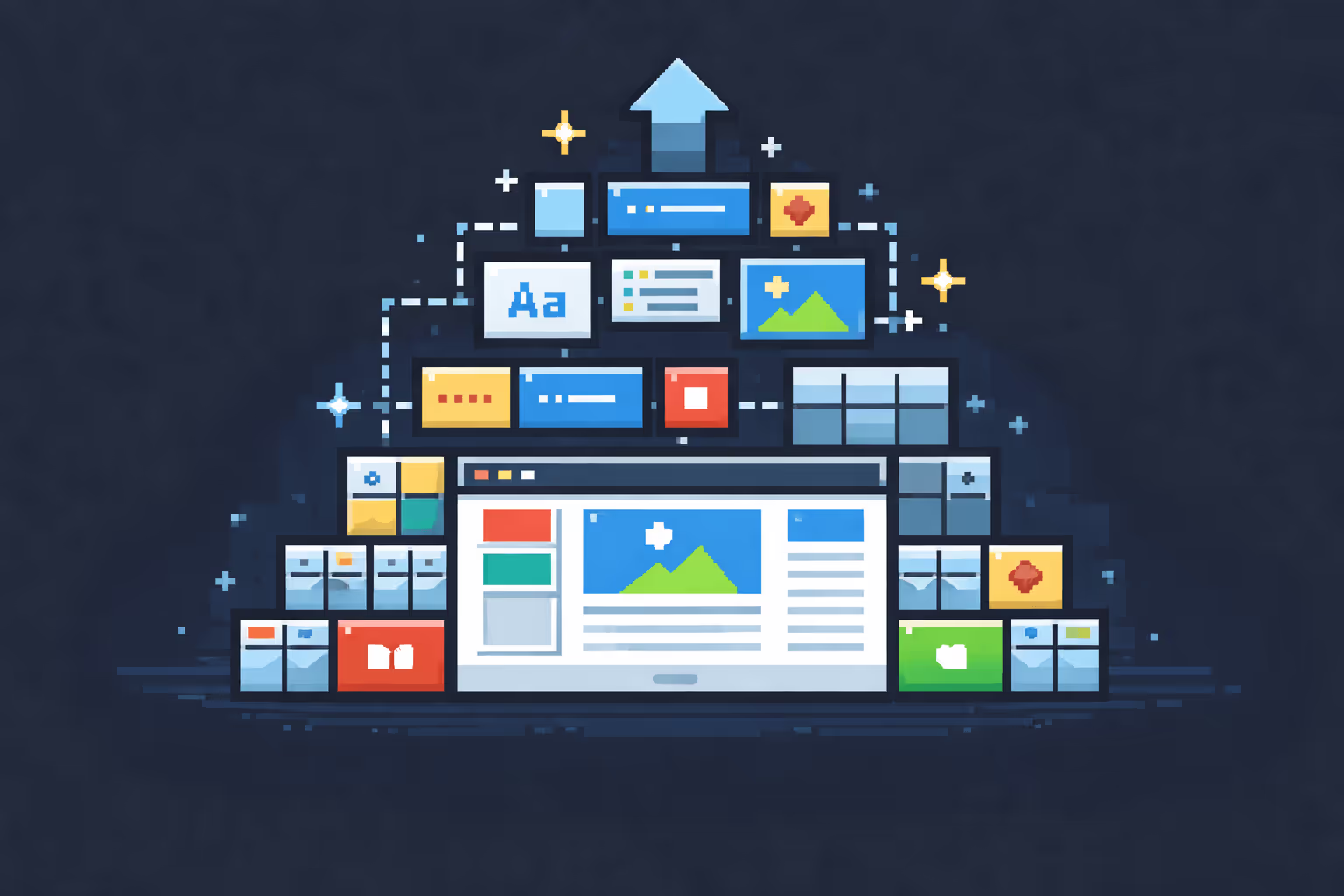
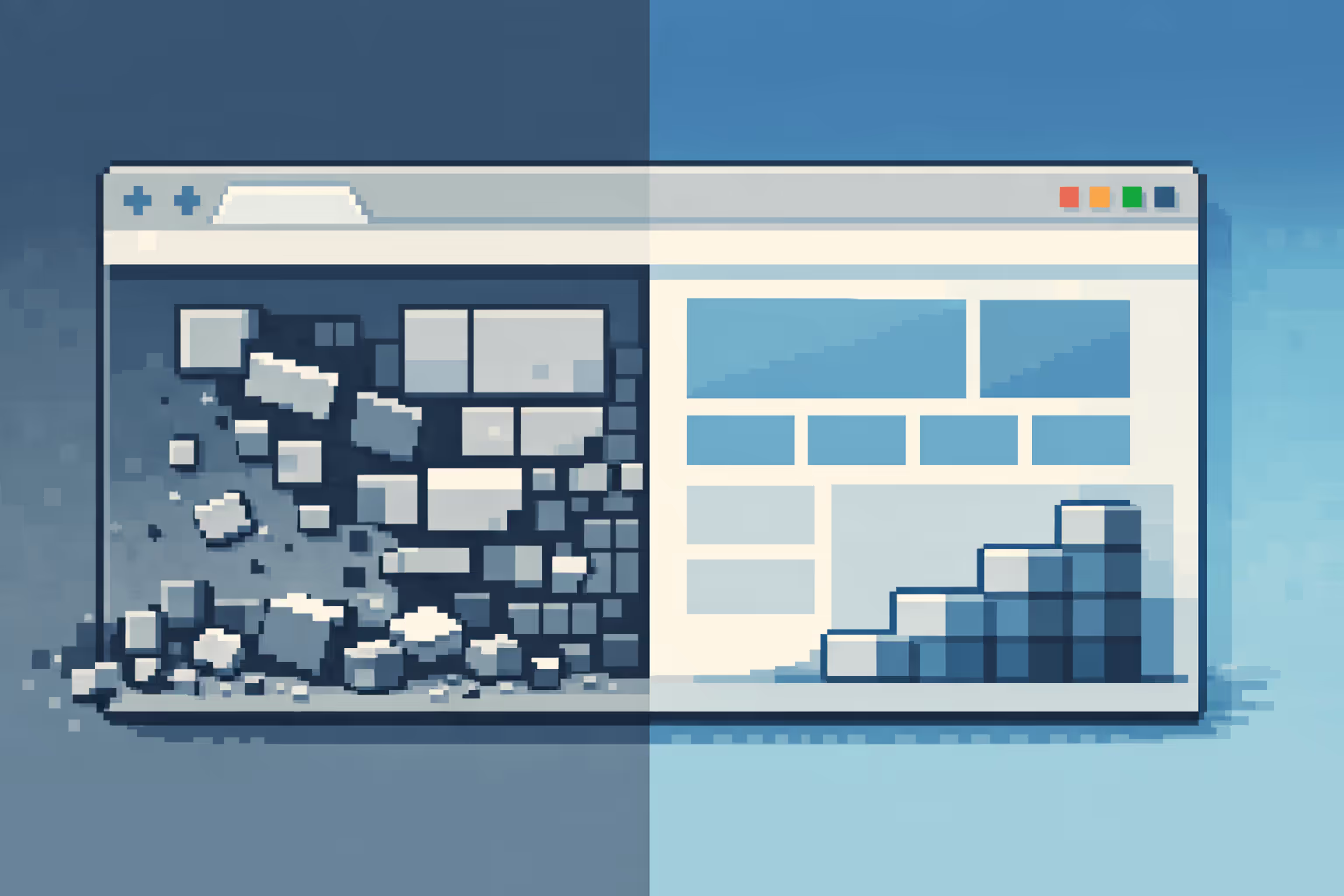
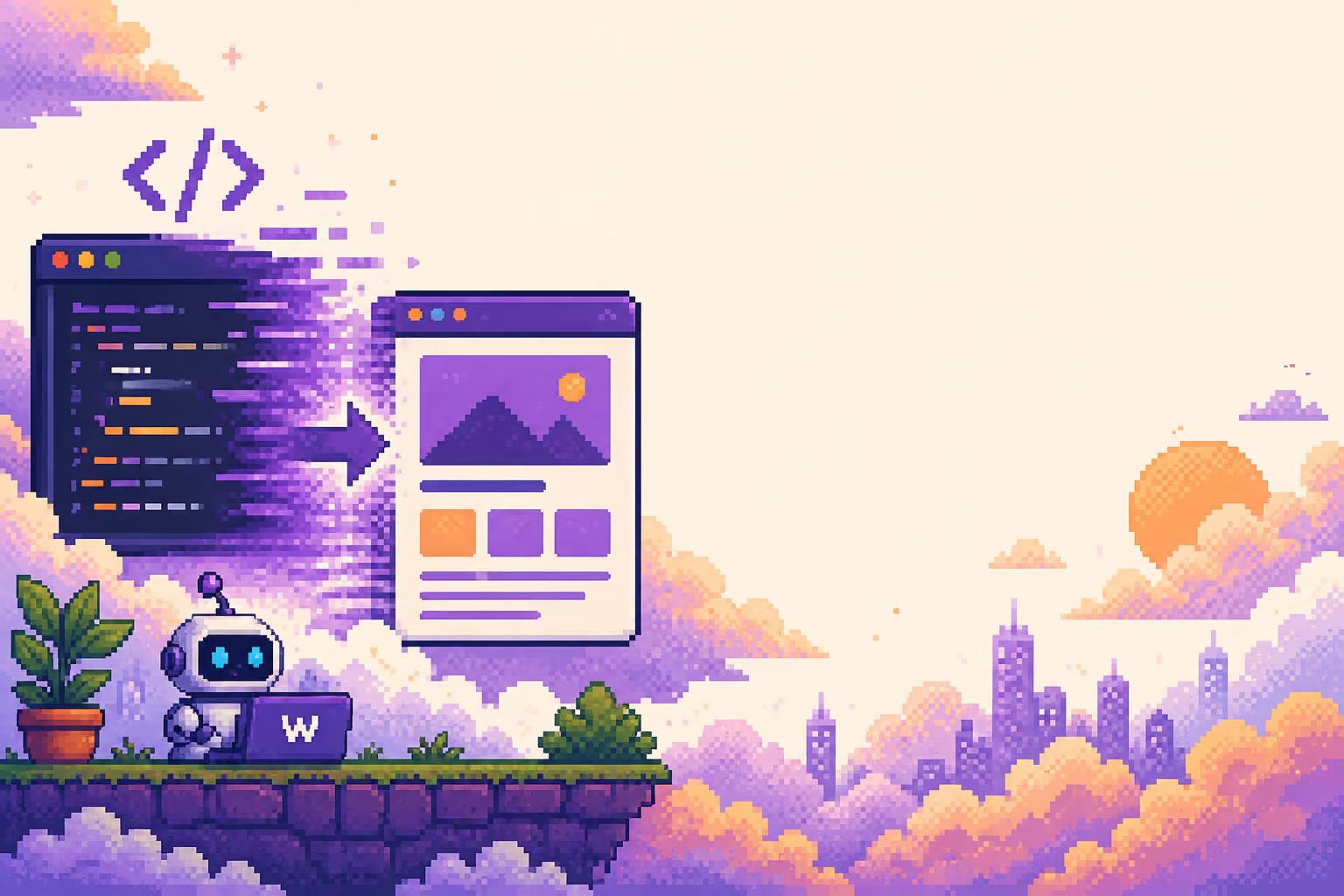
Pixel art illustration of code transforming into a website interface, representing code as the source of truth for modern web development.

Webflow just told its own users something most platforms would never admit. For over a decade, what you build in Webflow and what actually ships to a browser have been two different things. You design against an internal format. Webflow's compiler turns that format into HTML, CSS, and JavaScript behind the scenes. The canvas feels direct, but the real artifact, the code, was always one step removed from your hands.

In a post called "Getting to the Source," Webflow said it is changing that. Code is becoming the source of truth. Not an export option. Not a developer escape hatch. The actual thing the canvas renders and the actual thing that ships become the same object.

That is a bigger deal than it sounds, and it is worth being honest about both why it matters and why it took this long.

Why This Took Until 2026

Webflow's founder built the platform after watching a talk by designer Bret Victor, who argued that creators need an immediate, honest connection to what they make. For code on the web, that meant the real artifact was always going to be HTML and CSS, not a drawing of them.

Webflow's own post admits Victor later told them, directly, that the platform never fully lived up to that principle. The internal format was a trade-off, not an accident. In 2013 there was no realistic way to hand raw code to a marketer and expect anything to get built. The abstraction is what let non-developers ship real sites. It also meant the thing you designed and the thing that got published were never quite the same object.

What changed is not philosophy. It is that AI agents can now read, write, and explain code well enough that hiding it stops being necessary. If an agent can turn "make this heading bigger on mobile" into an actual code change you can see, the reason for keeping code behind a translation layer mostly disappears.

What This Means If You Run Marketing on Webflow

Here is the part that matters if you are not a developer and never plan to become one. Nothing about your daily workflow needs to change for this to be good news.

The Designer, the Editor, the CMS you already use to publish blog posts and update pricing, none of that goes away or gets harder. What changes is what sits underneath it. Right now, when you or an agent asks Webflow to do something, that instruction gets translated into a private format, then compiled into code. Under the new model, the instruction acts on the code directly. Same visual tools on the surface. A more honest foundation underneath.

The practical upside shows up in two places. First, anything AI-assisted gets more reliable, because there is no translation step for meaning to get lost in. Second, your site becomes something you can genuinely take with you: real, portable code, not a Webflow-specific format that only Webflow's compiler can read.

The Part Webflow Is Not Saying Out Loud

Webflow frames this as catching up to a technical shift AI made possible. That is true, but it is not the whole story. Every serious code-generation and no-code tool is racing toward the same conclusion right now, because agents read and write code, so code has to become the real thing everyone works with. Getting there is table stakes, not a competitive edge.

Where Webflow is making a real bet is on what happens after that starting line. A decade of building for marketing teams taught them something a code editor never had to learn: a prototype that runs in a browser is not the same as a production site a whole team can maintain. Most code-first tools are built around one developer and one repository. Webflow's actual customer base is marketers, designers, developers, and agencies all touching the same site in the same week, with agents now added to that mix. That is a harder problem than generating code, and it is the one Webflow is claiming it can solve that a lone AI coding tool cannot.

Whether that claim holds up will not be obvious until the full reveal at Webflow Conf this September. Until then, this is a direction, not a shipped feature. Nothing on your current site changes today.

Why This Matters for AI Search, Not Just AI Coding

There is a second thread worth pulling on here, one Webflow's post does not spend much time on but that matters just as much for anyone thinking about AEO.

AI search tools do not just want to read your published pages. Increasingly, they want to reason about your site's actual structure: what is a component, what is repeated, how content and layout relate to each other. A site whose real structure lives in a proprietary internal format is harder for any outside system, AI or otherwise, to fully understand. A site whose real structure is code is not.

If Webflow follows through on this, it does not just make agent-assisted editing more reliable. It makes the underlying site more legible to every AI system that touches it, from the ones building your pages to the ones citing your content in an answer. That is a second-order benefit worth watching, even if it is not the headline.

What To Actually Do Right Now

Nothing, and that is not a dodge. This is a direction Webflow has committed to publicly, not a migration you need to plan for. Your CMS structure, your existing pages, and your day-to-day workflow are unaffected today.

The one useful thing to do is pay attention in September. If code genuinely becomes the shared source of truth between the visual canvas and any AI agent working on the site, that changes what "clean setup" means for a Webflow project going forward. Sites already built with a disciplined component structure and a real CSS framework are going to make that transition easier than sites that were never organized in the first place. That has been true regardless of this announcement, but it becomes more true once code itself is the thing everyone, human and agent, is actually working with.

Author:
Milan Kostic | Freelance Webflow Developer

Milan Kostic

Freelance Webflow Developer
Frequently Asked Questions

Webflow announced it is rebuilding its platform so that code, not an internal proprietary format, becomes the source of truth for every site. The visual Designer and any AI agent will both act on the same real code instead of a private format that gets compiled separately.

No. This is a stated direction, not a released feature. The full details are expected at Webflow Conf in September 2026. Current sites, workflows, and the CMS are unaffected for now.

The stated reason is that AI coding agents can now read and write code well enough that hiding code behind an internal format is no longer necessary to keep the platform accessible to non-developers. That removes the original reason the abstraction existed.

Webflow says no, the Designer and Editor stay the same on the surface. The change is to what happens underneath those tools, not to how marketing teams interact with them day to day.

Indirectly, yes. A site whose real structure is code rather than a proprietary format is generally easier for outside systems, including AI search tools, to parse and understand. That is a secondary benefit beyond the coding workflow itself.

Let’s talk about your website

Other articles

7 Common mistakes when ordering your first business website

7 Common mistakes when ordering your first business website

The seven most common mistakes business owners make when ordering their first website, and how to avoid each one before you hire a developer.

Astro vs Webflow: A complete comparison for 2026

Astro vs Webflow: A complete comparison for 2026

A complete and objective comparison of Astro vs Webflow for 2026, covering performance, editorial workflows, cost, SEO, and when each platform makes sense for marketing teams.

Webflow vs AI-Generated Websites (Next.js/Vercel): What's Better for Marketing Teams in 2026

Webflow vs AI-Generated Websites (Next.js/Vercel): What's Better for Marketing Teams in 2026

An honest, objective comparison of Webflow vs AI-generated Next.js sites on Vercel for marketing teams in 2026, covering cost, editing autonomy, SEO, performance, and when to use each.

Webflow AEO Checklist: How to prepare your website for AI search

Webflow AEO Checklist: How to prepare your website for AI search

A practical checklist covering everything you need to prepare your Webflow site for AI search engines, from robots.txt and schema markup to content structure and llms.txt.

What to focus on when building a Webflow website

What to focus on when building a Webflow website

A practical guide on everything to plan and consider before and during a Webflow build, from class systems and CMS to responsiveness and launch testing.

AI Project Management Tools: An Honest Review for 2026

AI Project Management Tools: An Honest Review for 2026

Not every project management tool that says AI-powered actually is. Here is an honest breakdown of ten tools organized by what your team actually needs.

The Developer-First Web Designer: How to Design in Figma Like a Developer Thinks
The Developer-First Web Designer: How to Design in Figma Like a Developer Thinks
Most web designers hand off beautiful Figma files that are painful to build. Here is how to design with a developer-first mindset from the very first frame.

Webflow vs Squarespace: A Straightforward Breakdown for 2026

Webflow vs Squarespace: A Straightforward Breakdown for 2026

Webflow and Squarespace are often compared, but they serve completely different users. Here is a clear breakdown of the key differences across design, CMS, SEO, ecommerce, and pricing.

What are LLMs and what does that mean for building websites

What are LLMs and what does that mean for building websites

A practical guide to understanding large language models and how to make your Webflow site more readable and citable by AI tools.

Why B2B SaaS Marketing Teams Are Switching to Webflow in 2026

Why B2B SaaS Marketing Teams Are Switching to Webflow in 2026

The real question isn't whether Webflow is a good tool. It's why so many B2B SaaS companies spent years accepting that their website was the slowest part of their organization.
How to Run a Full AEO and GEO Audit on Your Webflow Site Using Claude and MCP

How to Run a Full AEO and GEO Audit on Your Webflow Site Using Claude and MCP

How to audit your Webflow site for AEO and GEO in under 30 minutes using Claude and MCP, with exact prompts for each step.

How to Run a Full Webflow SEO Audit Using Claude and MCP in Under 30 Minutes

How to Run a Full Webflow SEO Audit Using Claude and MCP in Under 30 Minutes

How to use Claude connected to your Webflow site via MCP to run a full SEO audit in under 30 minutes, with exact prompts you can copy and use today.

How to Optimize Your Webflow Site for AI Search Engines: Webflow for AEO

How to Optimize Your Webflow Site for AI Search Engines: Webflow for AEO

A practical guide to AEO for Webflow sites in 2026. How AI search engines discover, extract, and cite your content, and what to do about it.

The Best AI Tools for Startups in 2026. From Launch to Series A

The Best AI Tools for Startups in 2026. From Launch to Series A

A stage-by-stage breakdown of the best AI tools for startups in 2026, from building your first MVP and marketing site to scaling past Series A.

How the right website pays for itself

How the right website pays for itself

A poorly built website costs more than you think. Learn how the right website saves money, reduces ongoing expenses, and actively earns for your business.

Why I build every client website in Webflow (and what that means for you)

Why I build every client website in Webflow (and what that means for you)

There are dozens of platforms to build a website on. Here's why I use Webflow for every client, and what you actually get as a result.

Why your outdated website is costing you clients (and how to know if yours qualifies)

Why your outdated website is costing you clients (and how to know if yours qualifies)

60% of small businesses lose customers because of website issues. Most of them don't even know it's happening. Here's how to tell if your site is one of them.

Why blogging still works in 2026 (and how to do it without wasting time)

Why blogging still works in 2026 (and how to do it without wasting time)

Over 60% of internet users read blogs regularly. 81% of marketers say it still delivers results. So why does every small business owner I talk to have a blog they haven't touched in a year?

How to Use the Webflow Connector in Claude (Complete Guide)

How to Use the Webflow Connector in Claude (Complete Guide)

Learn how to set up the Webflow connector in Claude, what you can automate, and where the real limits are.

What is Webflow?

What is Webflow?

Learn what Webflow really is, why it's not just another website builder, and how it works.

What is Schema Markup? The Secret Language of High-Ranking Websites

What is Schema Markup? The Secret Language of High-Ranking Websites

What exactly is Schema markup? Learn how structured data helps Google understand your content and why it's the most underused growth asset in technical SEO.

How to Get a 100/100 Lighthouse Score on Webflow Mobile: A Full-Service Guide

How to Get a 100/100 Lighthouse Score on Webflow Mobile: A Full-Service Guide

Achieve a perfect 100/100 Lighthouse score on Webflow mobile. Learn expert strategies for AVIF images, font preloading, and script delays to boost your SEO ranking.

The Ultimate Webflow Migration Checklist for B2B & SaaS: A Stress-Free Guide to Scaling Without Losing SEO Juice

The Ultimate Webflow Migration Checklist for B2B & SaaS: A Stress-Free Guide to Scaling Without Losing SEO Juice

Moving your SaaS site to Webflow? Use this technical checklist to protect your SEO, automate CMS migration, and sync your CRM. Migrate without the stress.

The Ultimate Guide to Webflow SEO in 2026

The Ultimate Guide to Webflow SEO in 2026

Master Webflow SEO in 2026. Learn how to leverage AI, optimize for zero-click searches, and boost site speed with Webflow’s built-in tools. Start ranking higher!

From Figma to Webflow: The Definitive Guide for 2026

From Figma to Webflow: The Definitive Guide for 2026

Turn Figma designs into high-performance Webflow websites with a structured workflow, clean architecture, and modern best practices.

How much does a business website cost in the US?

How much does a business website cost in the US?

Learn how much a business website really costs in the US. A clear breakdown of pricing for small businesses, startups, landing pages, and larger projects.

Webflow vs Lovable: a platform comparison. Which one is better?

Webflow vs Lovable: a platform comparison. Which one is better?

A practical comparison of Webflow and Lovable. Learn which no-code platform is better for design flexibility, SEO, scalability, and long-term website growth.

Best No-Code Platforms for Websites in 2026: A Complete Comparison

Best No-Code Platforms for Websites in 2026: A Complete Comparison

A complete comparison of the best no-code platforms for building websites in 2026. Compare Webflow, Framer, Wordpress, and more to choose the right platform for your project.

Webflow and Framer: A Practical Comparison for 2026

Webflow and Framer: A Practical Comparison for 2026

Full 2026 Webflow vs Framer comparison covering CMS power, pricing, SEO tools, AI features, and which no-code platform fits your project.

Webflow App Gen: A Complete Guide to the AI Revolution in Web App Generation

Webflow App Gen: A Complete Guide to the AI Revolution in Web App Generation

Learn what Webflow App Gen is and how it uses AI to generate production-ready web applications directly inside Webflow. Features, CMS integration, and deployment explained.

Webflow Migration Guide: How to Move Your B2B Website Without Losing SEO Rankings

Webflow Migration Guide: How to Move Your B2B Website Without Losing SEO Rankings

Learn how to migrate your B2B website to Webflow without losing SEO rankings. A practical guide covering redirects, CMS structure, performance, and post-launch checks.

SEO, AEO, and GEO: what should you focus on in 2026?

SEO, AEO, and GEO: what should you focus on in 2026?

Learn the difference between SEO, AEO, and GEO, how search is evolving, and what to focus on in 2026 to stay visible in AI-driven and traditional search.

The difference between award-winning and high-converting websites

The difference between award-winning and high-converting websites

What’s the real difference between award-winning and high-converting websites? Learn how design goals, usability, and strategy impact business results.

How to fix conversion issues when you already have traffic

How to fix conversion issues when you already have traffic

Your website gets traffic but no leads? Learn why visitors aren’t converting and how better design, messaging, and structure can turn traffic into real business results.

Migrating to Webflow from other platforms

Migrating to Webflow from other platforms

Learn how migrating to Webflow from WordPress or other platforms works, what the real process looks like, and how it affects performance, scalability, and SEO.

Why SaaS companies should move to Webflow in 2026

Why SaaS companies should move to Webflow in 2026

Discover why SaaS companies are moving to Webflow in 2026 for better performance, SEO control, scalability, and faster marketing workflows.

Is Webflow Good for SEO? What Actually Matters

Is Webflow Good for SEO? What Actually Matters

Is Webflow good for SEO? Learn what actually affects rankings, from content and structure to technical setup, and why Webflow isn’t the problem.

Webflow vs WordPress which platform is right for your website

Webflow vs WordPress which platform is right for your website

This article breaks down whether Webflow is a better alternative to WordPress.

Should designers understand Webflow frameworks for smoother projects?

Should designers understand Webflow frameworks for smoother projects?

Learn why designers benefit from understanding Webflow frameworks and how shared structure improves collaboration, reduces friction, and keeps projects running smoothly.

Why the right Webflow framework matters for scalable websites?

Why the right Webflow framework matters for scalable websites?

Learn why the right Webflow framework is key to building scalable, consistent, and easy to maintain websites.

A closer look at Webflow components

A closer look at Webflow components

Learn why Webflow components are essential for scalable websites and how a component based approach improves consistency, speed, and long term growth.

When design breaks the development process and slows growth

When design breaks the development process and slows growth

Learn how poor design decisions create friction in development, introduce technical debt, and limit long term website scalability and growth.

Why marketing teams struggle to maintain Webflow projects on their own?

Why marketing teams struggle to maintain Webflow projects on their own?

Learn why marketing teams often struggle to manage Webflow websites, the structural mistakes behind it, and how to build a site that supports growth.

Why most Webflow websites do not scale well?

Why most Webflow websites do not scale well?

Learn why many Webflow websites struggle to scale, the structural mistakes behind them, and how to build a Webflow site that supports long term growth.

Webflow vs Custom code: How to choose the right approach for your website?

Webflow vs Custom code: How to choose the right approach for your website?

A clear comparison of Webflow and custom code, focused on choosing the right solution based on speed, flexibility, and business maturity.