Webflow Conf 2026: Every Announcement and What's Coming Next
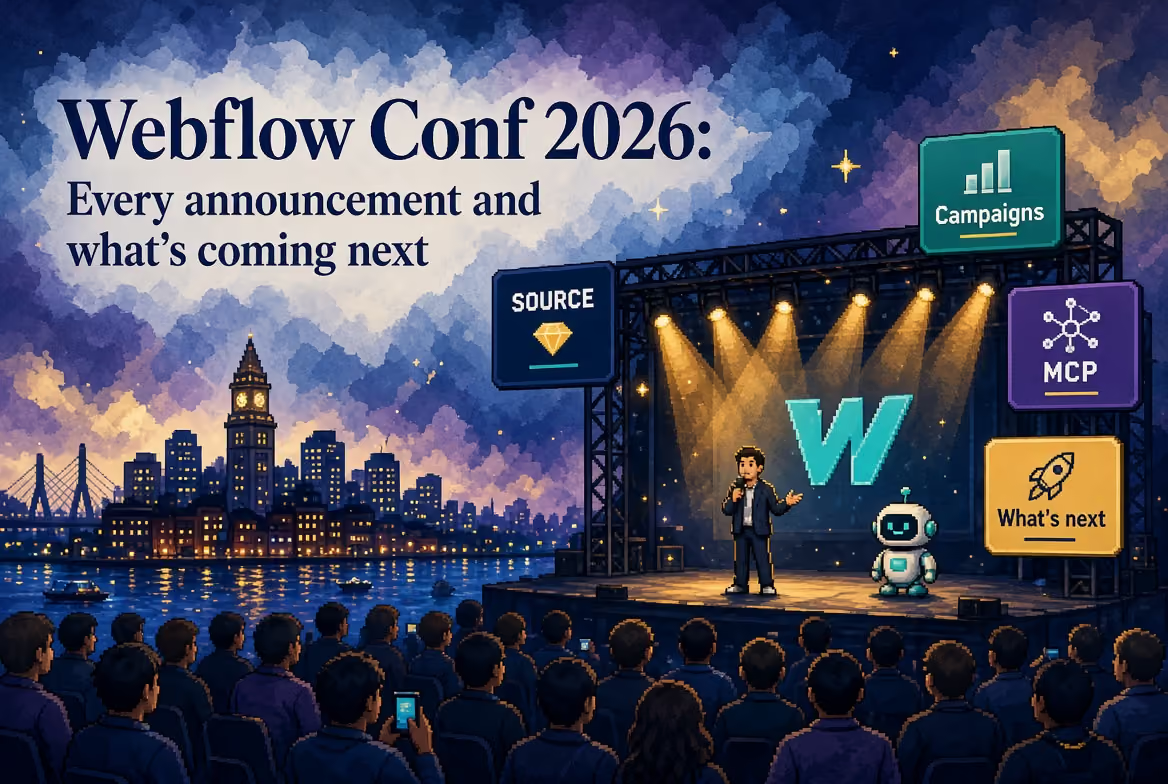
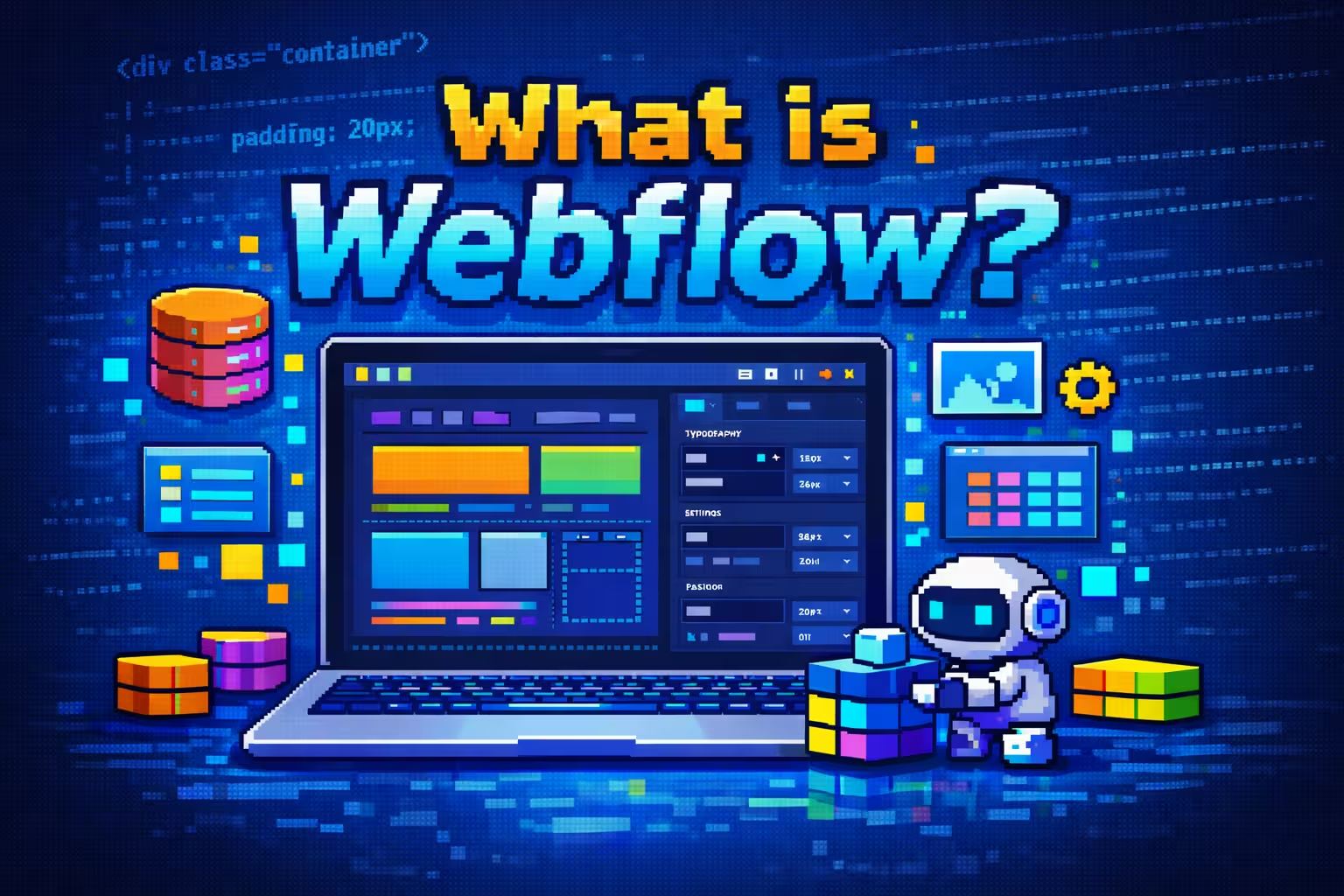
Webflow Conf 2026 opened with CEO Linda Tong making a specific claim: the definition of "builder" has expanded past designers, developers, and agencies to include marketers, and now agents. Whether or not that framing lands with you, the product lineup announced to back it up is the most crowded single-day release Webflow has shipped in years. Source by Webflow got its own dedicated announcement and its own post here. Everything else from the opening keynote is below, sorted by what you can actually touch today versus what's still coming.
Campaigns: From Brief to Live Landing Page in Hours
Campaigns is built for performance marketers who are tired of a campaign shipping weeks after the moment it was meant to catch. The workflow: point an agent at your live site (doesn't have to be built on Webflow) and it pulls your colors, fonts, and UI into a brand system. You submit a brief, an agent refines the strategy, then Campaigns generates a primary landing page plus variants per audience or keyword, along with matching ad creative it can push straight to Google Ads. Once live, it tracks conversions, connects to HubSpot or Salesforce for pipeline visibility, and keeps recommending landing page tweaks.
Status: in beta now, available for purchase next month.
Assets: Agentic Creative That Actually Stays On-Brand
The problem Assets is solving is a real one: AI made it trivial to generate a creative asset, but most of those assets drift from the brand the moment someone adapts them. Assets, built on technology from Webflow's Vidoso acquisition, gives agents the context they were missing, your design system, brand variables, existing asset library, and past performance, so an adapted asset still looks like it belongs to you. It works across formats: adapting a static asset for a new channel, or cutting a long-form video down with filler words trimmed and captions added for social.
Status: entering beta this October.
MCP 2.1: More Access for Agents Already Working Inside Webflow
MCP 2.0 shipped this summer with agent access to design systems, component props, and Webflow Analyze. MCP 2.1 extends that reach in three concrete ways:
- GSAP interactions - prompt the animation you want and the agent builds it as a native, timeline-based GSAP animation, so you keep full visual control over the timing afterward.
- Better CMS querying - agents can now sort and filter on custom fields and search across reference fields, without needing to know exact field names, which cuts down both audit time and token usage on multi-step CMS work.
- Webflow Cloud deploy errors - error logs now surface directly to agents, so tools like Claude Code or Cursor can diagnose and redeploy without a human bouncing between the CLI and the dashboard.
Status: rolling out to everyone later this month, with more releases planned through year-end.
Releases: Branching an Entire Site, Not Just a Page
Releases addresses a real gap for teams shipping big launches: it branches the entire site, pages, CMS content, components, assets, and locales, so a large update can be staged and reviewed as one unit instead of a scramble of individual page edits. A Release Manager tracks what's changed and who's working on what, and agents contributing inside a release are held to the same roles and permissions as any teammate before something merges to production.
Status: beta later this year.
Agent Instructions Generation: Less Manual Context-Writing
Agent Instructions launched earlier in the summer as a way to give agents the context they need, brand voice, legal language, design system rules, that otherwise lives scattered across a doc, a deck, or someone's memory. Writing those instructions by hand was the bottleneck. Now Webflow can generate them for you, with templates for brand guidelines, design system, asset guidelines, and CMS content, pulling from what's already on your site. The generated markdown files stay editable.
Status: live now, rolling out to everyone today.
Agent Presence: Seeing Where an Agent Is Working, Live
As more of a team's work gets delegated to agents, the coordination problem gets worse, not better: what did the agent change, who asked for it, is someone about to publish over an edit that isn't finished. Agent Presence shows an agent working live on the canvas the same way you'd see a human teammate's cursor, on top of the activity log Webflow already added this summer for tracking AI changes after the fact.
Status: available to all customers later this month.
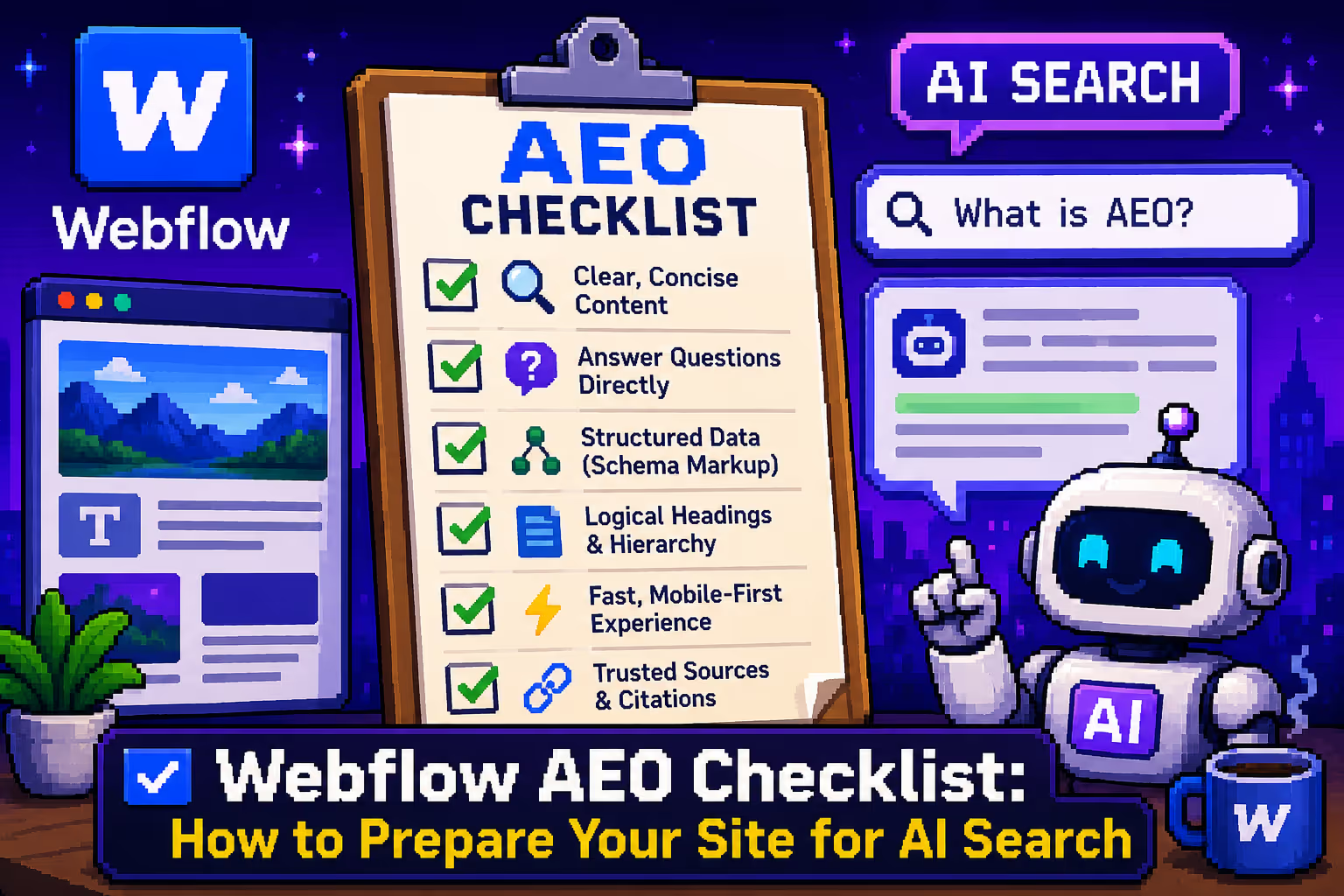
Webflow AEO: Content Agents That Write What's Missing
Webflow's own research across 2,000 companies found the median brand appears in only 16% of the AI answers it should be part of, and gets cited in just 6% of those. The AEO updates lean into that gap: new content agents scan for topics where competitors are getting cited and you aren't, then draft the brief and the original content directly in your CMS. Webflow reports AEO customers seeing meaningfully higher mentions and citations than non-Webflow brands, though that figure comes from Webflow's own internal comparison rather than independent measurement, worth noting if you're citing it elsewhere.
Status: content agents live now for AEO customers; content-refresh agents and external MCP access to AEO data are coming later this year.
What's Actually Usable Today vs. What to Watch For
If you're managing a Webflow site right now, the practical split looks like this: Agent Instructions generation is the one update you can use immediately with zero setup cost. MCP 2.1 and Agent Presence land within the month and are worth planning around if your team already works through Claude or another MCP-connected agent. Campaigns, Assets, and Releases are the ones to watch rather than adopt yet, all still in beta with no confirmed general pricing.
The Bottom Line
None of these are small features bolted onto the platform to look busy at a conference. Each one targets a specific point of friction that shows up once agents are actually doing production work alongside a team: who has context, who can see what changed, who owns the brand voice on an asset an agent touched. Source is the long-term architectural bet. Everything else announced today is the more immediate, practical layer that makes agents usable inside the Webflow teams already have, starting this month rather than at some undefined future date.

Milan Kostic
Freelance Webflow Developer