Migrating to Webflow from other platforms

December 26, 2025
Migrating to Webflow from other platforms

Website migration is one of those decisions most teams postpone for as long as possible. Not because they don’t recognize the problems with their current platform, but because migration is often associated with risk, uncertainty, and fear of losing existing results.

In practice, migrating to Webflow doesn’t have to be risky. When done strategically and systematically, it often becomes an opportunity to eliminate technical debt, improve performance, and build a solid foundation for long-term growth.

Why companies decide to migrate in the first place

Most migrations don’t start with a desire for a “new platform,” but with frustration. Websites become slow, difficult to maintain, overly dependent on plugins, or require constant developer involvement for even the smallest updates.
As companies grow, their websites need to scale with them. Marketing teams need speed, flexibility, and autonomy, while development teams want stability and reduced technical debt. When an existing platform can no longer support those needs, migration becomes the logical next step.

Common platforms companies migrate from

Webflow migrations most often happen from platforms that have either been outgrown or have become too complex to maintain over time.
WordPress is the most common example. While flexible, it often relies on numerous plugins, custom themes, and workarounds that negatively impact performance, security, and long-term stability.

Wix and Squarespace are frequently used in early-stage projects, but they quickly become limiting when greater control over design, CMS structure, and scalability is required.

There are also cases of migrations from custom or headless setups, usually when the website needs to be separated from a complex technical ecosystem and made easier for marketing teams to manage independently.

What a real Webflow migration process looks like

A successful migration never starts with building pages. It starts with understanding the existing website.

The first step is a full audit of the current site. This includes reviewing page structure, CMS collections, URLs, content, performance, and existing issues. A critical part of this phase is carefully analyzing the site map to understand how pages are connected, which URLs carry SEO value, and which sections are actually being used. The goal is not to recreate everything one-to-one, but to identify what is truly worth keeping.

The next step is defining a new structure. Webflow allows flexible CMS modeling, which often makes it possible to create a cleaner, more logical content structure than the previous platform. This is where outdated content, duplicates, and unnecessary complexity are removed.

Design and build come next. Whether the design is migrated from the existing site or rebuilt entirely, Webflow enables high-fidelity implementation without compromising performance or maintainability.

Before launch, a thorough QA process is essential. All links, forms, CMS references, responsiveness, and edge cases are tested across devices. Only after this validation does the site go live.

How migration impacts SEO

SEO is the most common concern during any migration, and for good reason. However, when handled properly, a Webflow migration does not have to result in traffic loss.

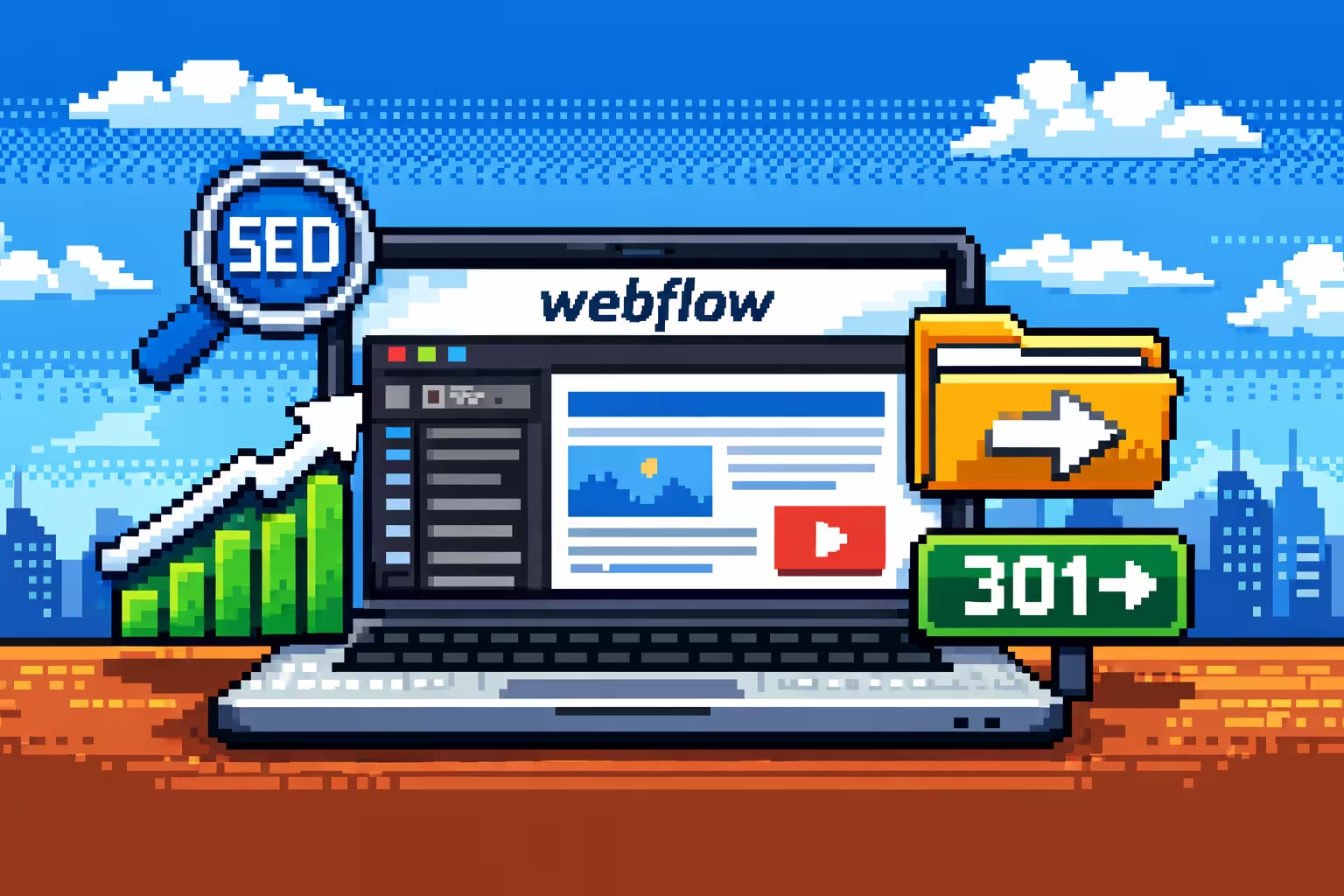
The most critical factor is preserving URL structures or correctly implementing 301 redirects wherever URLs change. Every page that previously held SEO value must be mapped to its new destination.

It’s equally important to retain title tags, meta descriptions, heading hierarchy, internal linking, and content structure. Webflow provides full control over these elements, allowing SEO signals to be carried over accurately.

In many cases, SEO performance improves after migration due to faster load times, cleaner HTML output, and a more structured content architecture.

Benefits after migrating to Webflow

Post-migration, the biggest improvement is usually felt in day-to-day workflows. Marketing teams gain the ability to update content, launch landing pages, and iterate quickly without relying on developers.

The website becomes faster, more stable, and easier to maintain. Less time is spent fixing technical issues, and more time is focused on product development and user acquisition.

Webflow also reduces long-term technical debt by removing plugin dependencies and minimizing maintenance overhead.

When migrating to Webflow doesn’t make sense

It’s important to be realistic. Webflow is not the right solution for every project. Applications with complex authentication, heavy dashboards, or deeply integrated backend logic still require custom development.

Webflow excels as a scalable, high-performance web layer for marketing sites, SaaS websites, and content-driven platforms, but it is not a replacement for an application backend.

Migration as a strategic decision, not a technical task

Migrating to Webflow is not just a technical exercise. It’s a strategic decision that affects how teams collaborate, how content is managed, and how quickly a company can adapt to change.

When approached thoughtfully, migration is not about risk—it’s about resetting the system and building a stronger foundation for long-term growth.

Let’s talk about your project

Other articles

The difference between award-winning and high-converting websites

The difference between award-winning and high-converting websites

What’s the real difference between award-winning and high-converting websites? Learn how design goals, usability, and strategy impact business results.

How to fix conversion issues when you already have traffic

How to fix conversion issues when you already have traffic

Your website gets traffic but no leads? Learn why visitors aren’t converting and how better design, messaging, and structure can turn traffic into real business results.

Why SaaS companies should move to Webflow in 2026

Why SaaS companies should move to Webflow in 2026

Discover why SaaS companies are moving to Webflow in 2026 for better performance, SEO control, scalability, and faster marketing workflows.

Is Webflow Good for SEO? What Actually Matters

Is Webflow Good for SEO? What Actually Matters

Is Webflow good for SEO? Learn what actually affects rankings, from content and structure to technical setup, and why Webflow isn’t the problem.

Webflow vs WordPress which platform is right for your website

Webflow vs WordPress which platform is right for your website

This article breaks down whether Webflow is a better alternative to WordPress.

Should designers understand Webflow frameworks for smoother projects?

Should designers understand Webflow frameworks for smoother projects?

Learn why designers benefit from understanding Webflow frameworks and how shared structure improves collaboration, reduces friction, and keeps projects running smoothly.

Why the right Webflow framework matters for scalable websites?

Why the right Webflow framework matters for scalable websites?

Learn why the right Webflow framework is key to building scalable, consistent, and easy to maintain websites.

A closer look at Webflow components

A closer look at Webflow components

Learn why Webflow components are essential for scalable websites and how a component based approach improves consistency, speed, and long term growth.

When design breaks the development process and slows growth

When design breaks the development process and slows growth

Learn how poor design decisions create friction in development, introduce technical debt, and limit long term website scalability and growth.

Why marketing teams struggle to maintain Webflow projects on their own?

Why marketing teams struggle to maintain Webflow projects on their own?

Learn why marketing teams often struggle to manage Webflow websites, the structural mistakes behind it, and how to build a site that supports growth.

Why most Webflow websites do not scale well?

Why most Webflow websites do not scale well?

Learn why many Webflow websites struggle to scale, the structural mistakes behind them, and how to build a Webflow site that supports long term growth.

Webflow vs Custom code: How to choose the right approach for your website?

Webflow vs Custom code: How to choose the right approach for your website?

A clear comparison of Webflow and custom code, focused on choosing the right solution based on speed, flexibility, and business maturity.