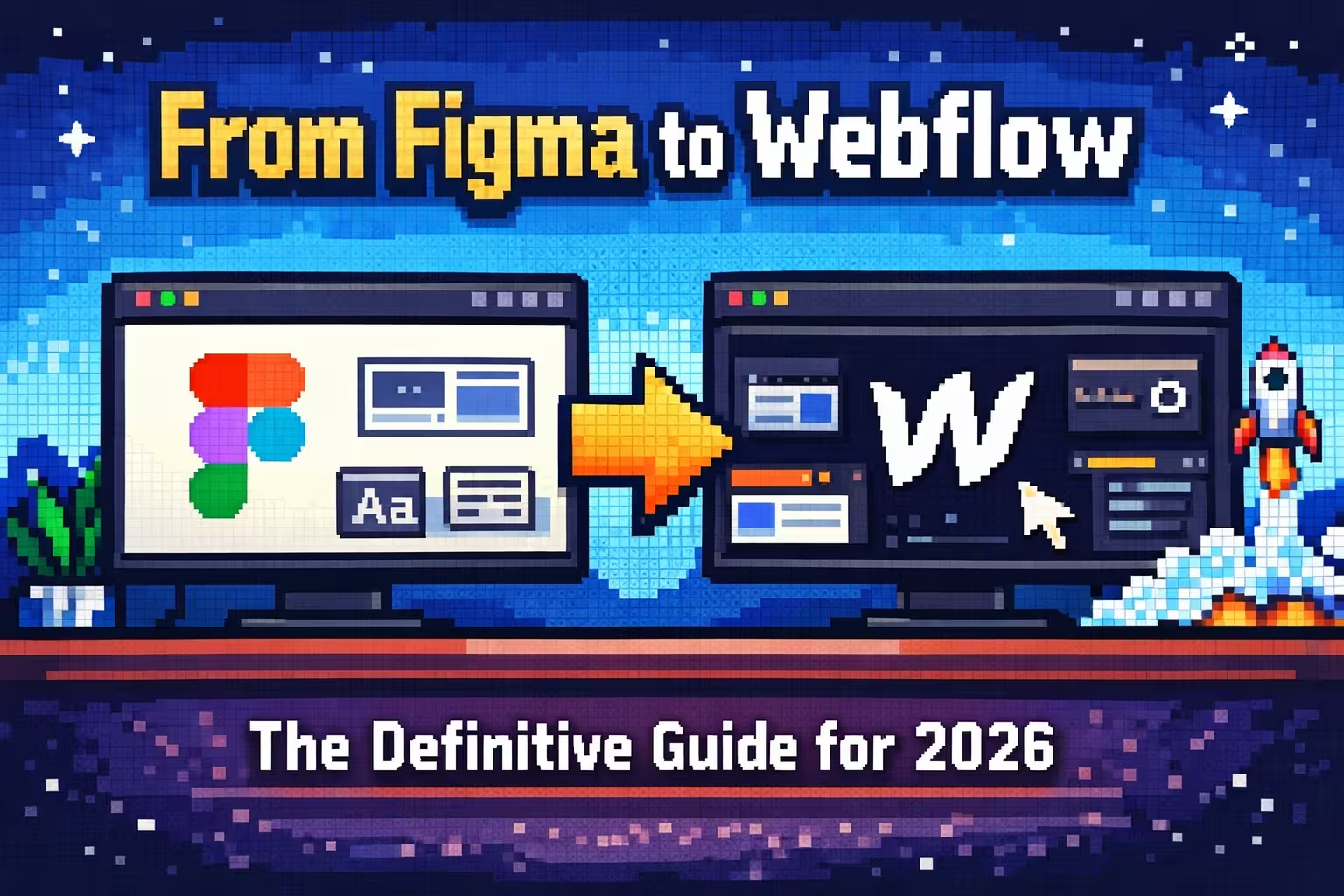
From Figma to Webflow: The Definitive Guide for 2026
Every great website starts with strong design, but it rarely ends there.
In today's web landscape, design is no longer just a visual expression of an idea. It is the foundation of usability, performance, and long-term scalability.
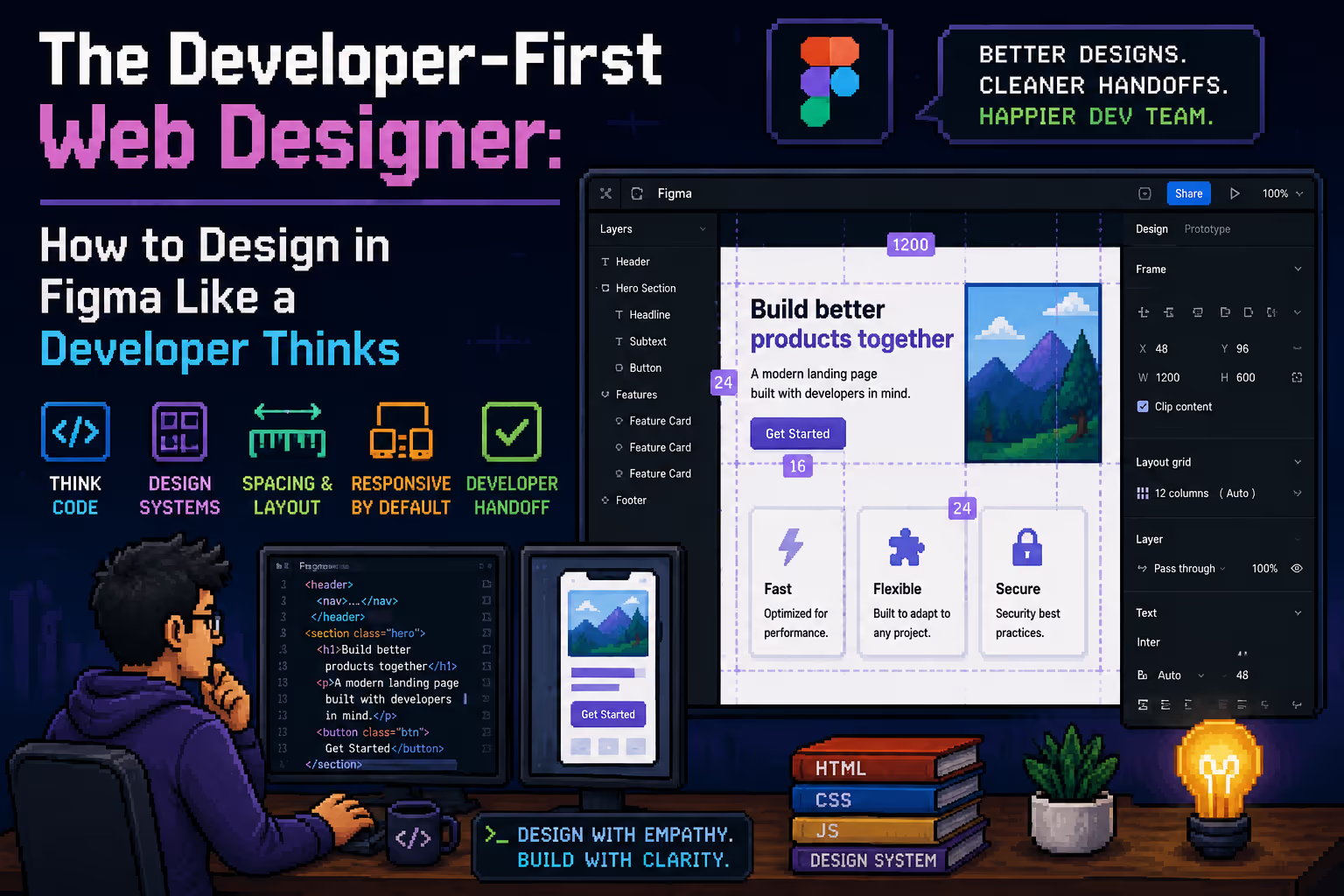
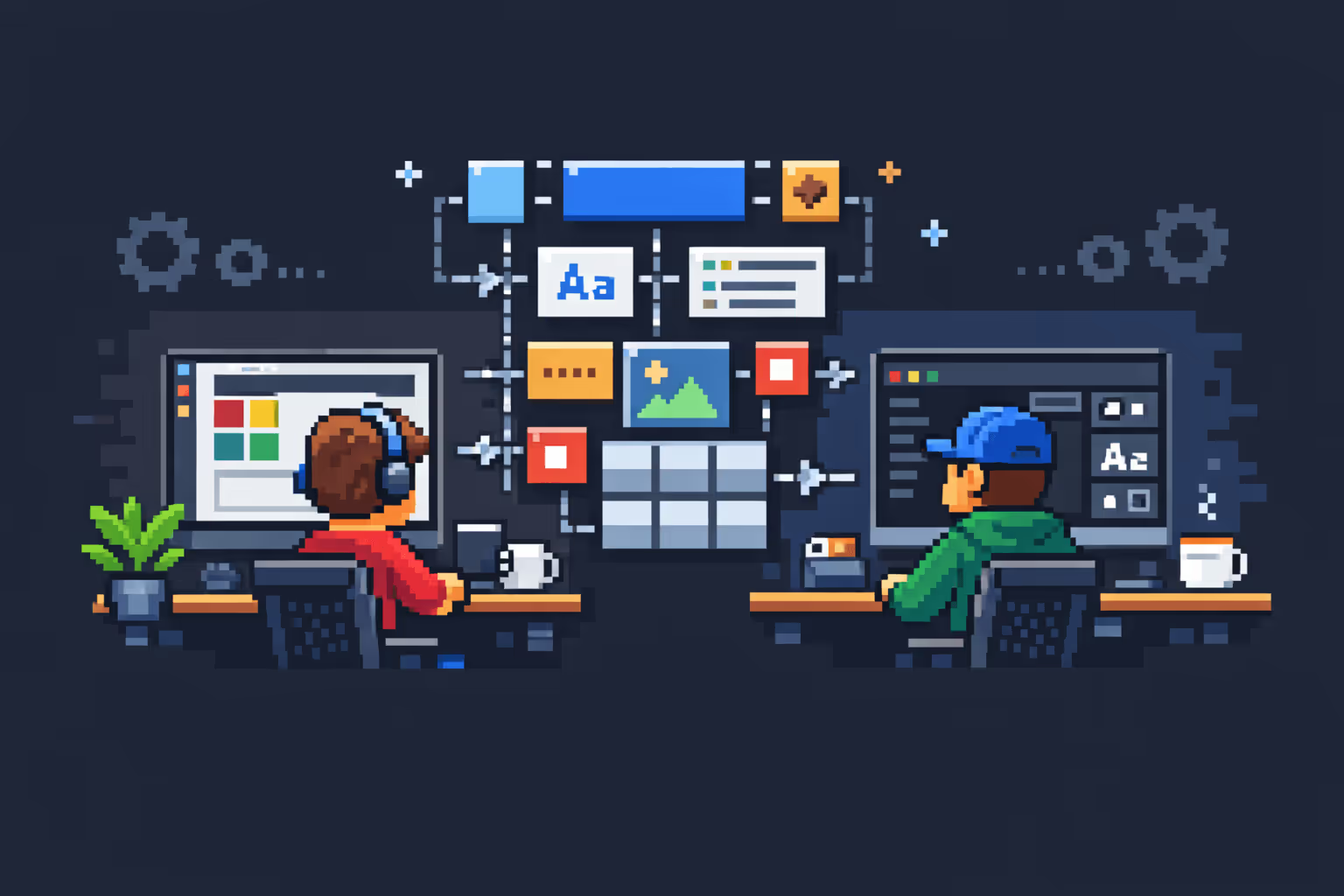
Over the past few years, Figma has established itself as the industry-standard design tool for web designers. Not just because of its speed or collaboration features, but because it encourages structured thinking. Modern Figma files are no longer just collections of screens, they define layout systems, spacing rules, components, and design decisions that directly impact how a website is built.
Still, no matter how powerful Figma is, it remains a design tool.
The moment a design needs to become a real product, responsive, interactive, and reliable across devices, a different environment is required.
That's where Webflow comes in.
Webflow removes the traditional boundary between design and development. While it's often labeled as a no-code tool, in practice it offers fine-grained control over HTML structure, CSS styling, and element behavior. This level of control is exactly why Webflow is now widely used for marketing sites, SaaS platforms, and even enterprise-level web projects. To understand the full scope of what Webflow offers, see our overview of what Webflow actually is.
This article is not a step-by-step tutorial.
Instead, it's a collection of practical recommendations based on real-world experience with the Figma to Webflow workflow, with a strong focus on structure, performance, and long-term maintainability.
How to think about the Figma to Webflow transition
One of the most common mistakes in this process is trying to recreate a Figma design in Webflow pixel by pixel.
In reality, that approach almost always leads to problems.
Figma is a visual tool.
Webflow is a system.
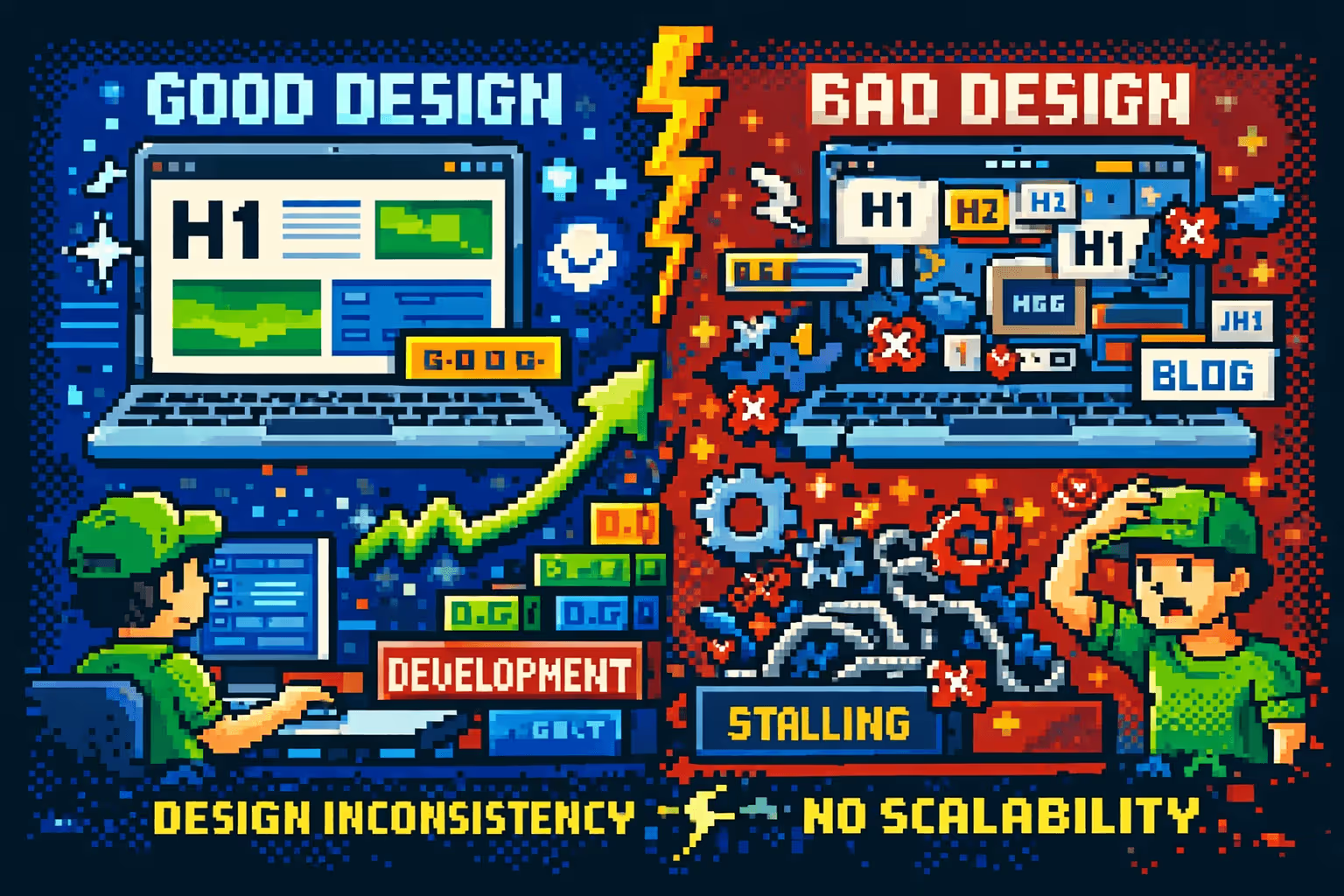
In Webflow, the key questions are not only how something looks, but how it's structured, how it behaves across breakpoints, and how easily it can evolve as the project grows. A well-built Webflow site needs to be flexible, readable, and scalable, not just visually accurate.
That's why the quality of the final website depends far more on its underlying architecture than on pixel-perfect precision. That said, pixel-perfect results are absolutely achievable when the Figma file is well structured and aligned with the same style guide principles used in Webflow, which makes the transition significantly smoother and more predictable.
Why I recommend cloning a style guide
Before building anything in Webflow, I strongly recommend cloning an existing style guide.
Frameworks like Client-First or MAST provide a solid foundation and help eliminate many structural issues before they ever appear.
These systems introduce clear rules for:
- consistent class naming
- layout and component organization
- CMS structure
- long-term scalability
A major advantage of both Client-First and MAST is that they come with extensive, publicly available documentation online. This documentation doesn't just explain how to use the system, but also why certain decisions were made, which is essential for understanding and applying the framework correctly.
That said, this approach isn't ideal for everyone.
If you're completely new to Webflow, I wouldn't recommend jumping straight into Client-First or MAST. These frameworks assume a solid understanding of Webflow fundamentals. Without that foundation, they can feel overwhelming and slow you down rather than help.
In that case, it's far more effective to first learn core Webflow concepts, then adopt a framework once the underlying logic clicks.
Structure matters more than visual perfection
One of the biggest traps in the Figma to Webflow process is obsessing over pixel-perfect implementation.
In practice, structure always matters more.
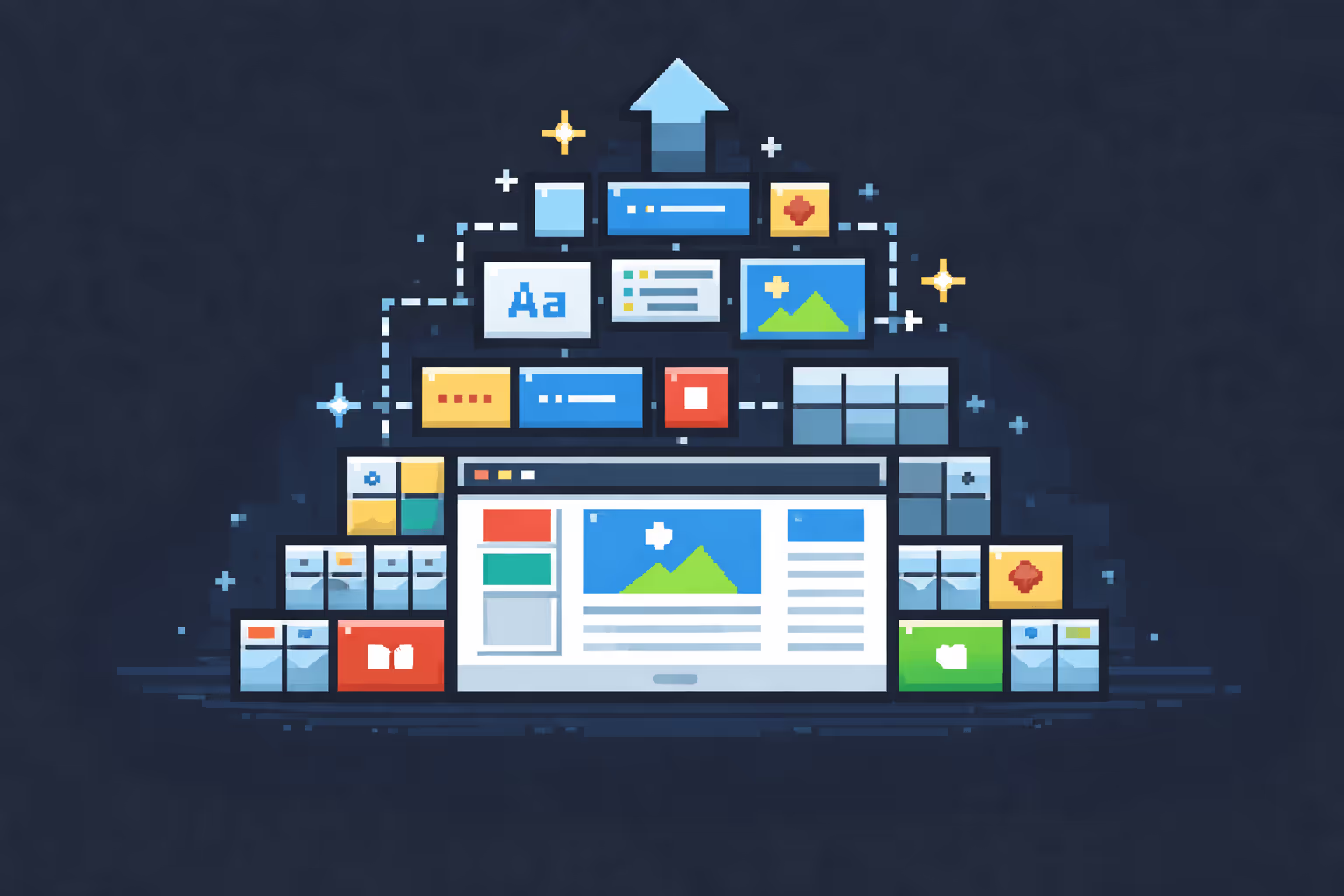
A clean, well-planned hierarchy makes it easier to:
- build responsive layouts
- avoid cross-device issues
- make future updates without breaking things
Figma should be treated as a reference, not an absolute rulebook. Small visual compromises often lead to much more stable and maintainable Webflow projects.
Image optimization and why I use AVIF
Image optimization is one of the most overlooked yet impactful parts of building a high-quality website.
Even the best-designed site can suffer if it relies on large, unoptimized assets.
That's why I recommend compressing all images and exporting them in the AVIF format whenever possible.
AVIF delivers significantly smaller file sizes compared to JPG or PNG while maintaining excellent visual quality. This directly improves page load speed, Lighthouse scores, SEO performance, and overall user experience, especially on mobile devices. For a complete technical breakdown of why this matters, see the guide on getting a perfect Lighthouse score on Webflow mobile.
Webflow fully supports AVIF, making it an easy win for modern, performance-focused websites.
Do I recommend the Figma to Webflow plugin or app?
While the Figma to Webflow plugin and app do exist and technically work, I don't recommend relying on them for serious production projects.
The issue isn't that these tools are broken, but that they often generate structures that are:
- unnecessarily complex
- difficult to maintain
- poorly suited for long-term scaling
In most cases, manually building the structure in Webflow while using the Figma design as a visual reference provides far better control over classes, responsiveness, CMS logic, and performance.
The plugin can be useful for quick prototypes or experiments, but for long-term projects, a manual approach consistently delivers better results.
Responsiveness should be part of the process, not an afterthought
Responsive behavior shouldn't be handled at the end of a project.
It needs to be considered from day one.
In Webflow, this means continuously testing layouts on tablet and mobile breakpoints and adjusting structure as you go. This approach prevents last-minute fixes and ensures a consistent experience across all screen sizes.
Final thoughts: From design to a sustainable web product
Moving from Figma to Webflow isn't just a technical task, it's a decision-making process.
When structure, style systems, and asset optimization are handled correctly, the result isn't just a good-looking site, but a fast, stable, and scalable web product. This is also why I build every client website in Webflow rather than alternatives.
Figma and Webflow together form a powerful workflow, but real quality comes from experience, system thinking, and thoughtful decisions throughout the entire build process.
Contact me
If you're looking for a Webflow developer who can turn your Figma designs into clean, scalable, and high-performing websites, feel free to reach out.
Whether you need help with a full Figma-to-Webflow build, improving an existing Webflow project, or setting up a solid architecture that scales over time, I'm happy to take a look and see how I can help.
You can contact me directly via email, or schedule a call through the contact page on my website to discuss your project in more detail.
I'm always open to new collaborations and thoughtful conversations around design, development, and building better websites.

Milan Kostic
Freelance Webflow Developer