Webflow Migration Guide: How to Move Your B2B Website Without Losing SEO Rankings
Migrating a B2B website is rarely just a design or development task. For most companies, it is a business-critical process that directly impacts lead generation, organic traffic, and revenue. A poorly executed migration can erase years of SEO work, while a well-planned one can actually improve overall performance.
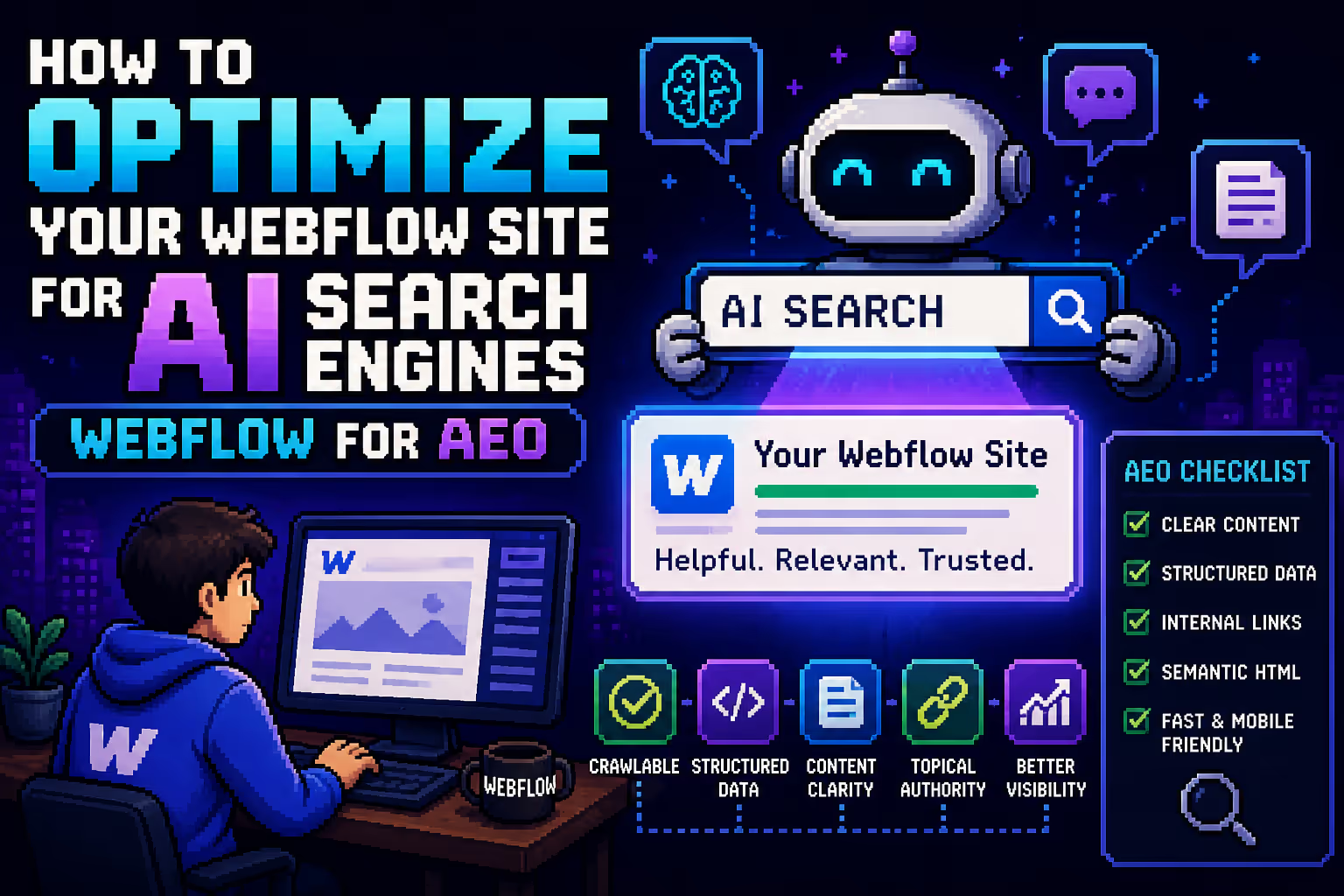
Webflow migrations are becoming increasingly common among B2B companies that want more control, better performance, and greater flexibility for marketing teams. Still, the core question remains the same: how do you move to Webflow without losing your SEO rankings? For a broader look at why this migration makes strategic sense, see why SaaS companies are moving to Webflow in 2026.
This guide walks through the entire migration process, focusing on what truly matters for SEO, content integrity, and long-term scalability.
Why B2B Companies Choose Webflow
Most B2B website migrations to Webflow are not driven by aesthetics. They are driven by operational friction. Marketing teams waiting on developers for simple copy changes. Bloated plugin stacks that slow the site down. CMS structures that made sense three years ago but no longer reflect how the business works.
Webflow removes these bottlenecks. It gives marketing teams direct editorial control, provides a stable technical foundation, and produces the kind of clean, performant output that modern SEO requires.
The Foundation: A Complete URL Audit
Before a single design decision is made, every existing URL needs to be catalogued. This means crawling the current site and mapping out every page that has been indexed, every page with backlinks, and every page that generates organic traffic.
This audit serves as the migration roadmap. Losing even one high-authority URL without a redirect in place can cause measurable ranking drops.
Preserving SEO Through Redirects
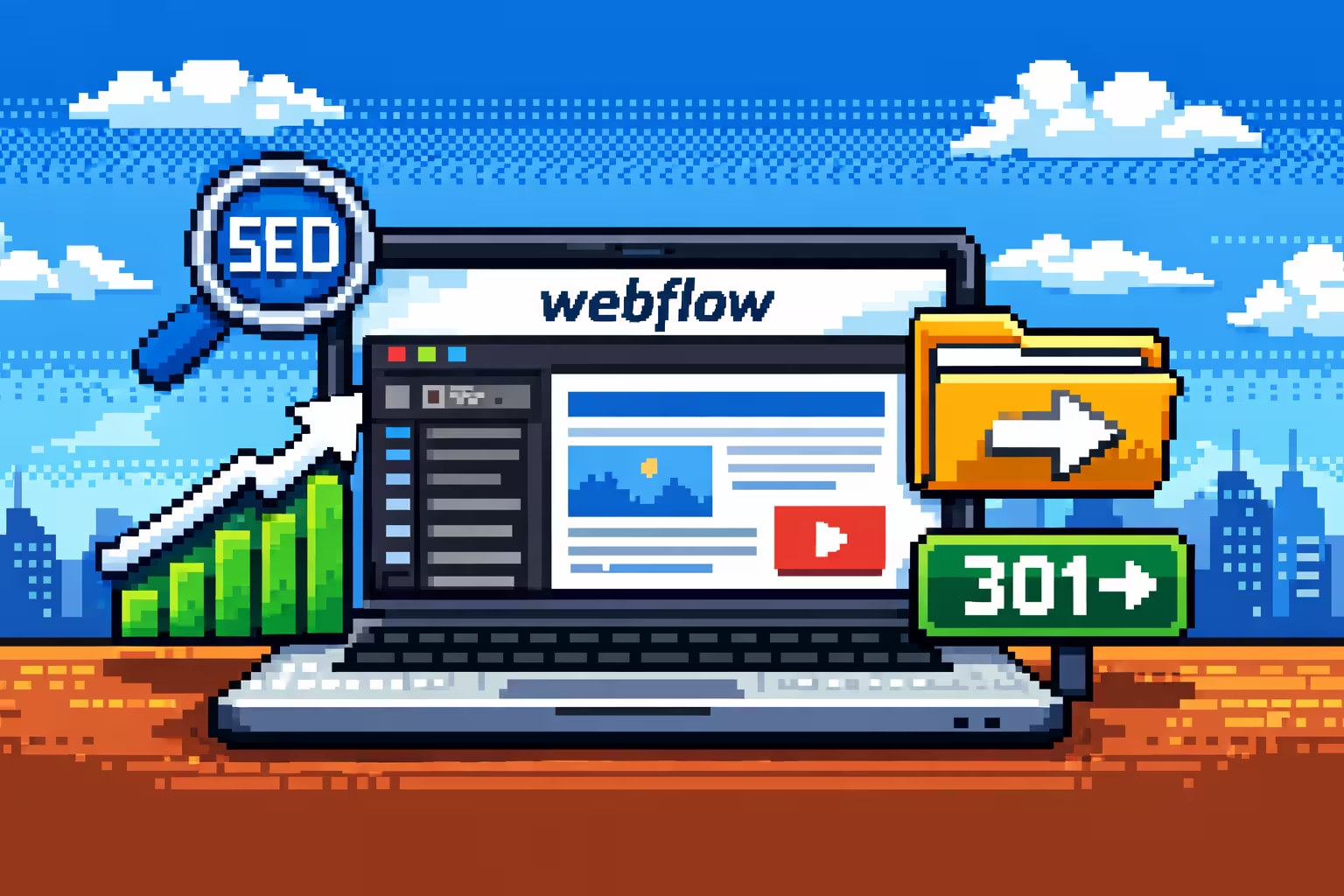
If any URLs are changing during the migration, 301 redirects are non-negotiable. Each old URL needs to point to its new equivalent. Webflow supports bulk redirect uploads, which makes this process manageable even for large sites.
Metadata must also be preserved. Every page's title tag and meta description should be carried over to the new build, ideally improved in the process. For the full technical SEO picture on Webflow, the Webflow SEO guide for 2026 covers everything in detail.
Content Migration at Scale
For B2B sites with large content libraries, manual migration is not realistic. CSV-based imports into the Webflow CMS are the standard approach. The key is mapping every field correctly before import: title, slug, author, date, category, body content, and images.
Preserving original slugs during this process is critical. If blog post URLs remain unchanged, Google treats the migration as a technical upgrade rather than a site replacement.
Performance and Technical Quality Post-Launch
After migration, the site should be audited for performance. Webflow's clean output is a strong starting point, but images, third-party scripts, and animation implementations need to be reviewed. Achieving strong Lighthouse scores immediately after launch is both a technical goal and an SEO signal. Our guide on achieving a perfect Lighthouse score on Webflow mobile covers exactly this.
The Launch Window
The final step before going live is disabling indexing on the Webflow staging subdomain. If the staging site gets indexed by Google before launch, it creates duplicate content issues that can split ranking signals.
After launch, submitting the new sitemap to Google Search Console immediately triggers re-indexing of the updated structure. Monitoring Search Console closely in the first two to four weeks helps catch any unexpected issues before they compound.
Long-Term Maintenance and Team Enablement
A migration is only as successful as the team's ability to use the new site. The Webflow build should be handed over with clear documentation, a structured CMS, and a training session for the editors who will manage ongoing content.
When this is done correctly, the migration doesn't just solve the problems that triggered it. It creates a foundation the team can build on for years.

Milan Kostic
Freelance Webflow Developer