Webflow and Framer: A Practical Comparison for 2026
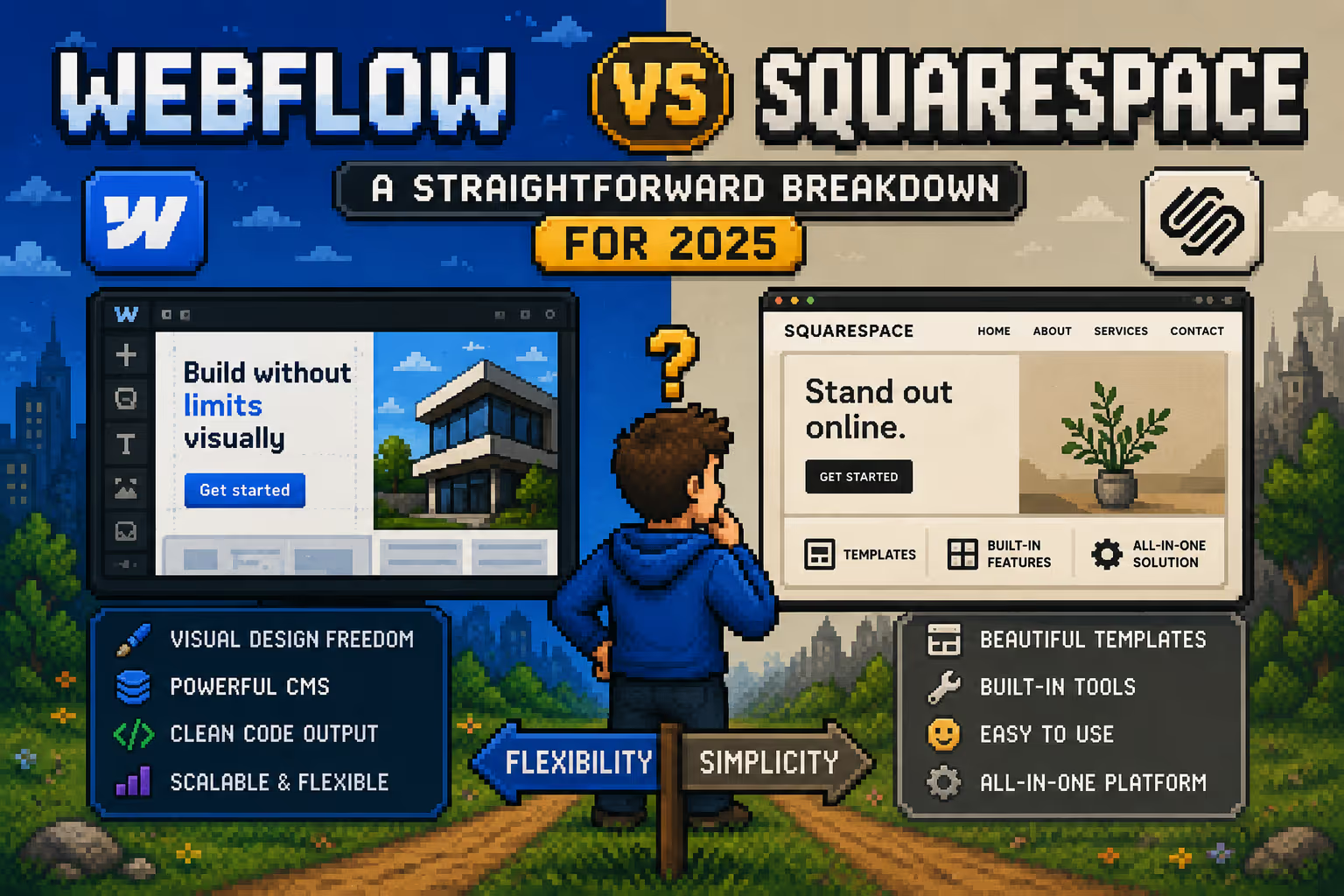
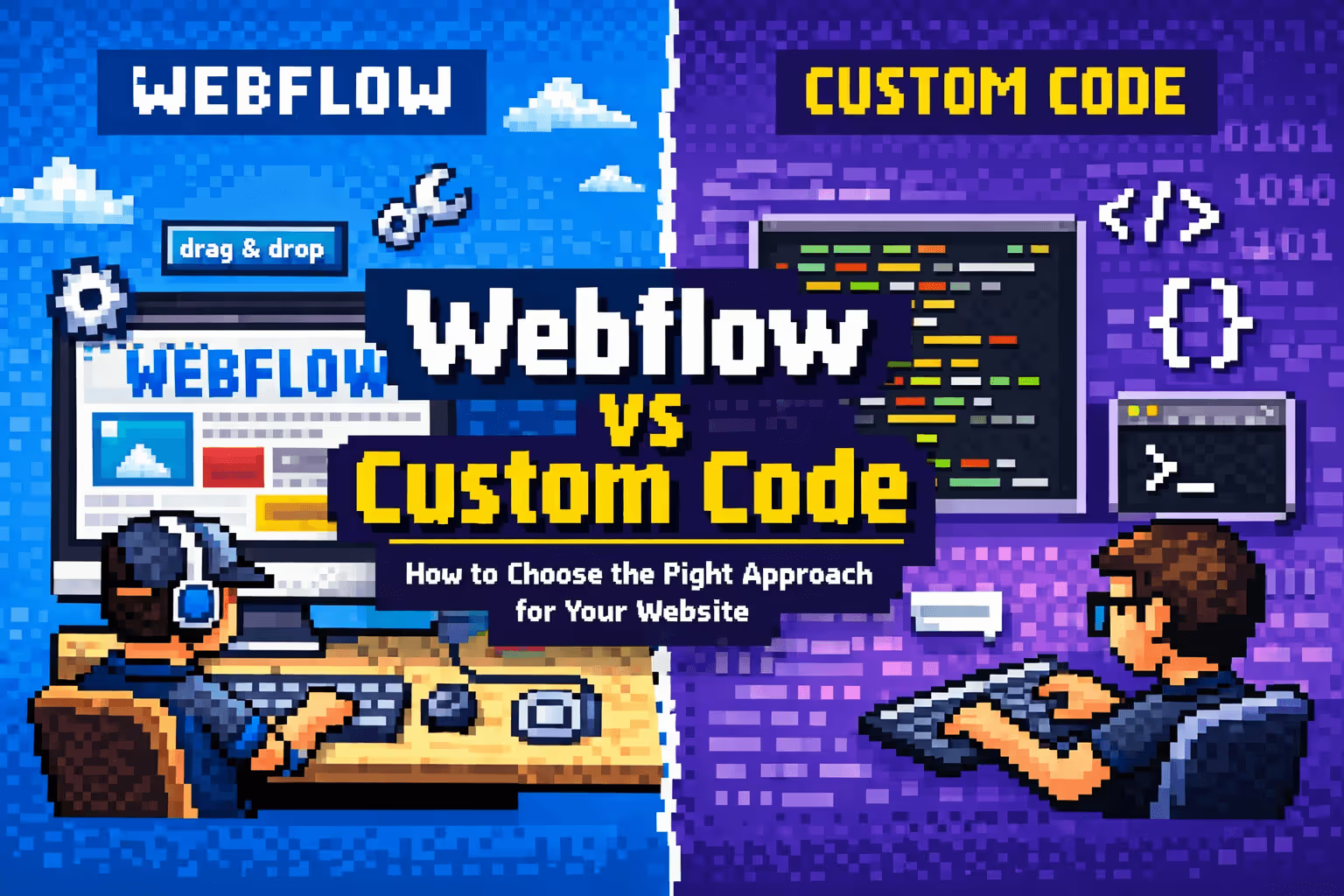
Webflow and Framer are currently two of the most widely used visual web-building platforms. While they appear similar at first glance, they're built with different priorities in mind. Understanding what each tool is strongest at is much more useful than trying to determine which one is "better."
Webflow still holds a larger share of the visual no-code market, while Framer continues to grow rapidly among designers and teams that value speed. Both tools now include AI-powered features, new performance improvements, and updated design workflows, which makes the comparison more relevant than ever. For a full overview of what Webflow is and how it works, see our complete Webflow guide.
Webflow: Where It Fits
Webflow works best for projects that rely on structured content, multi-page architecture, and long-term scalability. Marketing and content teams benefit from a powerful CMS that supports blogs, documentation, resource libraries, case studies, and other content systems.
Startups that expect their websites to evolve over time usually find Webflow more reliable. A landing page can easily turn into a full multi-section website without rebuilding everything from scratch. Agencies and freelancers also prefer Webflow because of the control it provides over layout, class systems, interactions, SEO settings, and content structure. It allows designers to build custom, high-performance experiences that remain maintainable over the long term.
Framer: Where It Fits
Framer is a better fit for design-driven projects, fast landing pages, prototypes, and smaller websites where visuals are the main focus. The interface feels similar to Figma, making it easy for designers to move quickly without thinking too much about structure.
Early-stage startups often choose Framer because they can launch and test ideas fast. UX/UI designers also use it for high-fidelity interactive prototypes, since animations and user flows can be previewed with very little setup. For projects that don't rely heavily on complex CMS requirements, Framer delivers speed and simplicity.
Ease of Use and Learning Curve
Framer is generally easier to start with. It uses a layer-based interface and a familiar design environment, which means designers can begin building immediately. However, limitations appear once the project requires more customization or deeper structure. Styling is applied at the element level rather than through reusable classes, and advanced hover states rely on component variants rather than native interaction settings.
Webflow is more demanding at the beginning because it mirrors how HTML and CSS actually work. Once the class system becomes clear, scaling a design becomes faster and more predictable. Interactions, layout logic, and responsive structure are more detailed and open-ended. Although Webflow feels more complex at first, it becomes a more flexible long-term tool.
CMS Comparison
Webflow has the advantage when it comes to CMS functionality. It supports reference and multi-reference fields, connected data, custom filtering, nested structures, and large content databases. This makes it ideal for SaaS companies, B2B websites, educational platforms, and any site with multiple content types.
Framer's CMS is improving quickly, but remains more simplified. It works well for small blogs, personal sites, and lightweight content needs. For anything involving cross-linked collections or advanced relationships, Webflow is the more capable system.
Pricing Differences
Framer's higher-tier plans tend to be around 25–30% more affordable than similar Webflow plans, which makes it appealing for smaller sites. The pricing structure is also more straightforward.
Webflow is more expensive, especially for CMS-heavy or high-traffic sites, but its plans include more bandwidth, more editor seats, a larger content limit, and ecommerce capabilities. For businesses that expect growth, the cost difference often reflects the additional functionality. For a broader view of what professional websites cost, the business website pricing guide breaks this down in detail.
Tools, Workflow, and Ecosystem
Framer focuses on a single main design environment where you handle both layout and CMS. It keeps the workflow simple and design-centric.
Webflow splits its workflow into Designer and Editor. The Designer controls structure, classes, logic, animations, and CMS setup, while the Editor allows content teams to manage text, images, and dynamic items directly on the site. This separation is extremely useful when multiple people contribute to content without affecting the site design.
Both platforms offer large libraries of templates, though Webflow's ecosystem is significantly larger. Its Marketplace includes libraries, apps, integrations, and advanced tools created by the community.
SEO Capabilities
Webflow provides deeper SEO control, especially for technical optimization. Users can set structured data, manage redirects, customize metadata, add JSON schema, refine canonical tags, inject code at the page level, and minify assets. It also generates clean output code, which benefits performance and search visibility.
Framer covers all essential SEO needs and includes built-in GDPR-compliant analytics, which is a nice advantage. Although it doesn't offer the same level of granular control as Webflow, it is more than enough for smaller sites and landing pages.
AI Features
Both platforms introduced AI features, but with different goals.
Webflow AI helps with structure, copy suggestions, layout guidance, accessibility improvements, and technical areas like alt text generation and JSON schema suggestions. The assistant is integrated directly into the workflow, so it supports real-world production tasks rather than generating an entire site from scratch.
Framer AI is designed for speed and inspiration. It can create a full website layout based on a prompt, making it useful for quick concepts and prototypes. However, larger production sites still require manual adjustments, especially when design consistency or content strategy matters.
Conclusion
Webflow and Framer each excel in different areas. Webflow is the stronger choice for CMS-heavy, scalable, multi-page websites that need technical depth and long-term structure. Framer is ideal for fast landing pages, design-first websites, prototypes, and smaller projects where visuals take priority over content architecture.
Neither platform is universally "better." The best choice depends entirely on the type of project and how much structure, flexibility, or speed you need. When the tool matches the project, both Webflow and Framer can produce excellent results.

Milan Kostic
Freelance Webflow Developer