When design breaks the development process and slows growth
Design is often treated as a purely visual phase of a project, something that comes before development and exists mainly to make a website look good. In reality, design plays a much deeper role. It defines how a website will be built, maintained, and evolved over time. When design is poorly structured, the consequences may not be immediately visible, but they quickly surface through slower development, team friction, and limited long term growth.
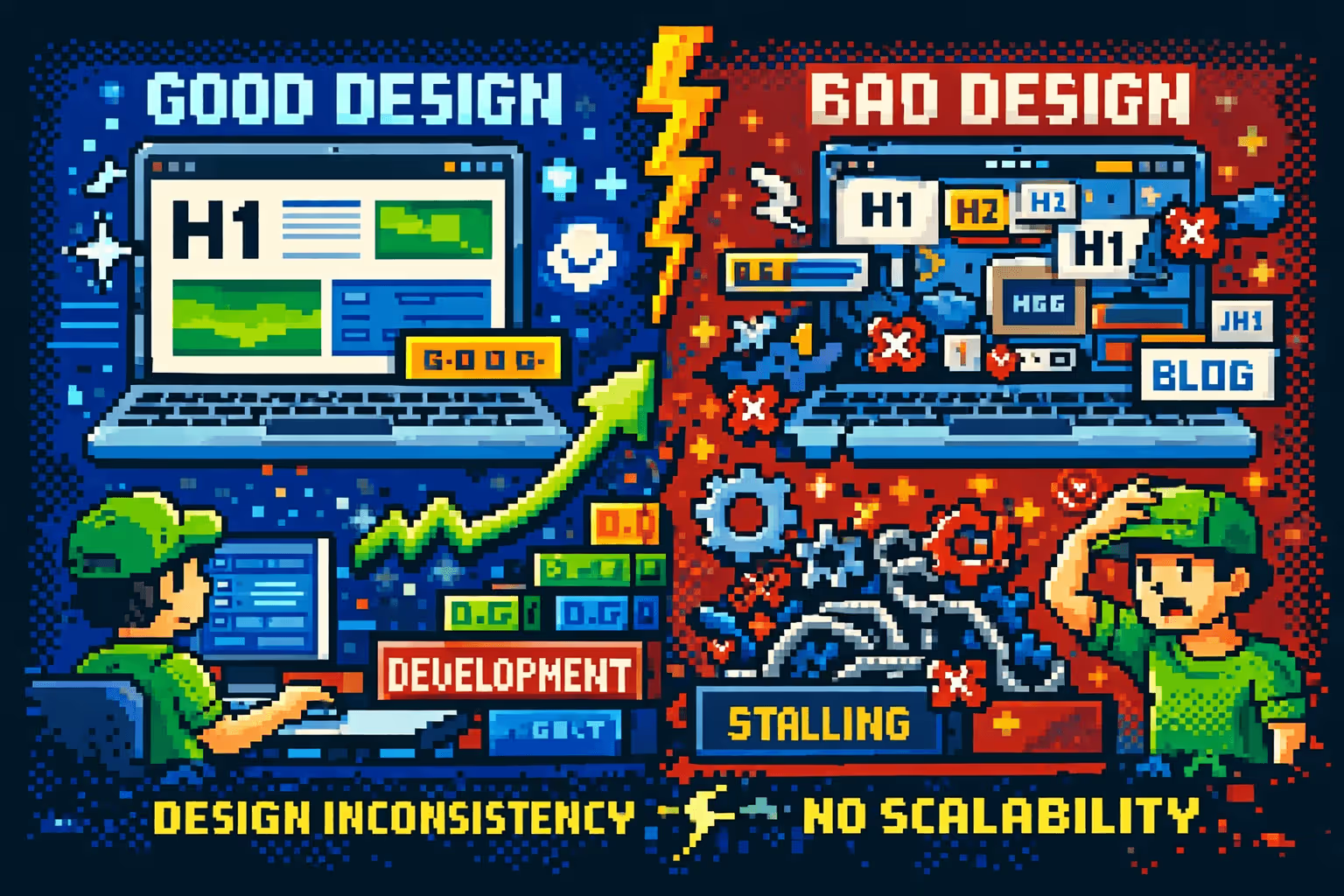
Poor design does not necessarily mean bad aesthetics. More often, it means the design lacks systems and consistency. A website can look polished on the surface while hiding structural problems that make development harder and scaling increasingly painful.
When the design file fails as a specification
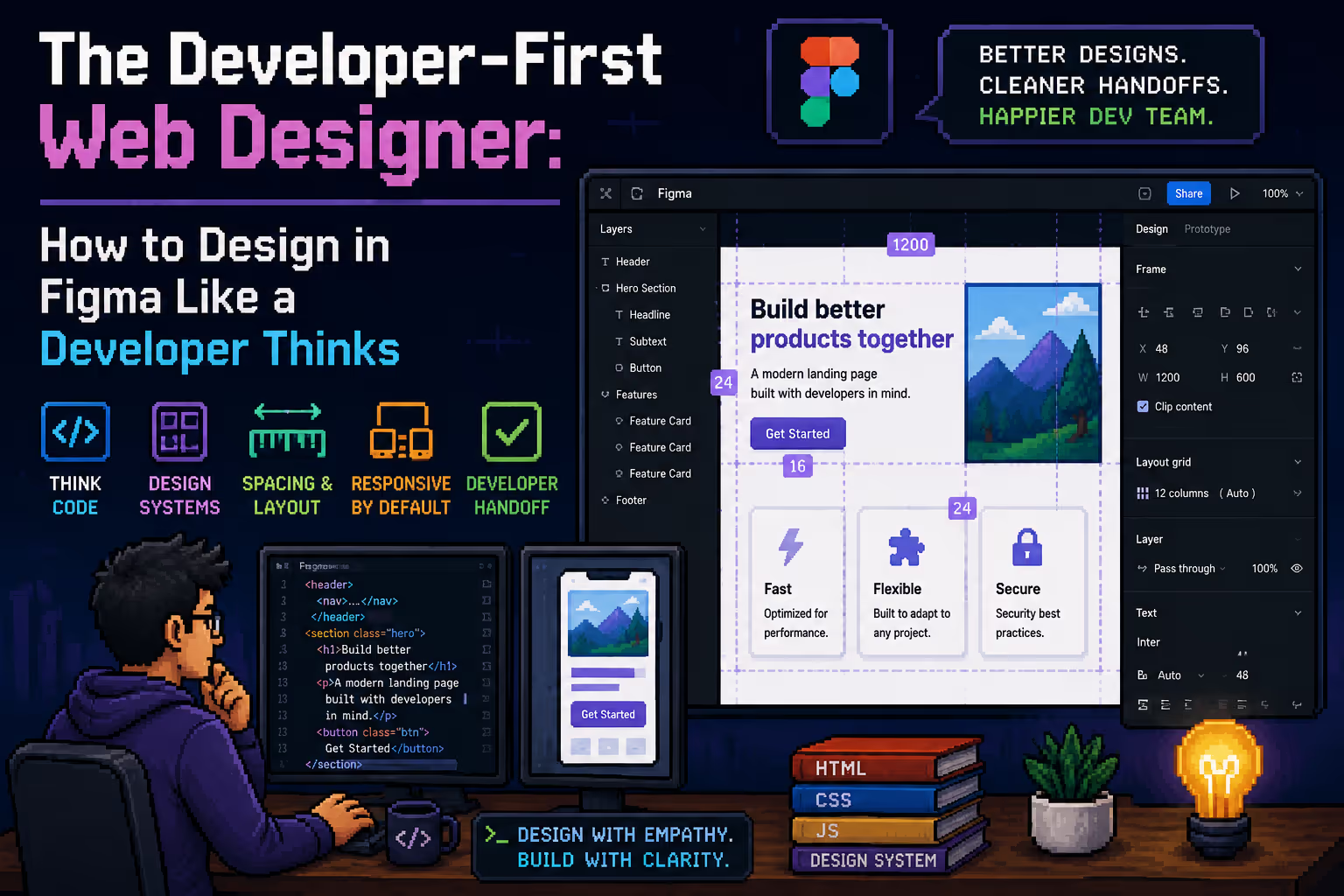
For developers, a design file is more than a visual reference. It is a specification that communicates structure, spacing, hierarchy, and component logic. When a design file is inconsistent, incomplete, or built without awareness of how it will be implemented, the developer has to make interpretive decisions that were never part of the brief.
These decisions add time, introduce variation, and often result in a site that drifts from the original design intent. The more of these decisions a developer has to make, the more the process slows down. This is exactly why designers benefit from understanding Webflow frameworks before starting a project.
The hidden cost of design inconsistency
In many projects, the visual design looks coherent at a glance but falls apart under scrutiny. Spacing values change between screens without clear logic. Components are named differently in different parts of the file. Responsive behavior is implied but never specified. Typography scales exist in isolation rather than as a connected system.
These inconsistencies don't just slow down development. They create maintenance problems that compound over time. Every time a new page is added or an existing section is updated, the developer has to resolve the same ambiguities again.
When design decisions conflict with technical reality
Some design decisions look achievable in a static file but create significant technical challenges in practice. An animation that seems simple in Figma may require custom JavaScript and careful performance management in a real browser. A layout that works perfectly on the design artboard may behave unexpectedly on certain screen sizes or devices.
When these conflicts surface late in development, the team faces a choice between reworking the design or implementing a technical compromise. Either path adds cost and time that could have been avoided with earlier alignment.
The relationship between design quality and long term growth
A well-structured design system enables a development team to move faster over time, not slower. When components are defined clearly, when spacing follows a logical system, and when the design has been built with implementation in mind, new pages and features can be added with predictability and efficiency. This directly connects to why most Webflow websites struggle to scale after the initial build.
The opposite is also true. A design that was built for aesthetics alone, without structural thinking, creates a ceiling. At some point, the team can no longer add to the site without breaking something or creating new inconsistencies.
What good design looks like from a development perspective
From a development perspective, good design is design that communicates intent clearly and consistently. It uses a defined spacing system. It names components in a way that reflects their function. It specifies responsive behavior rather than leaving it to interpretation. It treats the design file as a living document that the development team can actually work from.
This doesn't require designers to become developers. It requires them to think about how the design will be used, not just how it looks.
Bridging the gap between design and development
The most effective way to reduce the friction between design and development is early alignment. When designers and developers discuss structure and implementation at the start of a project, rather than at the handoff stage, the process becomes significantly more predictable. The right Webflow framework is one of the clearest ways to create that shared language from day one.
Design is not just what users see. It is the foundation that everything else is built on. When that foundation is strong, the project moves forward with clarity. When it isn't, the consequences show up everywhere.

Milan Kostic
Freelance Webflow Developer