What is Schema Markup? The Secret Language of High-Ranking Websites

Imagine walking into a massive library where none of the books have titles on their spines—just plain covers. To find out what a book is about, you have to pull it off the shelf and read several pages. This is exactly how search engines like Google view most websites.
Now, imagine you start putting labels on every single book that say: "This is a cookbook, the recipe is for lasagna, it takes 45 minutes to prep, and it has a 4.8-star rating from readers."
That is Schema markup. It's the "secret language" that communicates directly with search engines, telling them not just what your website says, but what that information actually means.
1. What exactly is Schema Markup?
Technically speaking, Schema markup (structured data) is code you add to your site's HTML to help search engines understand the context of your content.
Google is incredibly smart, but it's still software. It can read the word "Apple," but without structured data, it might take a moment to figure out if you're talking about the fruit, the tech giant, or a local juice bar. Schema removes that guesswork.
Moving from "Strings" to "Things"
Google has shifted from searching for "strings" (sequences of letters) to "things" (entities). Schema helps Google map those entities and connect them into a meaningful whole.
2. Why Schema is non-negotiable for SEO in 2026
If you think SEO is still just about stuffing keywords into a page, you're stuck in 2010. Modern SEO is all about Rich Snippets—those enhanced search results that stand out from the crowd. For a broader look at how to win in search this year, check out our ultimate guide to Webflow SEO in 2026.
Dominating the Search Real Estate
A standard search result has a title, a URL, and a description. A result using Schema (like FAQ Schema) takes up twice as much space. It adds drop-down questions, star ratings, or product prices directly under your link.
- The more space you take up, the less room there is for your competitors.
- More screen real estate = More clicks.
Drastic CTR (Click-Through Rate) Boost
Data shows that results with rich snippets can see a 30% increase in clicks compared to plain links. Users naturally gravitate toward results that provide immediate value, like a price point or an answer to their specific question.
Trust and Authority
When a user sees yellow stars (Review Schema) or helpful answers directly on Google, they perceive you as an authority before they've even set foot on your site. This ties directly into what we cover when discussing SEO, AEO, and GEO priorities for 2026.
3. Essential Schema types for B2B and SaaS
Not all Schema is created equal. For business websites, these types are the "Holy Grail":
FAQ SchemaWhat it does: Displays questions and answers directly in the search results.Business Value: Dominates SERP space and addresses customer objections immediately.
Product SchemaWhat it does: Shows price, availability, and key specifications.Business Value: Critical for SaaS pricing pages and software comparisons.
Review SchemaWhat it does: Adds those recognizable yellow stars and user ratings.Business Value: Massively increases trust and click-through rates.
Organization SchemaWhat it does: Tells Google exactly who you are, where you're located, and your social profiles.Business Value: Enhances your "Knowledge Panel"—that info card on the right side of Google.
4. Webflow and Schema: A high-performance match
As a Webflow developer, I'm often asked: "Do I need an SEO plugin like WordPress users do?" The answer is no, and that is one of Webflow's biggest SEO advantages.
Clean Code (JSON-LD)
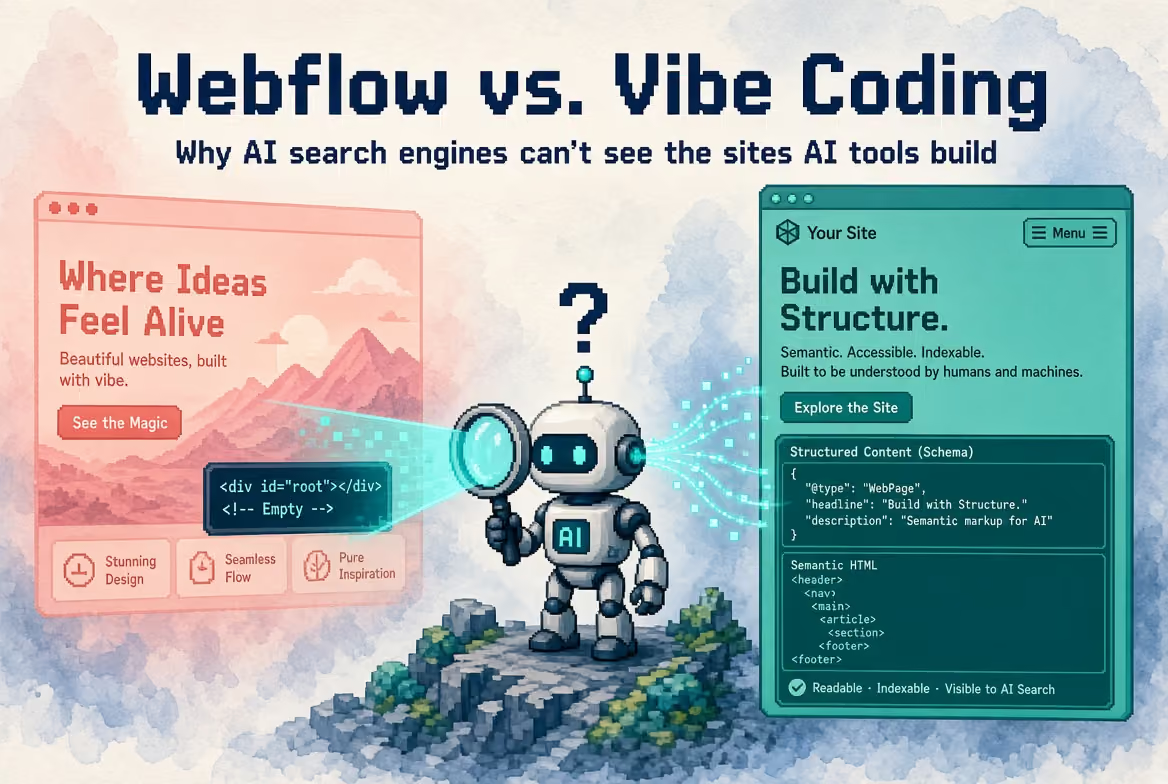
Google prefers a format called JSON-LD. Webflow allows us to inject this code directly into the page header without bulky plugins that bloat your site and slow it down. The result? A lightning-fast site that search engines love.
Automation through the CMS
This is where Webflow truly shines. Instead of manually writing code for every blog post or FAQ, I build it into the Webflow CMS.You enter a question and an answer into the CMS, and the system automatically generates the necessary Schema code behind the scenes. You handle the marketing; the site handles the technical SEO.
5. The Future: AI Overview and Voice Search
In the era of ChatGPT and Google's Search Generative Experience (SGE), Schema is becoming even more critical. AI models don't crawl the web like humans; they pull data from structured sources. If your site doesn't have Schema, an AI might overlook your content when generating a "quick answer" for a user.
Similarly, for voice search (Siri, Alexa), structured data is the backbone. It provides the short, precise answers that these devices can read aloud. Achieving a perfect technical baseline is also what we focus on when helping clients get a 100/100 Lighthouse score on Webflow.
The Bottom Line: Invest in Structure, Not Just Aesthetics
A great website in 2026 needs to be beautiful for humans but readable for robots. Schema markup is a small investment in your code that pays huge dividends in rankings, clicks, and brand authority.
If your site looks amazing but isn't "showing up" on Google the way you want it to, it's very likely missing this secret language.

Milan Kostic
Freelance Webflow Developer