The Ultimate Webflow Migration Checklist for B2B & SaaS: A Stress-Free Guide to Scaling Without Losing SEO Juice

For B2B and SaaS companies, your website is the engine of your business. It's not just a digital brochure; it's a 24/7 lead generation machine, an educational hub, and your primary sales tool. This is why the thought of a migration often triggers a fair amount of anxiety: "Will our organic traffic tank?" "Will our HubSpot integration break?" "How do we move 500+ blog posts without a manual nightmare?"
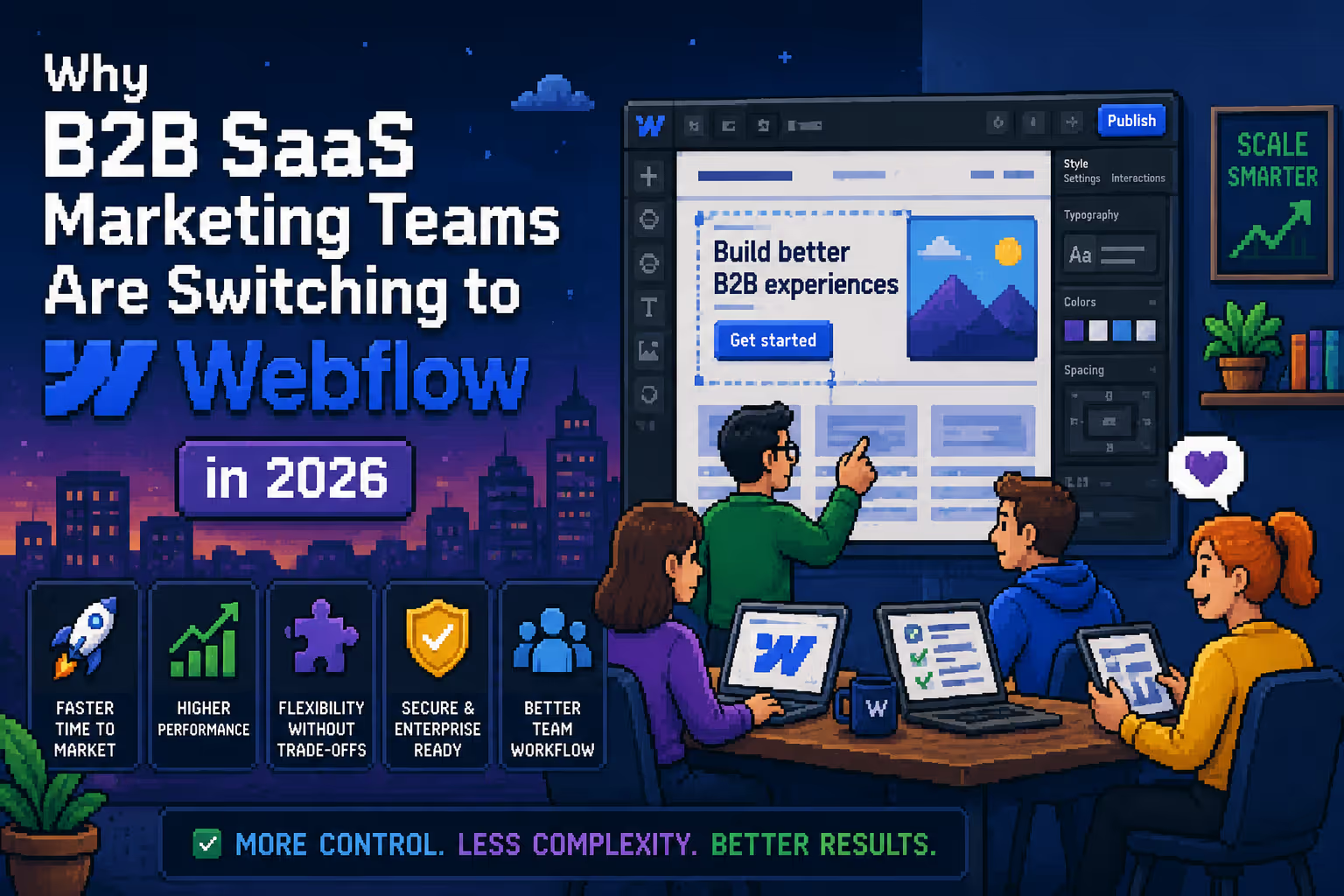
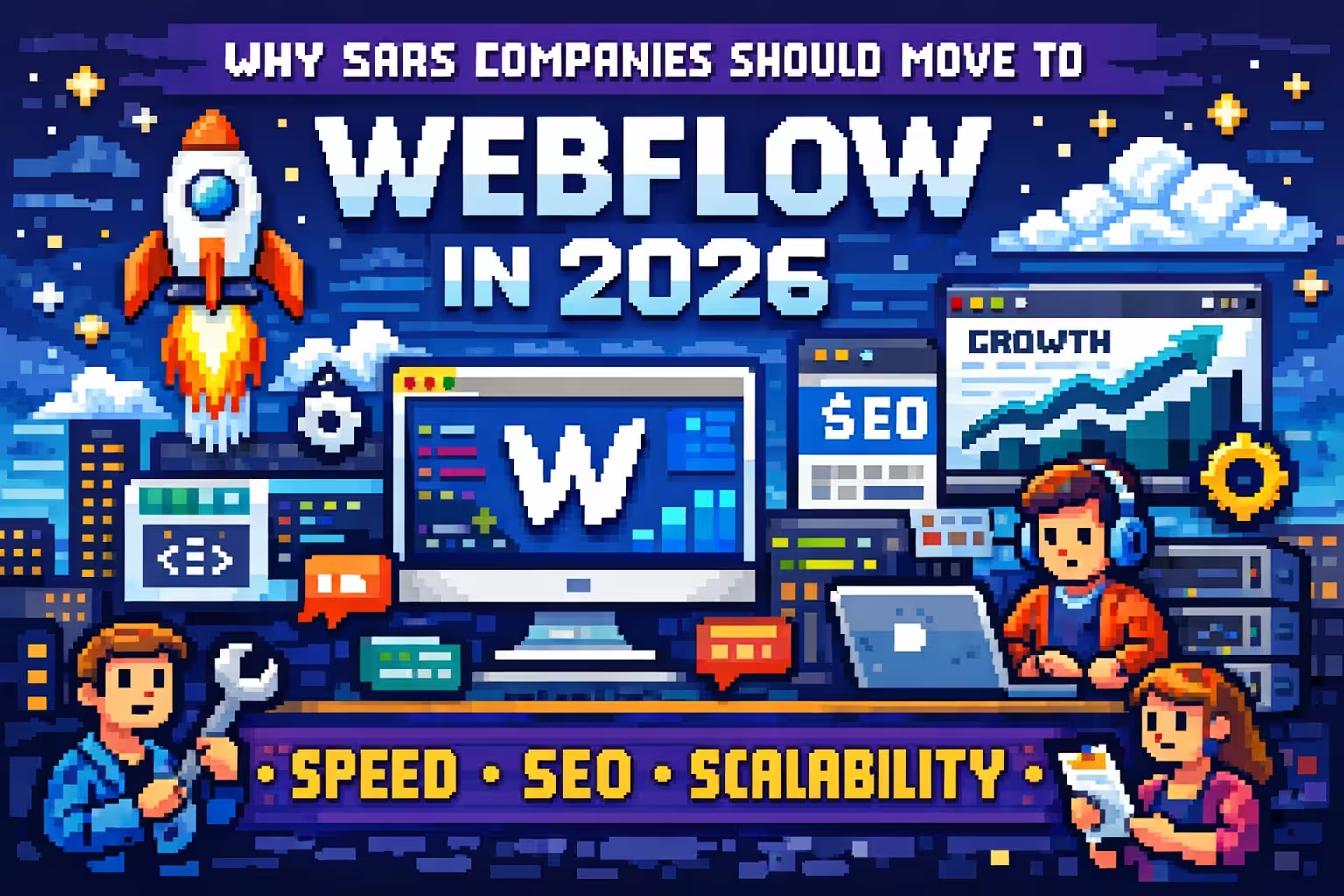
The truth is, while migrations can be complex, they don't have to be stressful. When executed correctly, moving to Webflow is a strategic opportunity to shed technical debt and empower your marketing team. For a deeper look at why this platform makes sense for SaaS, see why SaaS companies should move to Webflow in 2026.
Here is the exact checklist I use to ensure a seamless transition that protects your SEO and sets the stage for rapid growth.
Phase 1: The Deep Audit (Before You Touch the Designer)
Before a single pixel is moved, you need a crystal-clear map of where you're starting.
Full URL Inventory
First, we crawl your current site (using tools like Screaming Frog) to list every single live URL. This is our roadmap. Missing even one high-authority page can result in lost rankings that take months to recover.
SEO Baseline
Document your current keyword rankings, organic traffic levels, and domain authority. We do this to provide measurable proof of success post-launch. You can't manage what you don't measure.
Content Inventory
Migrations are the perfect time for a "spring cleaning." Decide which content still drives value, what needs an update, and what can be sunsetted. For SaaS companies, this often means pruning outdated product documentation or irrelevant old news.
Phase 2: Technical Architecture & Scalability
B2B sites need to be fast, accessible, and easy to maintain. The "bones" of the site matter more than the paint.
My Recommendation: The MAST Framework
When building out the site structure, I personally recommend and utilize the MAST framework. While there are many ways to build in Webflow, I prefer MAST because it's incredibly lightweight and focused on efficiency. For SaaS clients, this means a clean, bloat-free codebase that is extremely scalable. When your marketing team needs ten new landing pages for a campaign tomorrow, a system like this allows them to be built in hours, not days.
Global Styles & Components
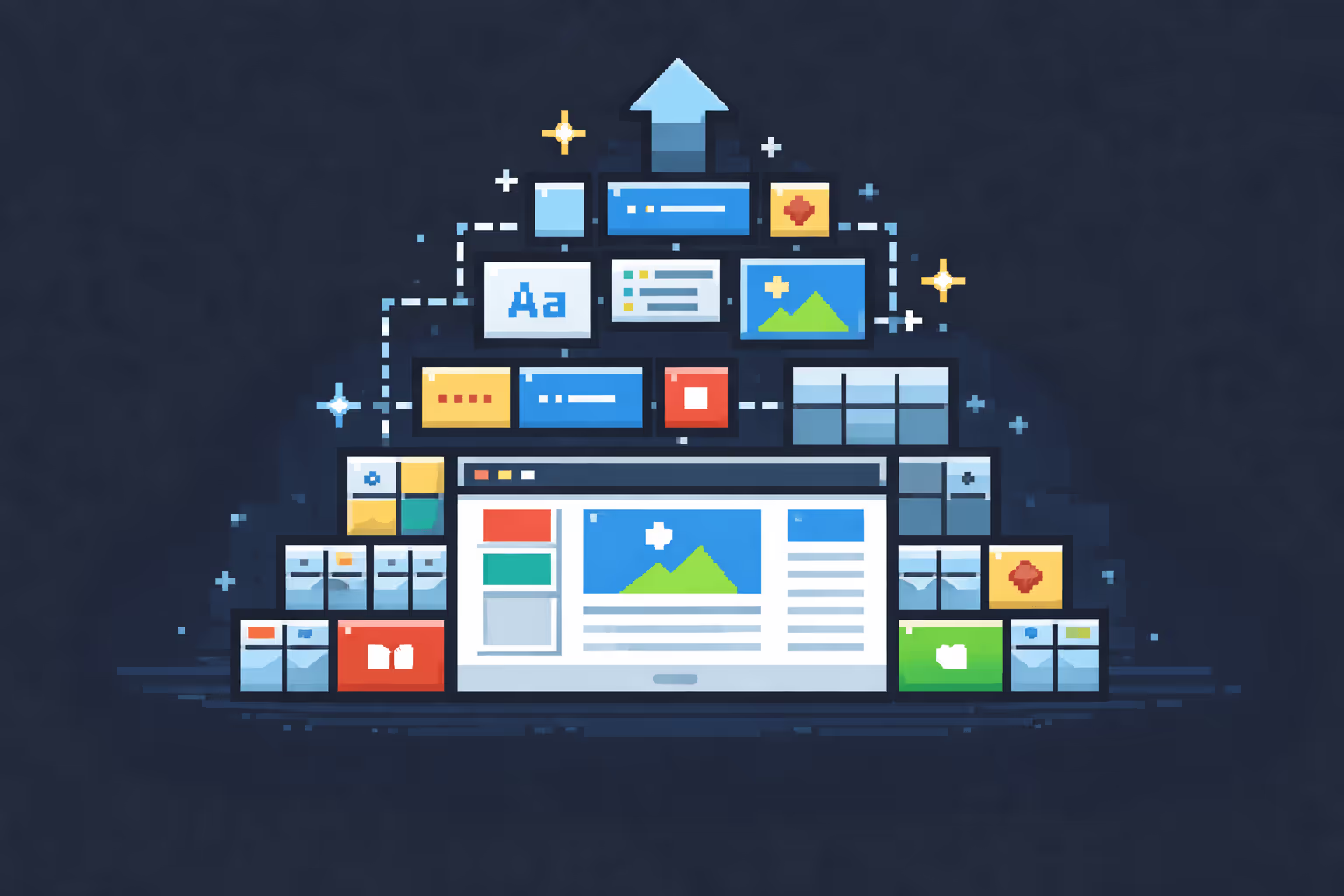
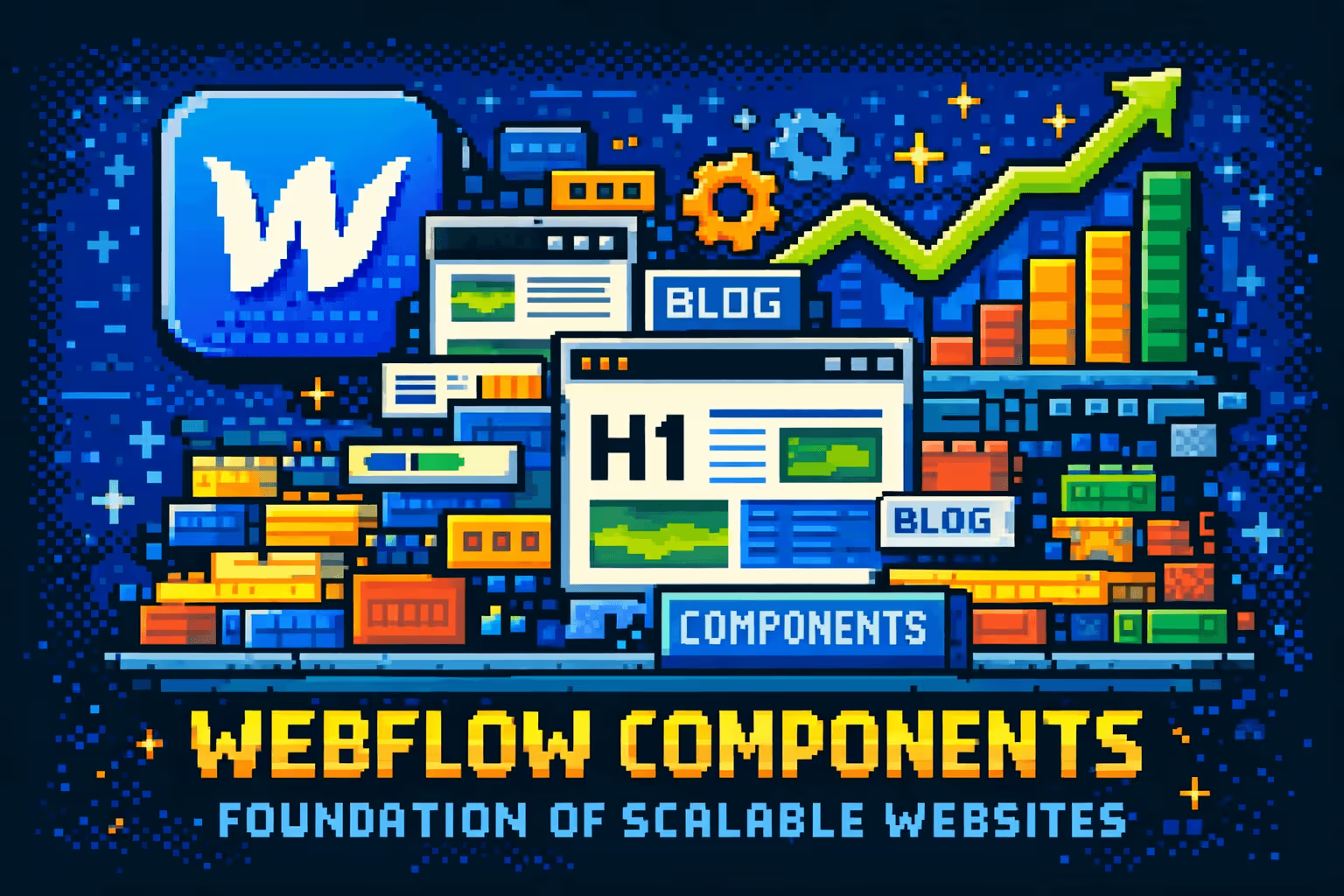
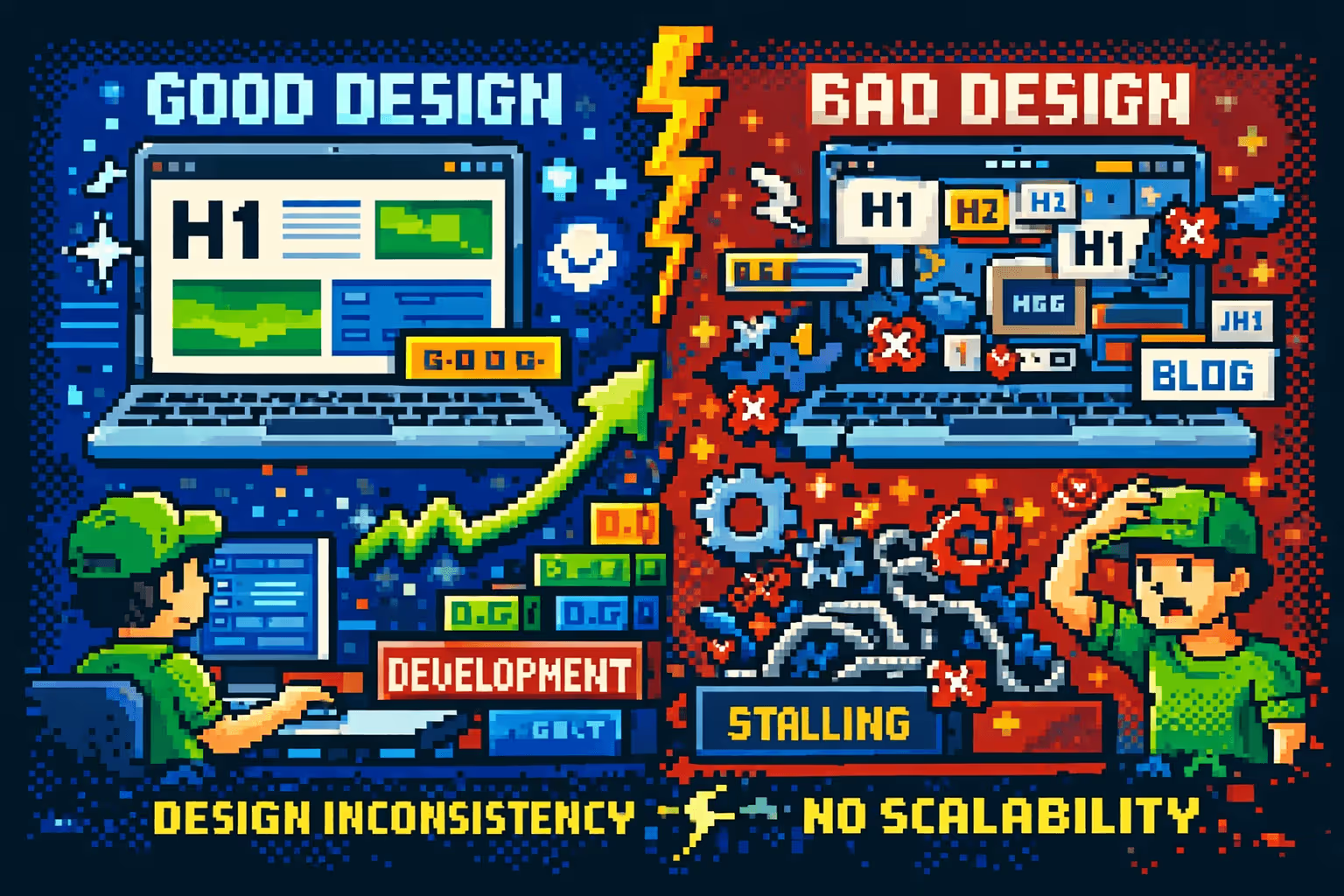
SaaS brands require consistency. By defining global styles (typography, buttons, form inputs) early on, we ensure that every new page looks and feels like part of the brand, regardless of who is building it in the future.
Phase 3: The Data Migration (Moving 500+ Posts Without a Hitch)
This is where most migrations go off the rails—especially for sites with massive content libraries.
Surgical CSV Mapping
If you're moving a site with 500+ blog posts, case studies, or integration pages, manual entry is out of the question. The secret to success lies in a perfectly prepared CSV file.
- Field Mapping: Every field from your old system (WordPress, Contentful, etc.) must be accurately mapped to a corresponding field in the Webflow CMS (Titles, Authors, Images, Categories).
- Preserving Slugs: This is critical. We keep the original "slugs" (e.g.,
/blog/how-to-scale-saas) in the CSV. By maintaining the same URL structure, Google won't even realize you've changed platforms, keeping your SEO authority intact. - Mass Data Cleaning: While the data is in a spreadsheet, we bulk-clean duplicate tags, fix missing alt text for images, and standardize formatting so everything looks perfect the moment it hits Webflow.
Phase 4: Integrations & Automation (Where Your SaaS Lives)
Webflow shouldn't be an island; it needs to "talk" to the rest of your tech stack.
Lead Gen Forms
We verify that every form on the site routes data exactly where it needs to go—whether that's HubSpot, Salesforce, Pipedrive, or a Slack notification via Zapier. Your marketing team shouldn't miss a single lead during the transition.
Tracking & Analytics
Connecting GA4 and Google Tag Manager (GTM) is the baseline. For B2B, however, the real work is in testing "events." Does a click on the "Request Demo" button track correctly? Is the LinkedIn Insight Tag firing on conversions? Everything must be verified before we go live.
Phase 5: 301 Redirects & SEO Safety
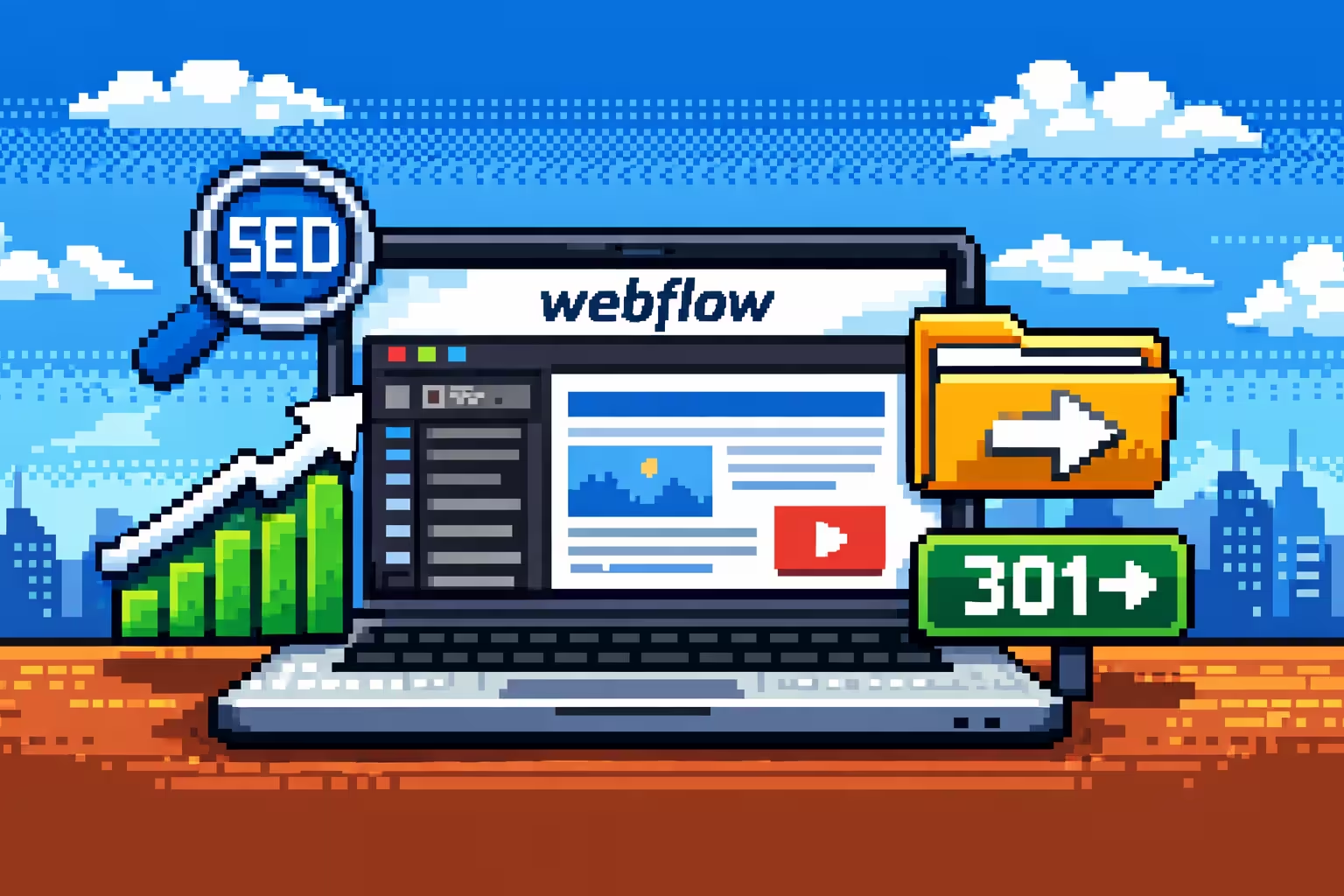
If any part of your URL structure is changing, 301 redirects are your best friend. They tell Google: "This content has moved permanently to this new location."
- Bulk Uploads: Webflow allows for bulk redirect uploads, which we use to cover every old link that no longer exists or has moved.
- Metadata Integrity: Every page must retain its optimized Title and Meta Description tags. We automate this for CMS pages to ensure no SEO data is left behind.
Phase 6: The Final Test & Launch
Before we hit "Publish" on the production domain, we run a rigorous gauntlet of tests:
- Staging Review: A full-site sweep of all interactions, links, and functionality on the staging domain.
- Disabling Staging Indexing: In the Webflow SEO settings, we always disable the "Index subdomain" option. This prevents Google from indexing your test site (e.g.,
your-site.webflow.io), which would create duplicate content issues and confuse your rankings. - Speed Optimization: We optimize all assets (WebP images) and run performance tests. For SaaS clients, we aim for 90+ on Lighthouse scores because speed directly affects conversion rates.
- Search Console & Sitemap: Immediately after launch, we submit the new sitemap to Google Search Console to trigger the indexing of your new, optimized structure.
The Bottom Line
A Webflow migration for B2B and SaaS isn't just about a "new look"—it's a strategic move to remove technical friction. When done professionally, the result is a faster, more secure site that turns more visitors into customers.
Planning to migrate your SaaS site to Webflow?
I'm here to ensure the process is seamless, secure, and built to the highest industry standards.

Milan Kostic
Freelance Webflow Developer