SEO, AEO, and GEO: what should you focus on in 2026?
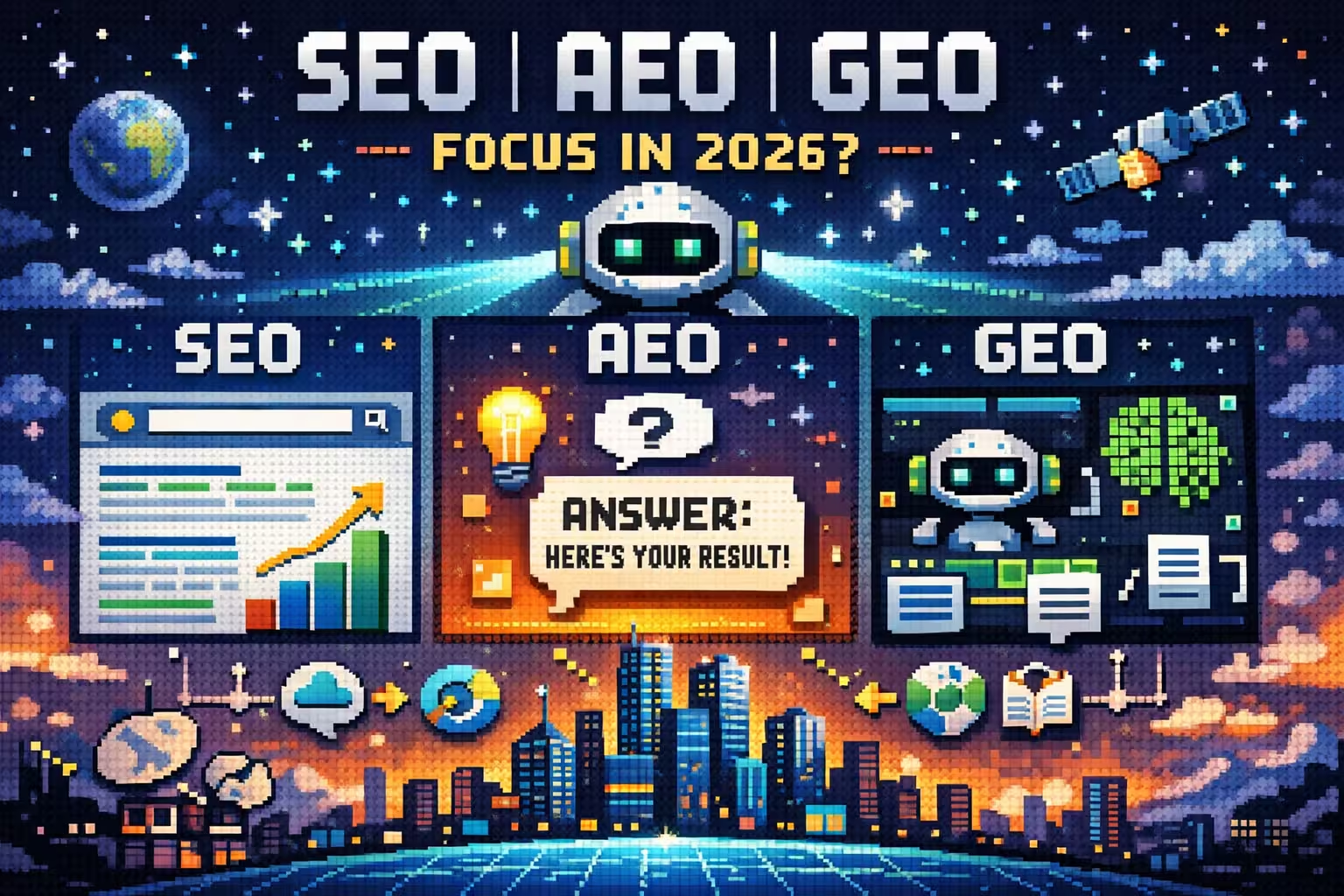
The way people access information online is going through a major shift. Traditional search based on a list of links is no longer the only way users discover content. Today, people expect fast and precise answers, often without the need to open a website at all. At the same time, AI tools are increasingly acting as intermediaries between users and information.
As a result, alongside traditional SEO, new terms like AEO and GEO are gaining importance. While they may sound technical at first, they actually describe three different ways content is discovered, interpreted, and used in modern search. Understanding the difference between SEO, AEO, and GEO is becoming essential for anyone aiming for long-term visibility in 2026 and beyond.
What is SEO, and why it is still essential
SEO, or Search Engine Optimization, refers to optimizing a website to rank higher on search engines such as Google. Its primary goal is to drive relevant organic traffic through high-quality content, technical accuracy, and a clear site structure.
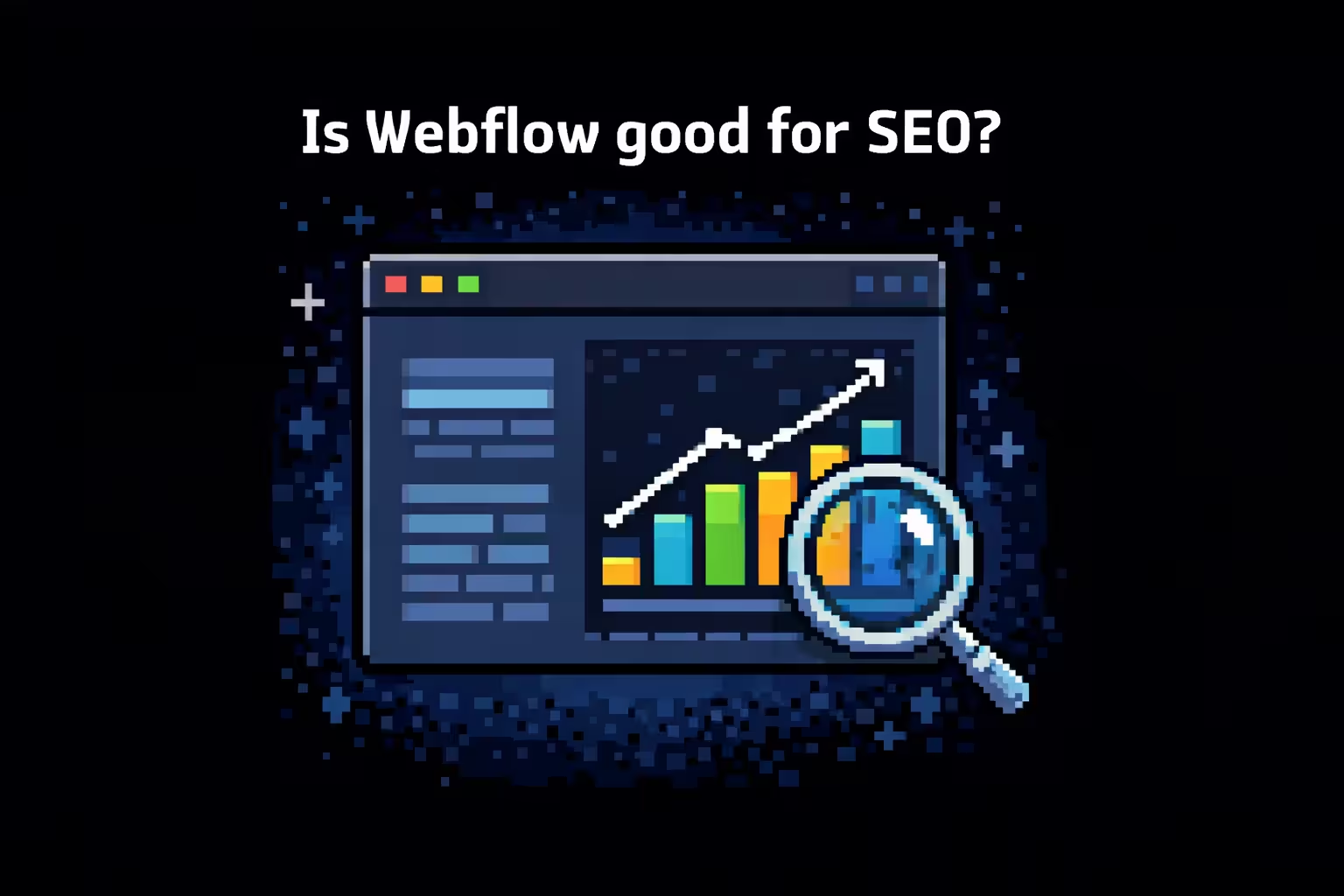
Modern SEO goes far beyond keyword placement. Site architecture, internal linking, page speed, layout stability, and clarity of information all play a crucial role. A well-optimized SEO website is easy to understand not only for users but also for search algorithms. For a complete technical breakdown of what proper SEO looks like in Webflow, see the ultimate Webflow SEO guide for 2026.
In 2026, SEO will no longer be a competitive advantage, it will be a baseline requirement. Without a solid SEO foundation, content cannot be properly indexed, which limits its reach across all other forms of search, including AI-driven answers and direct response systems.
What is AEO, and how it differs from traditional SEO
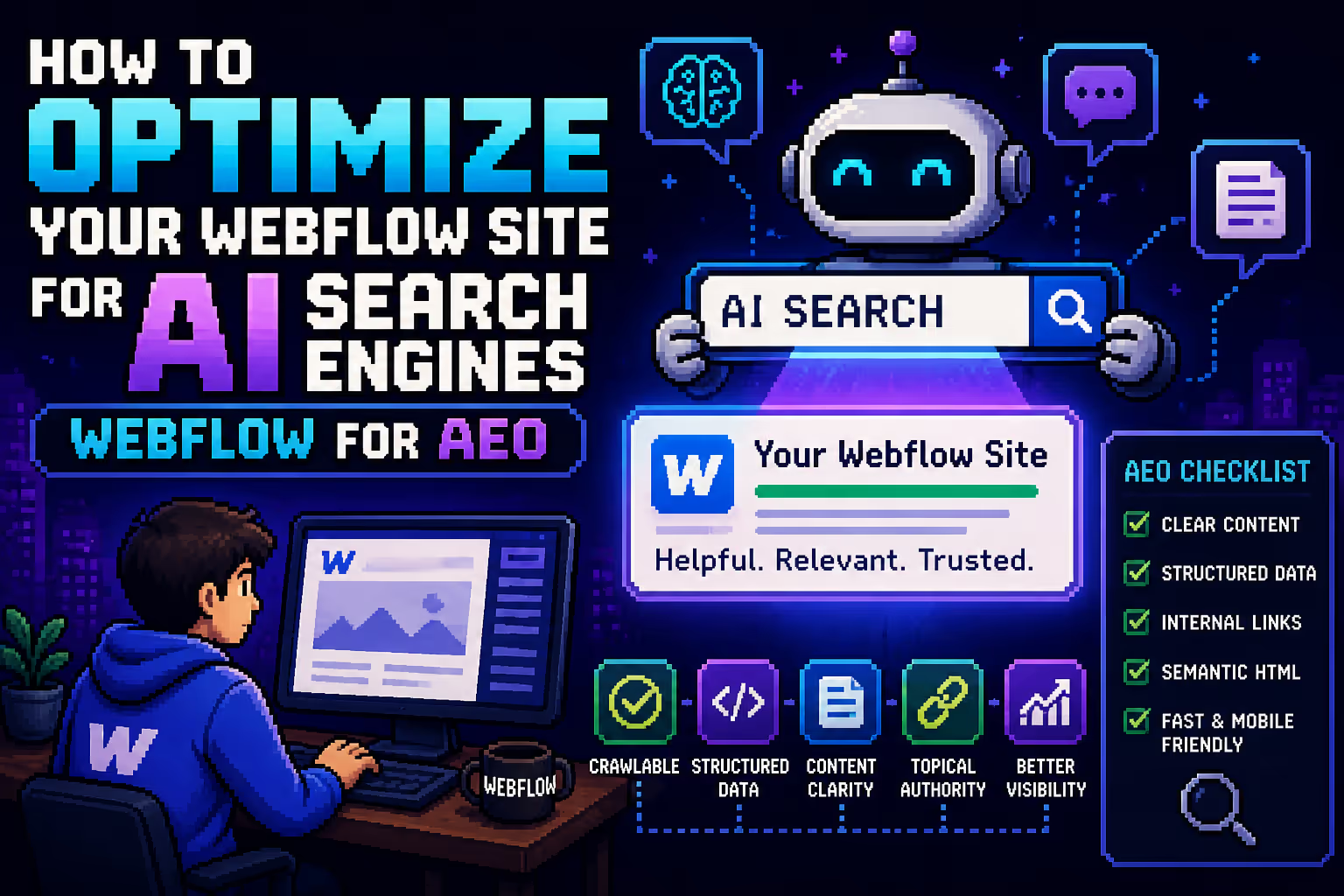
AEO, or Answer Engine Optimization, focuses on optimizing content for direct answers rather than rankings. Instead of competing for positions in search results, AEO aims to have your content selected as the most accurate and concise answer to a specific user question.
Users increasingly search using full questions rather than short keyword phrases. In response, search engines and AI systems attempt to provide immediate answers without requiring additional clicks. AEO requires content to be structured in a way that clearly addresses these questions.
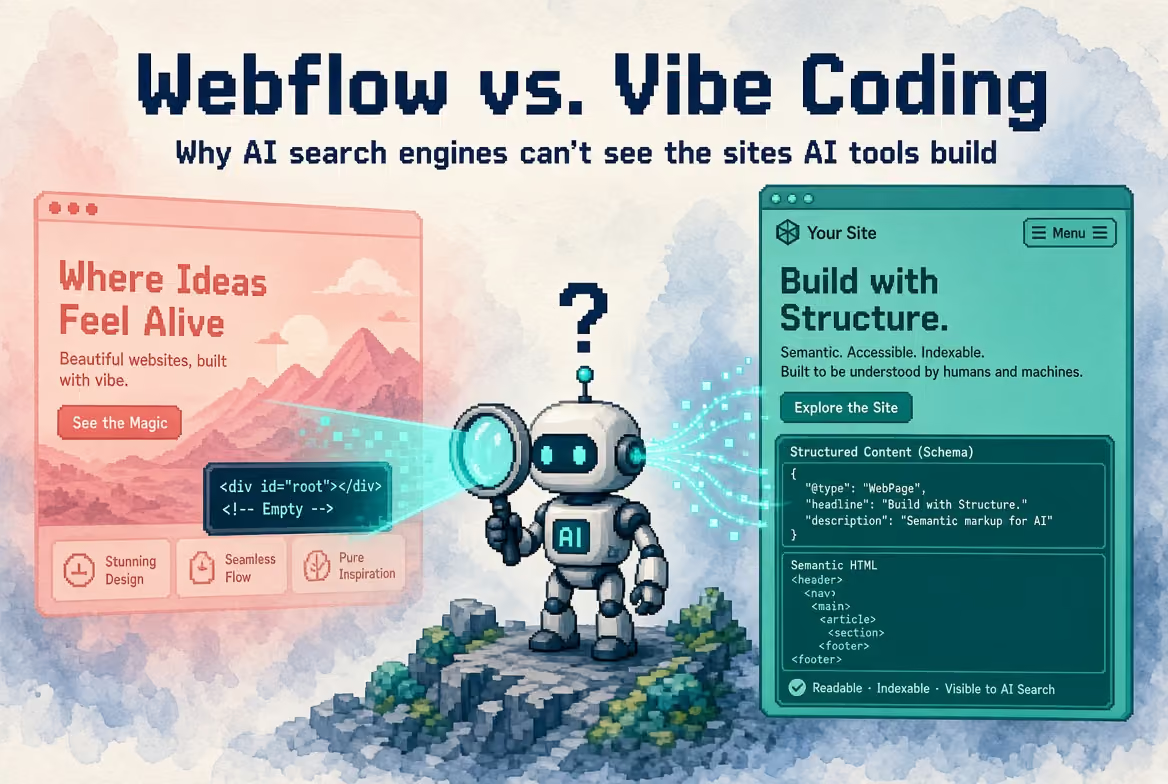
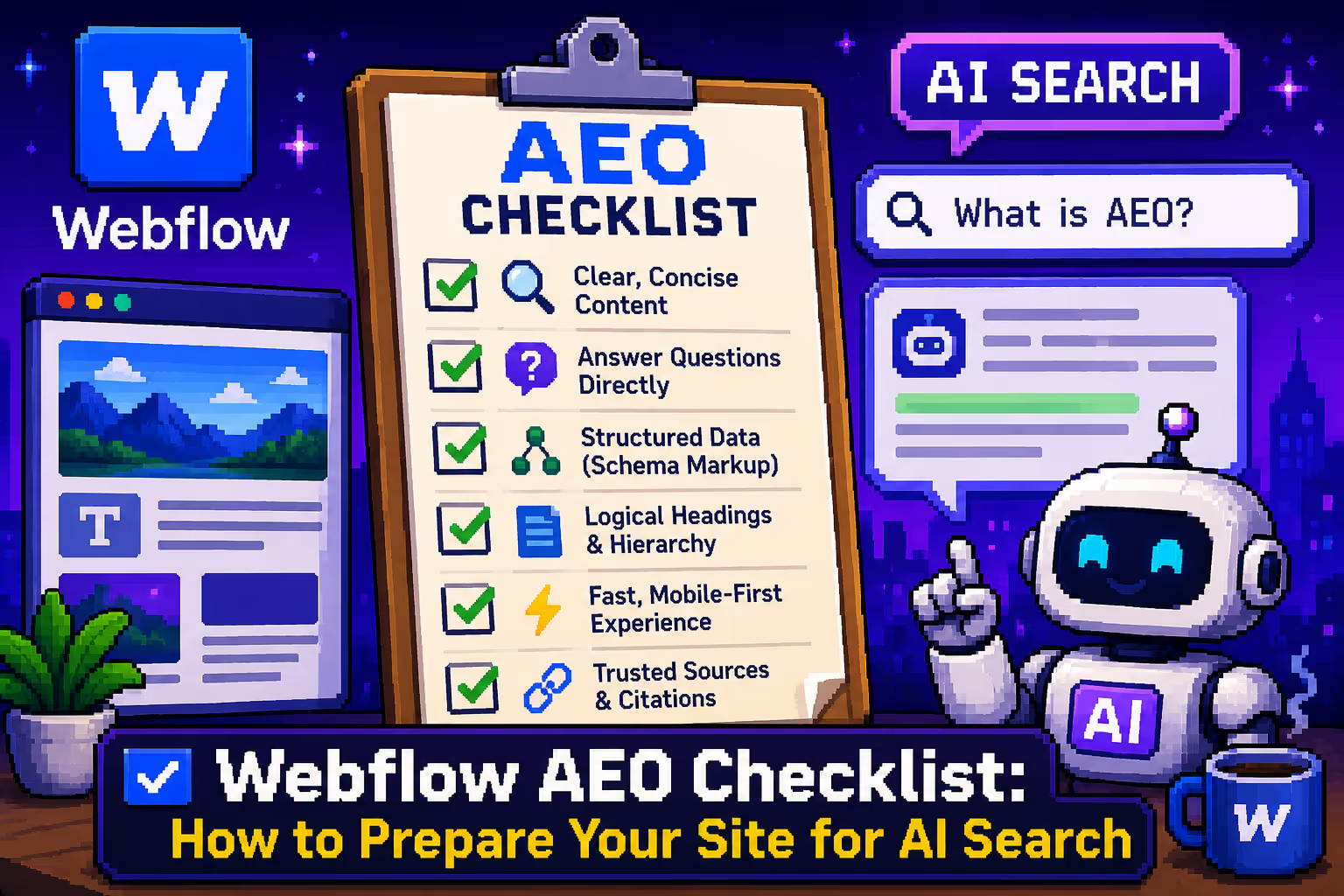
This means content should include clear definitions, precise introductory answers, and logical explanations. Long-form content still has value, but the most important information must be immediately accessible and easy to understand. One powerful way to help search engines understand your answers structurally is through schema markup.
AEO does not replace SEO, it builds on top of it. While SEO ensures visibility, AEO determines whether your content is used as the answer itself.
What is GEO, and how AI is changing search
GEO, or Generative Engine Optimization, refers to optimizing content for generative AI systems that do not simply display links, but actively generate responses. In this model, AI synthesizes information from multiple sources to produce a single, cohesive answer.
Tools like ChatGPT do not think in terms of rankings. Instead, they prioritize reliability, context, and depth of understanding. Shallow or overly generic content has a much lower chance of being recognized as a credible source.
GEO favors content that explains topics clearly, connects related concepts, and demonstrates a strong grasp of the broader context. Rather than individual articles targeting a single keyword, thematic content clusters that build authority over time perform significantly better.
How SEO, AEO, and GEO work together
SEO, AEO, and GEO should not be treated as separate strategies, but as interconnected layers of the same system. SEO allows content to be discovered and indexed. AEO determines whether that content is selected as a direct answer. GEO decides whether the content becomes a trusted knowledge source for generative AI responses.
Without SEO, AEO and GEO lack a foundation. Without clear answers, AEO loses its purpose. Without depth and topical authority, GEO cannot function effectively. When all three layers are aligned, content gains long-term value and relevance.
What to focus on in 2026
In 2026, the focus shifts away from tactical tricks and toward quality and consistency. The most valuable content is content that solves real problems, explains complex topics clearly, and demonstrates expertise over time.
Writing should be clear, structured, and user-focused rather than algorithm-driven. Instead of publishing isolated blog posts, it becomes increasingly important to build connected topic clusters that comprehensively cover a specific area. Blogging still works in 2026, but only when posts are part of a larger content strategy rather than standalone pieces.
Brand and author authority also play a growing role. In a world of generative search, trust and consistency are key factors in determining whether content is recognized as a reliable source.
Conclusion
SEO, AEO, and GEO together represent the evolution of search, not its end. While traditional clicks may become less central, high-quality and well-structured content gains new value through direct answers and AI-generated responses.
In 2026, the most successful websites will be those that understand how search is changing while staying focused on clarity, usefulness, and long-term authority. Rather than chasing trends, the advantage will belong to those who build trust and knowledge through content.

Milan Kostic
Freelance Webflow Developer