A closer look at Webflow components

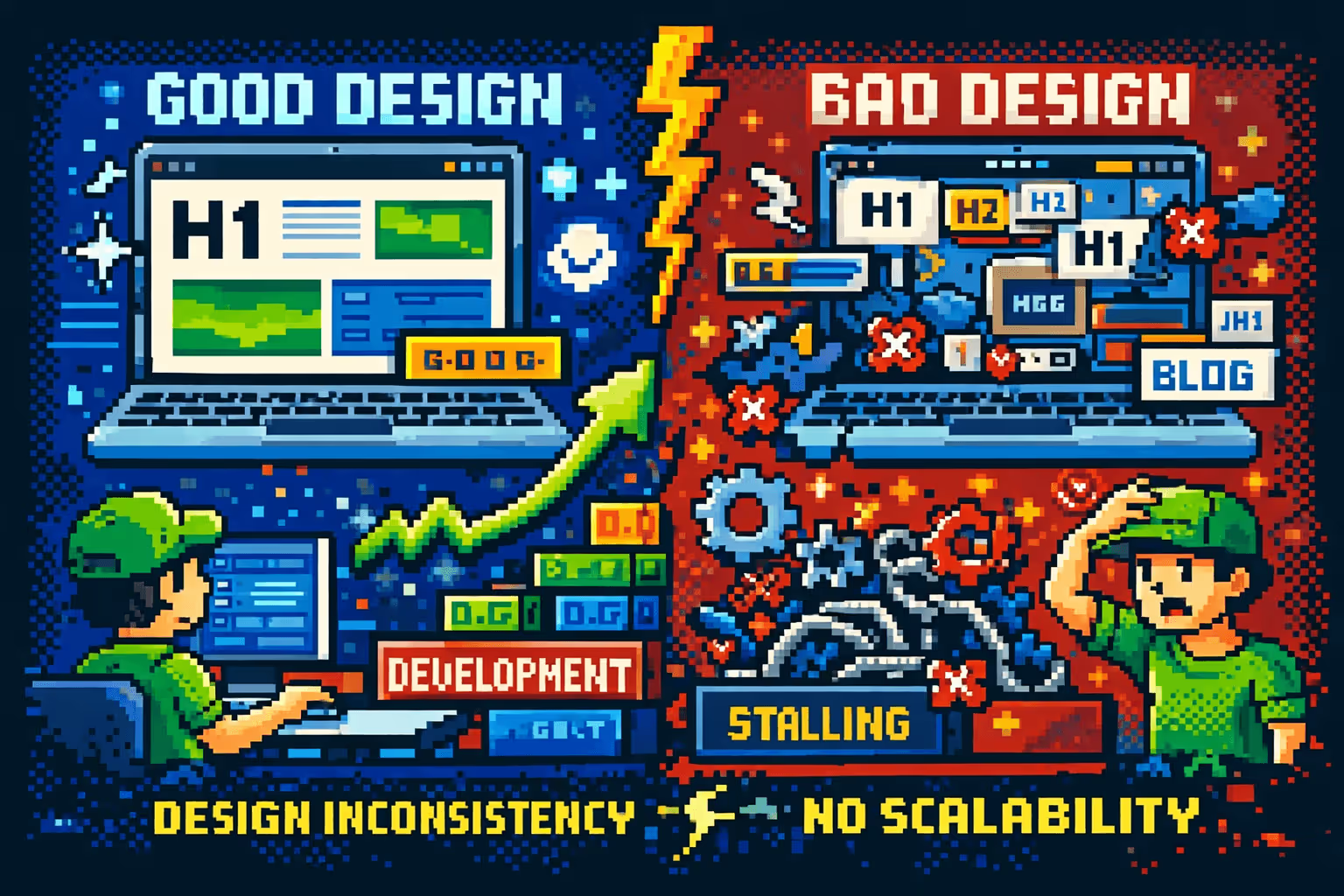
Webflow components are often described as a technical feature or a way to reuse sections across a website. In practice, their role goes far beyond that. Components represent a way of thinking about a website as a system rather than a collection of individual pages. When used correctly, they directly impact development speed, design consistency, marketing team autonomy, and long term scalability.
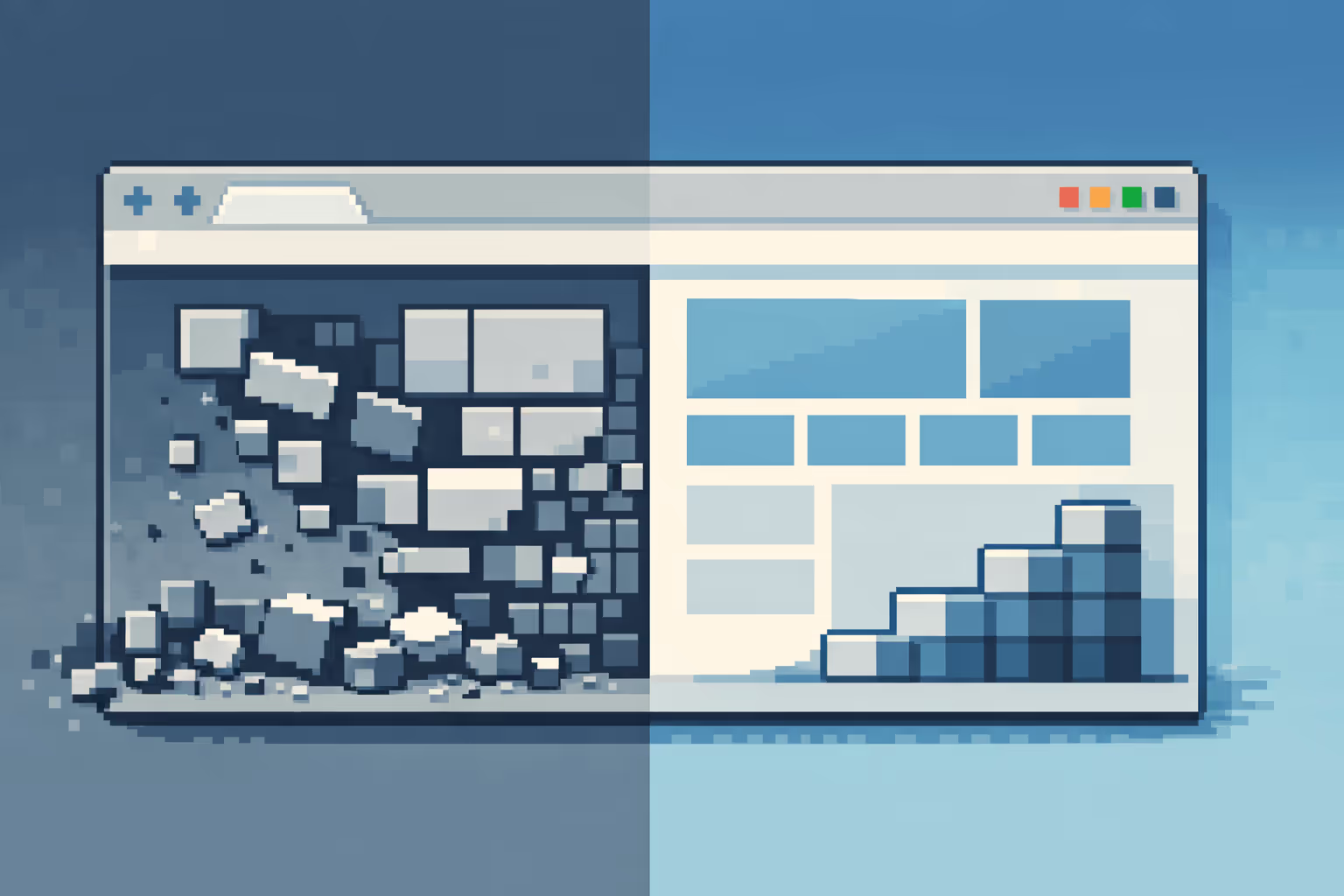
The problem is that many teams use Webflow without a clear component based approach. Websites are built page by page and section by section, without considering what should be reusable, what needs to be standardized, and how the site should behave as it grows. In that context, components are treated as an optional optimization instead of the foundation of the system. This is closely related to why most Webflow websites don't scale well as they grow.
Why Webflow components change how you think about building
Before Webflow introduced native components, the standard approach was to copy and paste sections across pages and manually update each instance when something changed. This worked for small sites but became a serious problem at scale. Changing a navigation item or updating a footer across thirty pages required editing each one individually.
Components solve this by creating a single source of truth. A change to the component automatically propagates to every instance across the site. This is not just a convenience. It fundamentally changes how maintainable a Webflow site can be over time.
What components actually cover
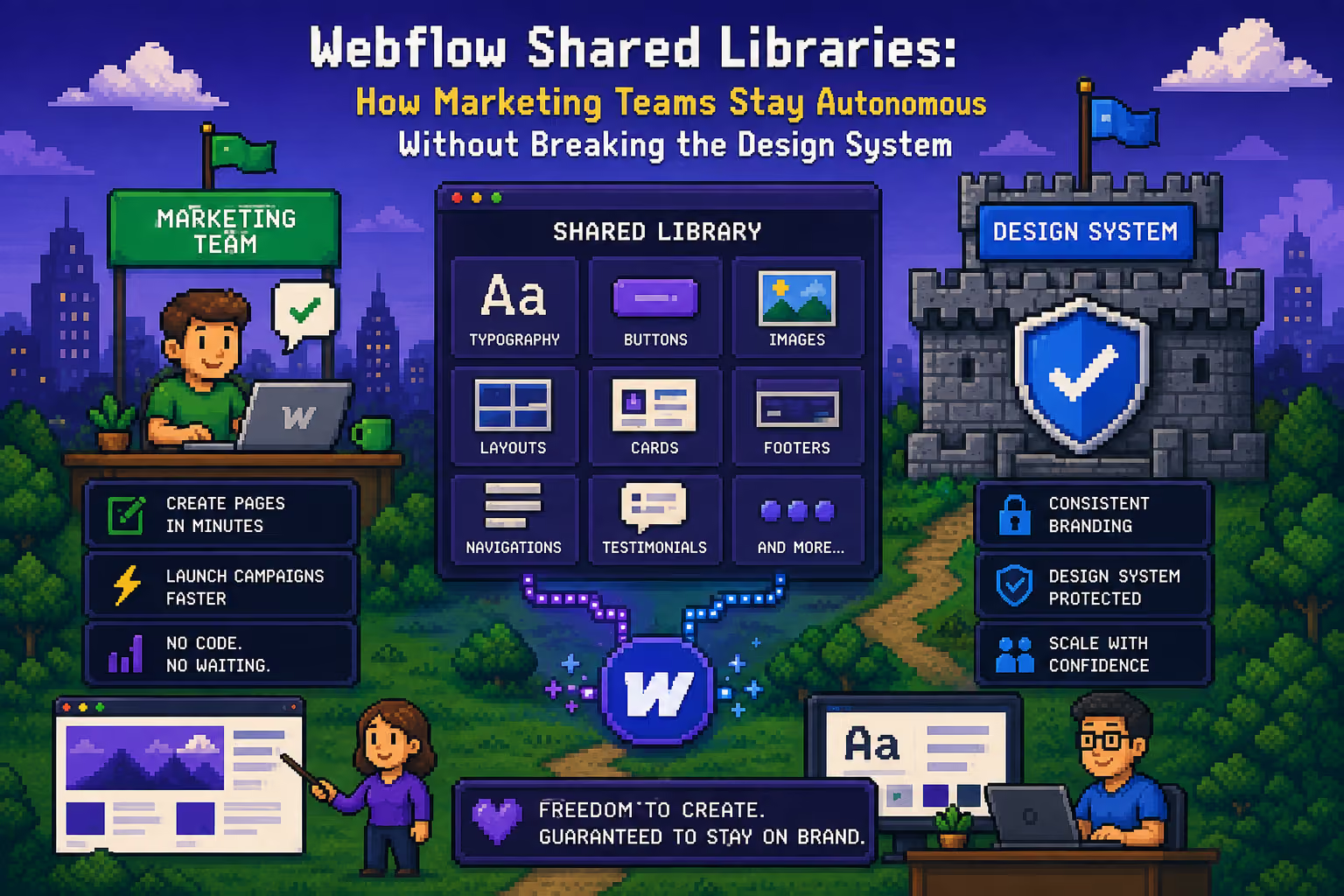
In practice, components in Webflow are most valuable for elements that appear in multiple places and need to remain consistent. Navigation, footers, calls to action, pricing cards, testimonials, and feature rows are the most common examples. Any element that appears more than once and carries its own design logic is a strong candidate for componentization.
Beyond recurring sections, components are also valuable for patterns that need to be built many times with slight variations. A card component that accepts different images and text, or a feature block that adjusts based on content, allows the team to build new pages significantly faster without recreating layouts from scratch.
The connection between components and marketing team autonomy
One of the most practical benefits of a component-based Webflow site is what it enables for non-technical teams. When a site is built with well-structured components, marketing teams can create new landing pages by assembling existing building blocks rather than requesting new designs from scratch.
This is exactly the kind of autonomy that marketing teams often struggle to achieve on Webflow sites that weren't built with this in mind. A component-based system makes the difference between a site that requires developer involvement for every change and one that empowers the whole team.
Where most Webflow teams go wrong
The most common mistake is not using components at all during the initial build, then trying to introduce them later when the site is already complex. Retrofitting a component structure into an existing site is significantly more time-consuming than building with components from the start.
The second most common mistake is creating components that are too rigid. A component that cannot accept variations in content or layout is only marginally better than a copied section. Good component design anticipates variation and builds flexibility in from the beginning.
Components as a long-term investment
A component-based Webflow site requires more upfront thinking than a page-by-page build. The payoff comes over time, in faster page creation, easier design updates, and a site that remains coherent as it grows.
For any Webflow project that expects to evolve after launch, components are not an advanced feature. They are the baseline approach that makes everything else sustainable.

Milan Kostic
Freelance Webflow Developer