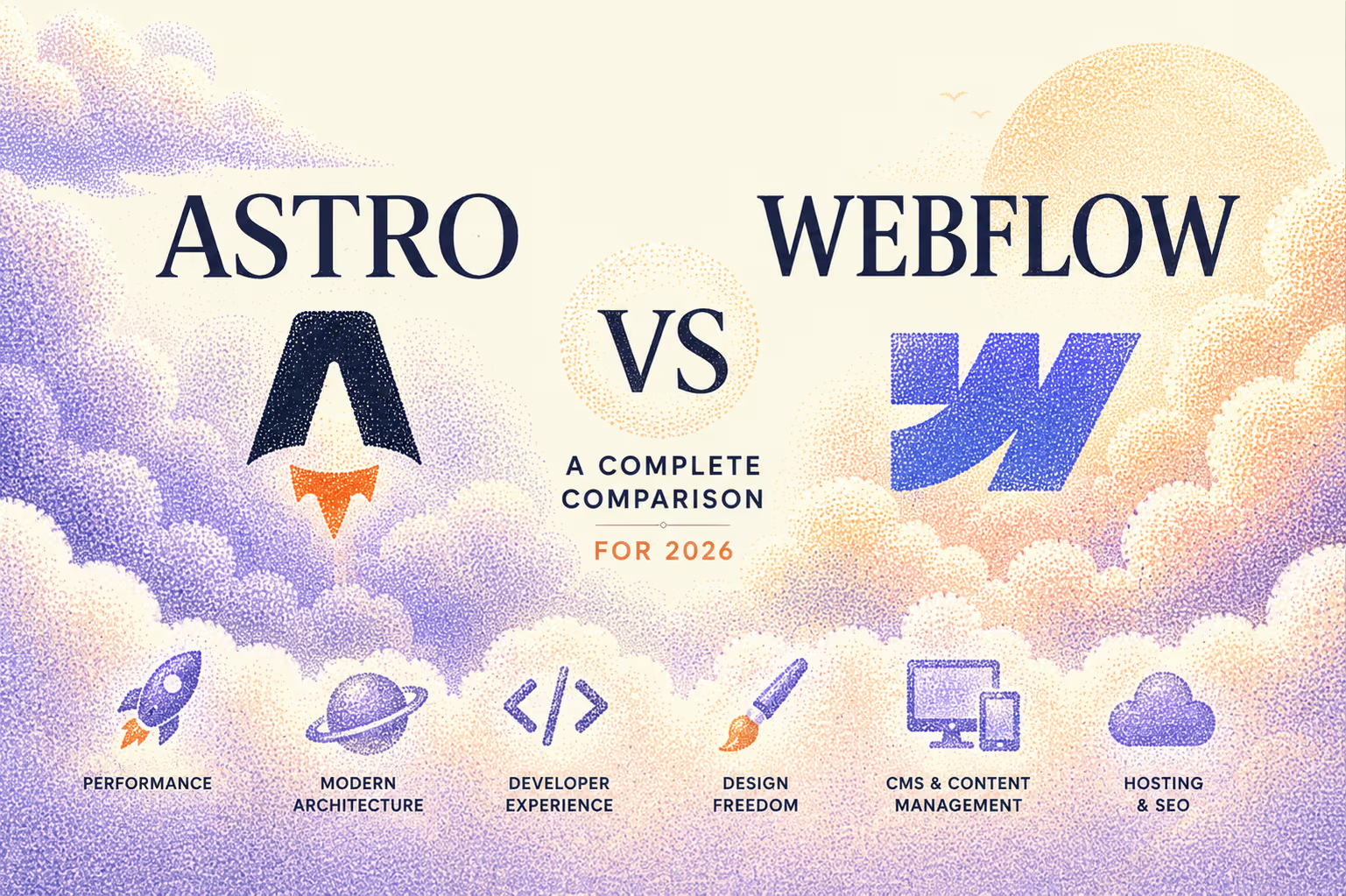
Webflow vs Custom code: How to choose the right approach for your website?
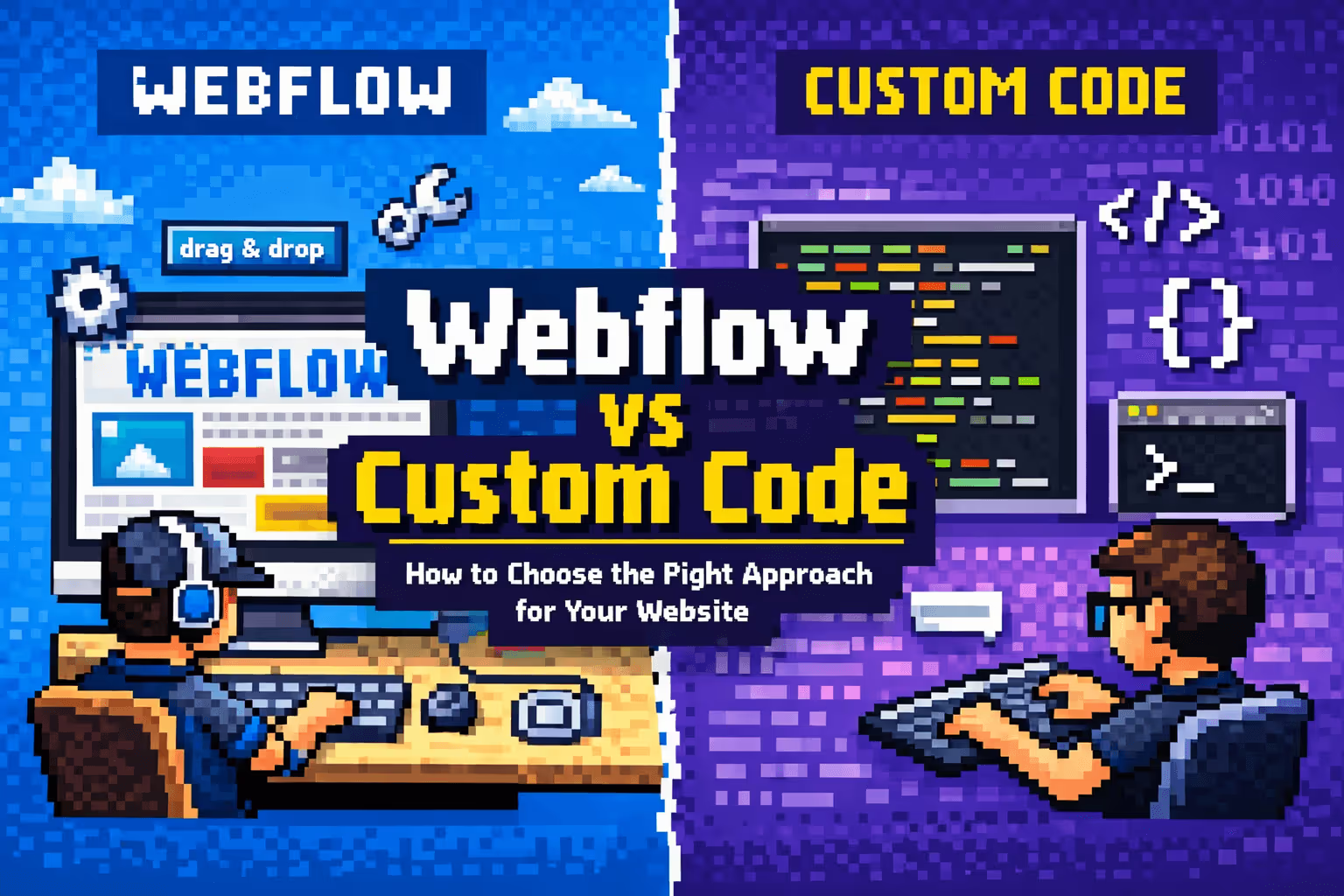
As digital products and SaaS businesses continue to mature, websites are no longer simple marketing assets. In many cases, they function as the first product touchpoint, shaping perception, trust, and conversion long before a sales conversation ever happens. This shift has made the choice of technology increasingly important. One of the most common questions teams face today is whether to build their website using Webflow or invest in a fully custom coded solution.
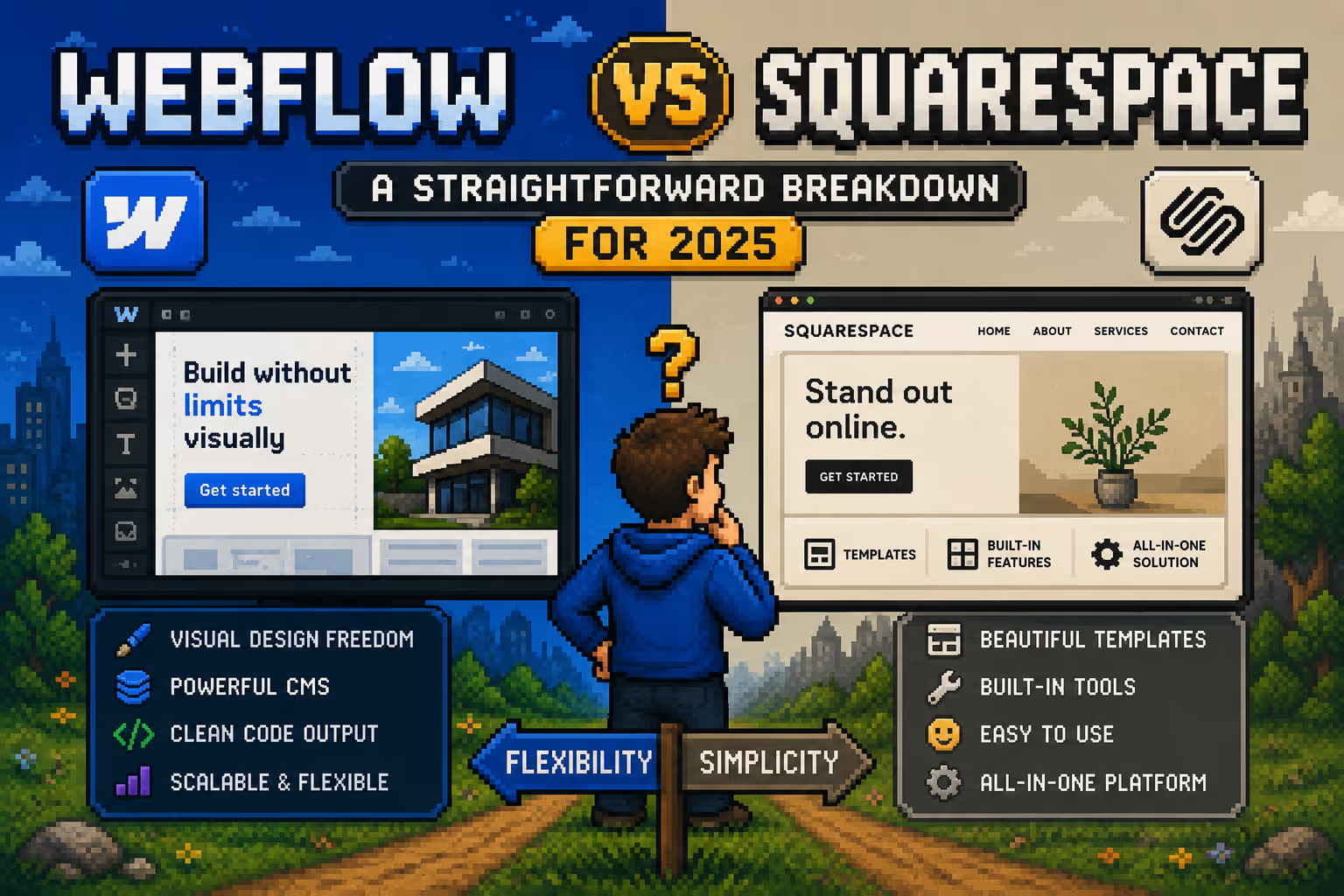
This decision is rarely about which tool is better. Instead, it is about choosing the right level of flexibility, speed, and complexity for the stage your business is in. Understanding the strengths and limitations of both approaches is essential if you want to build a site that supports growth rather than becoming a bottleneck.
What Webflow actually offers
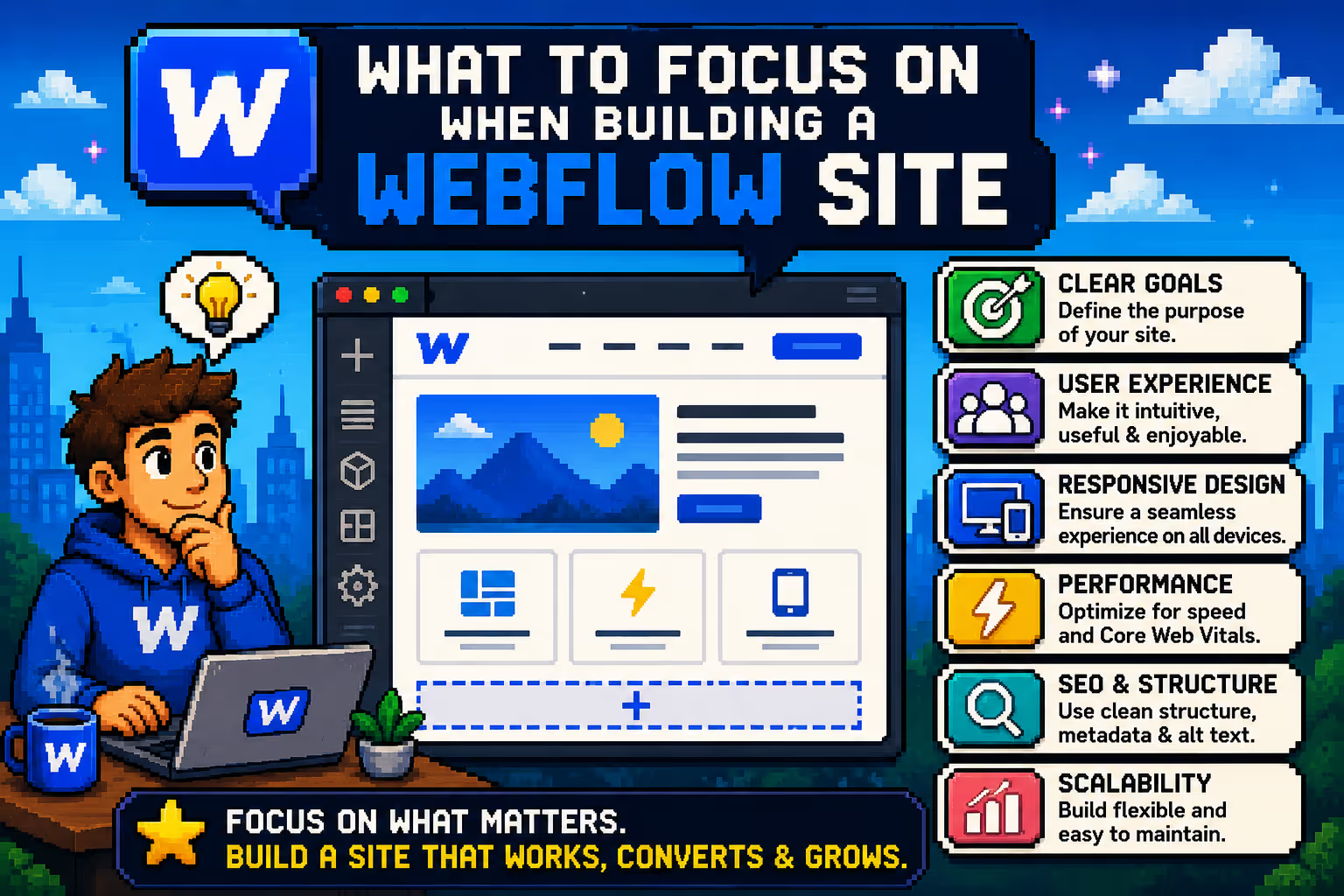
Webflow is not a simple drag-and-drop builder. It is a visual development environment that generates clean, semantic HTML and CSS, runs on managed hosting with built-in CDN and SSL, and includes a CMS that can support complex content structures. For a full overview of what the platform includes, see our complete Webflow overview.
For most marketing websites, SaaS landing pages, and content-driven properties, Webflow provides everything a team needs to build, launch, and iterate quickly. The design-to-production workflow is direct, the output is performant, and non-technical teams can manage content without developer involvement.
What custom code actually offers
Custom coded websites are built from scratch using frameworks like React, Next.js, or plain HTML and CSS. The developer has complete control over every aspect of the site, from how data is fetched to how interactions behave at a granular level.
This level of control is genuinely valuable in specific situations. Complex application logic, custom authentication systems, highly specific integrations, or sites where performance must be optimized at an unusually granular level are all cases where custom code may be the right choice.
Where Webflow has a clear advantage
For teams that need to move quickly, iterate often, and maintain their site without a dedicated engineering team, Webflow has a structural advantage. The time from design to launch is significantly shorter. Updates can be made without a deployment cycle. The CMS makes content management accessible to non-technical team members.
Webflow also handles a large portion of the technical baseline automatically. SEO fundamentals, performance optimization, and security are managed at the platform level, reducing the amount of engineering time spent on infrastructure. For a deeper look at how this affects SEO specifically, see what actually matters for SEO on Webflow.
Where custom code has a clear advantage
When a site needs to behave like an application, when the interaction model is complex enough to require state management, or when the technical requirements genuinely exceed what a visual development platform can support, custom code is the right approach.
The tradeoff is time, cost, and the need for dedicated technical resources to build and maintain the system. These are reasonable tradeoffs when the complexity is real. They become problematic when custom code is chosen out of habit rather than necessity.
The most common mistake: choosing based on perception, not requirements
Many teams choose custom code because it feels more serious or more technically rigorous. Many other teams choose Webflow because it seems faster without fully evaluating whether it can meet their specific requirements.
The better approach is to start with requirements and work backward. What does the site actually need to do? How much flexibility does the team need to make changes after launch? What level of technical maintenance can the business realistically sustain? For most marketing-focused use cases, Webflow covers the requirements completely and does so with significantly less ongoing overhead.
A practical framework for making the decision
Webflow is typically the better choice when the primary goal is a marketing website, when the team needs to move and iterate quickly, and when long term maintenance needs to be accessible to non-engineers.
Custom code is typically better when the site needs to function as an application, when the interaction model is unusually complex, or when existing infrastructure requires deep technical integration.
In many cases, the right answer is also hybrid: Webflow for the marketing layer, custom code for the application or backend. This keeps the marketing site fast and manageable while preserving full technical control where it is genuinely needed.

Milan Kostic
Freelance Webflow Developer