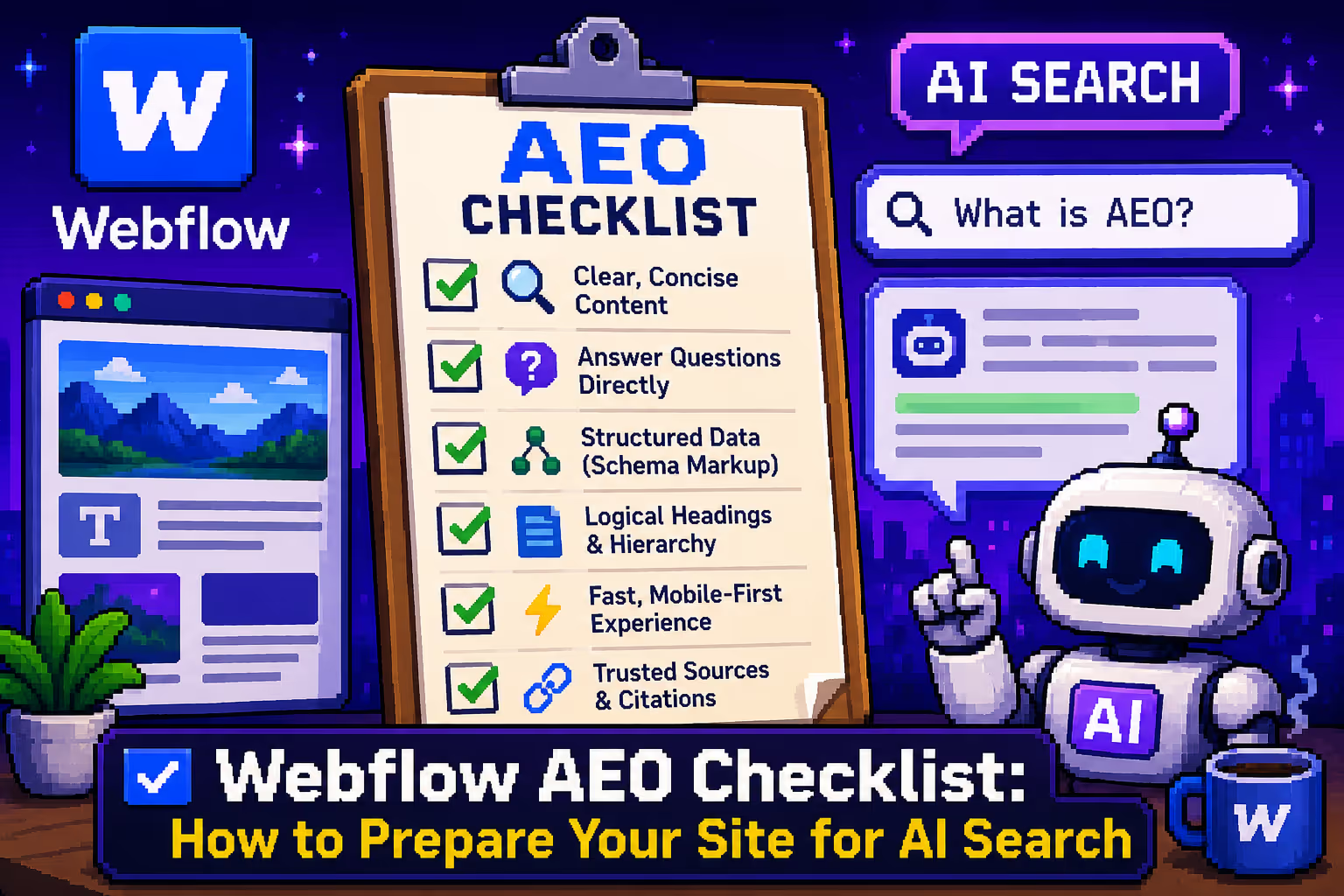
How to Optimize Your Webflow Site for AI Search Engines: Webflow for AEO
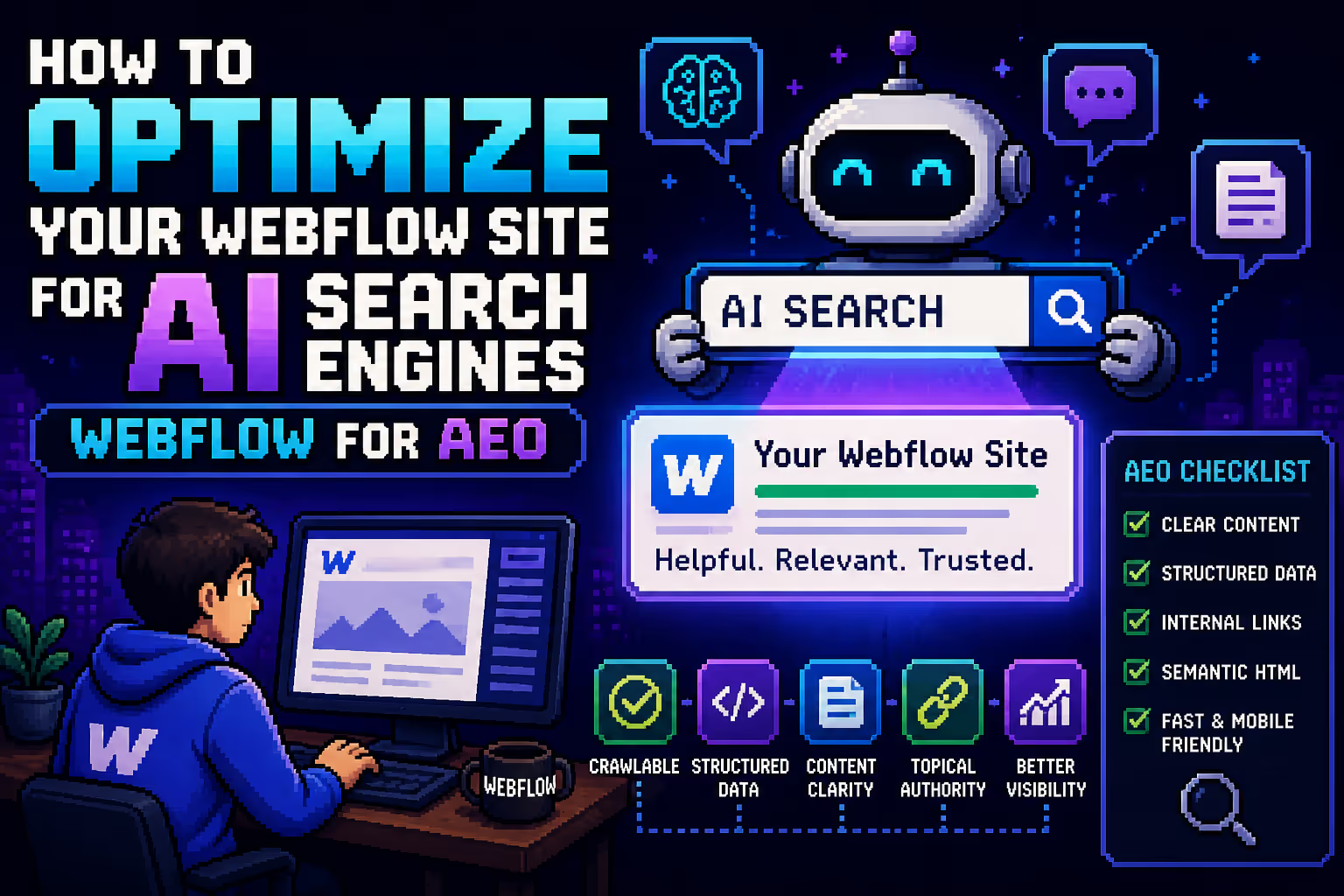
There's a shift happening in how people find businesses online, and it's moving faster than most marketing teams realize.
69% of searches now result in zero clicks, as users get everything they need from AI-powered responses. They're not scrolling through blue links anymore. They're asking ChatGPT, Perplexity, or Google AI Overviews a direct question and accepting the answer they get. If your brand isn't in that answer, you don't lose a ranking. You lose the conversation entirely.
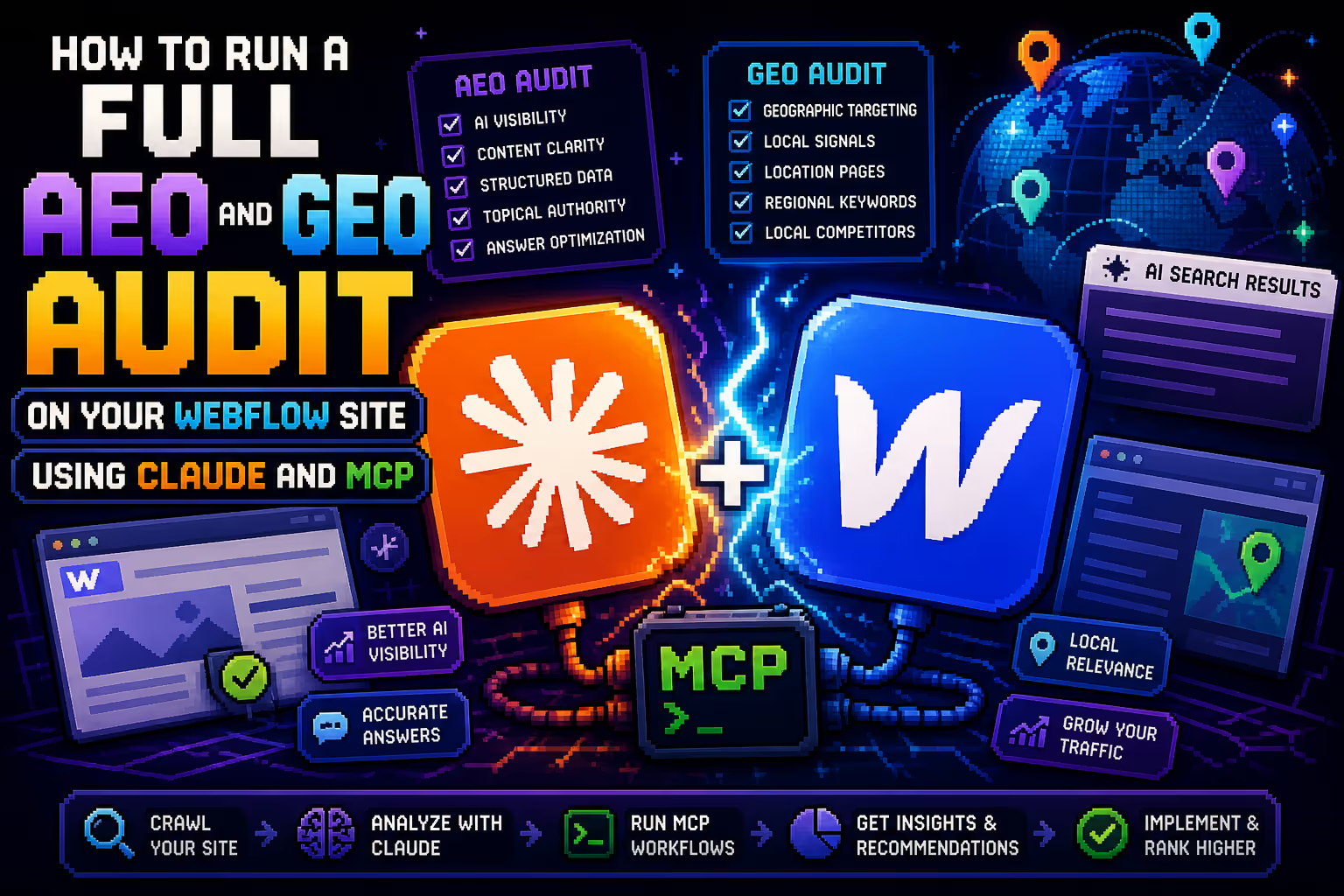
This is the new game. It's called Answer Engine Optimization, or AEO, and in 2026 it's no longer optional for any business that takes its web presence seriously. And if your site is built on Webflow, you're starting from a position that most of your competitors aren't.
What Is AEO and How Is It Different from SEO?
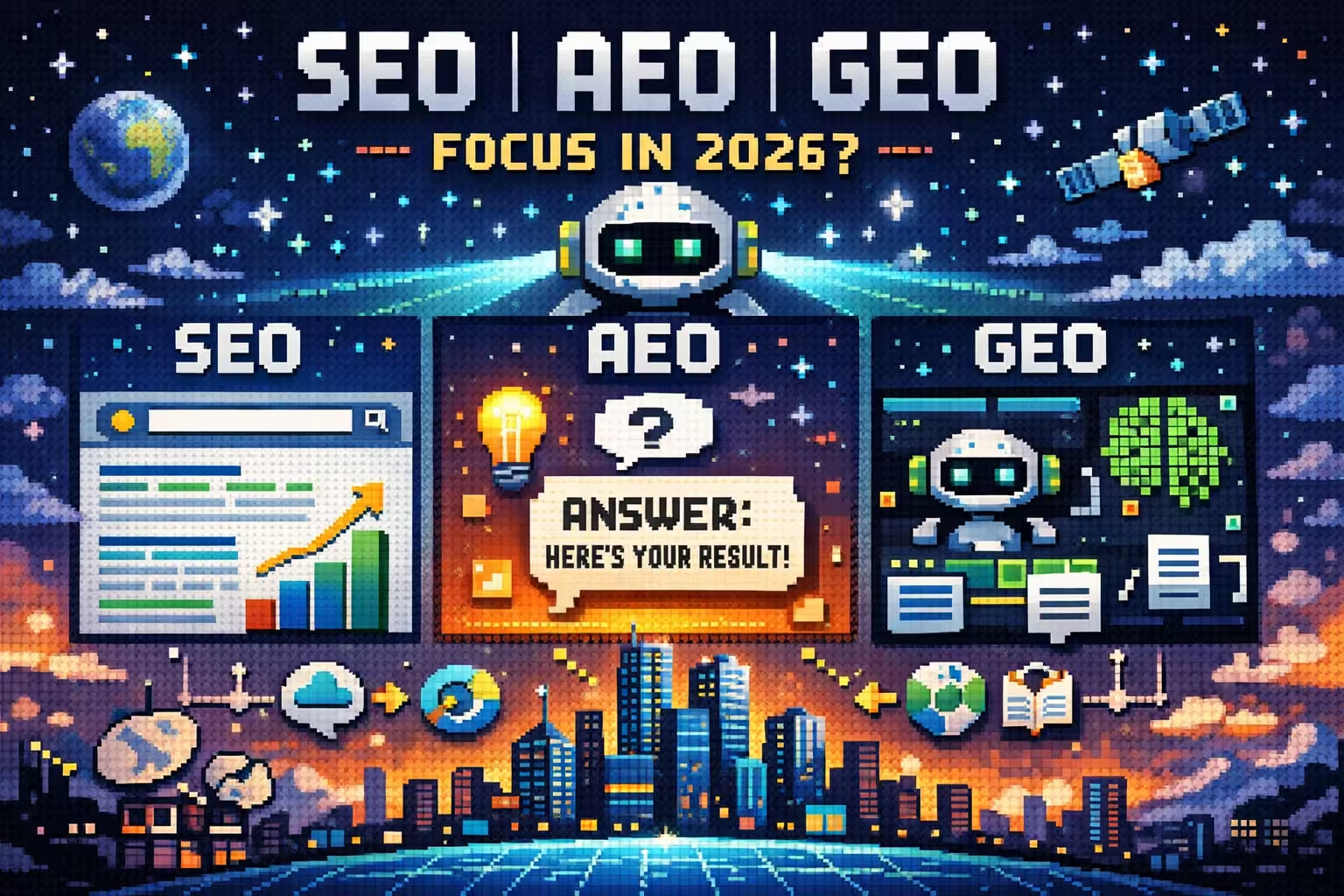
SEO and AEO are related but they solve different problems.
SEO is about ranking. You optimize for keywords, build authority through backlinks, and compete for position on search results pages. The goal is a click. AEO is about being cited. Instead of chasing keywords, AEO prioritizes clarity, structure, and authority so large language models pull the right information about your brand. The goal is an answer that includes you.
The practical difference: when someone searches on Google, they see a list of results and choose where to click. When someone asks an AI tool the same question, the AI synthesizes an answer from sources it considers authoritative and machine-readable. You're either in that synthesis or you're not. There's no page two.
Content formatted specifically for LLM extraction is three times more likely to be cited, and there's a strong correlation between a website's authority and frequency in AI citations. That means the work you do for AEO compounds over time, just like SEO, but the signals are different.
What AI models reward:
Structured, clearly formatted content. Direct answers to specific questions. Schema markup that makes content machine-readable. Consistent entity signals across your entire site. Genuine expertise tied to real, named authors.
Most brands in 2026 are practicing hybrid optimization. You need traditional SEO to build the infrastructure, and AEO for interpretation through structured data, entity clarity, and authority signals. One without the other leaves money on the table. For a full breakdown of how SEO and AEO intersect on Webflow, see the ultimate guide to Webflow SEO in 2026.
Why Webflow Has a Structural Advantage for AEO
Before getting into tactics, it's worth understanding why Webflow is particularly well-positioned for this.
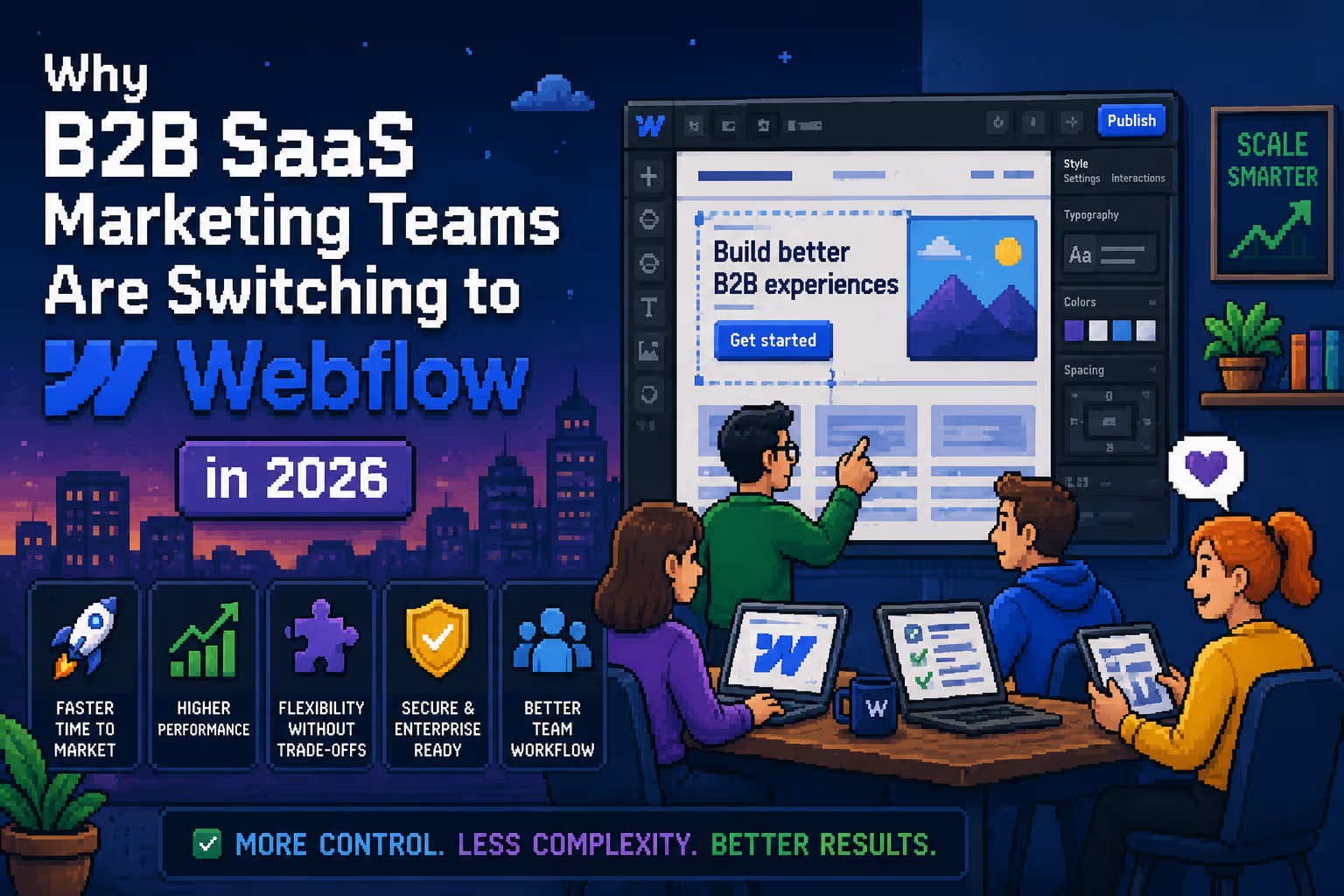
Every site created on Webflow automatically generates clean, semantic code, schema markup, and llms.txt files so your content is machine-readable and easy for AI systems to interpret. With global hosting, built-in speed optimization, and no plugin sprawl, your site will be ready for AEO from day one.
This matters more than it might seem. Most of the AEO optimization steps below require either template-level control or the ability to inject structured data cleanly across your entire site. Webflow's CMS architecture gives you both natively, without touching a plugin or maintaining a separate toolset.
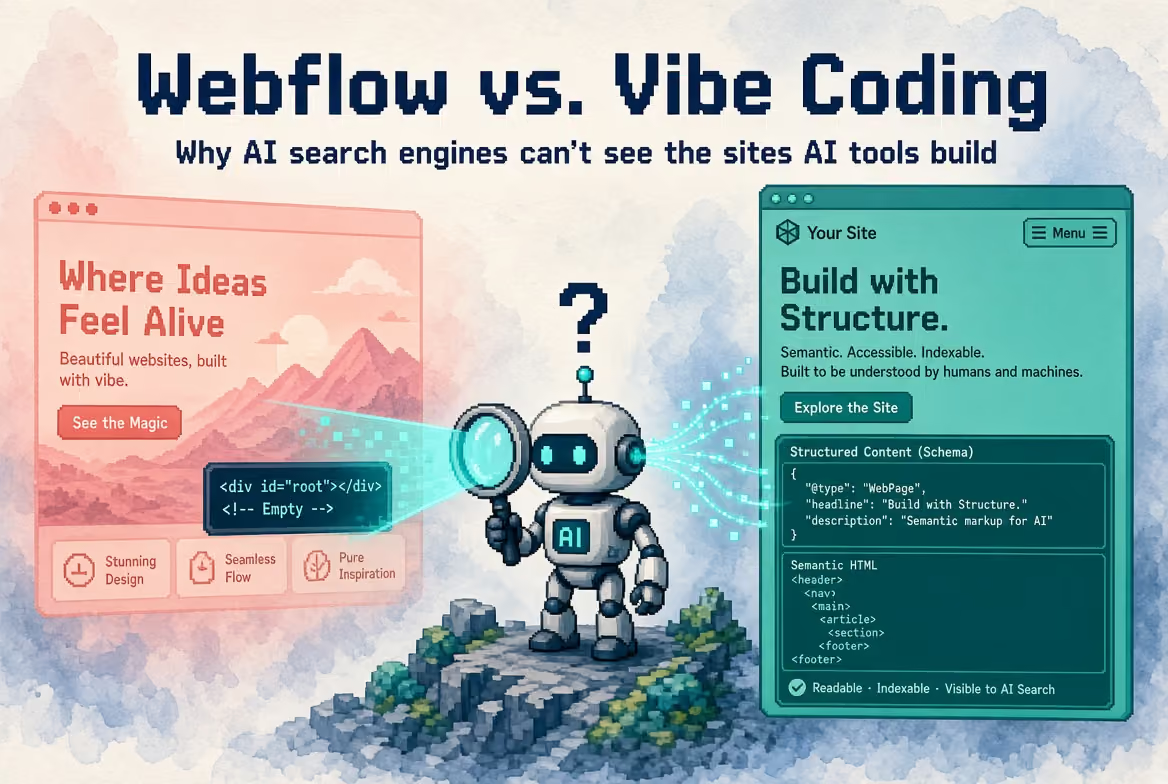
Sites built on fragmented stacks or AI-generated code don't have this. Every page is its own project. Schema markup is inconsistent. Heading hierarchies vary. AI models that crawl these sites encounter unpredictable structure and either struggle to extract clean answers or skip the content altogether. On Webflow, you define structure once and it propagates everywhere. To understand exactly what Webflow is and how it works at the platform level, see the complete Webflow guide for 2026.
Webflow AEO: What Webflow Launched in April 2026
On April 13, 2026, Webflow officially launched Webflow AEO in private beta for Enterprise customers. Understanding what it does helps clarify what any Webflow team should be working toward, regardless of plan.
Webflow AEO uses AI agents to bring measurement, recommendations, and execution directly into Webflow, so teams can go from insight to shipped improvements quickly and seamlessly.
The product works across three areas:
Measurement. Enterprise teams can see how often their brand is cited in answer engines, which prompts they appear in, and how AI visibility connects to on-site engagement and conversions, with no data expertise or instrumentation required.
Recommendations. AEO agents surface prioritized, brand-specific recommendations, from broken links and outdated metadata to new content opportunities that are likely to boost citations for the prompts you're already tracking.
Execution. Webflow AI agents turn recommendations into shipped improvements at scale, with review-before-publish safeguards so your team can move faster without giving up control.
The key differentiator is the closed loop. Most AEO tools show you where the gaps are, then leave you to figure out implementation across different systems. Webflow AEO handles measurement, recommendations, and execution inside one platform. Webflow AEO is currently Enterprise-only. But the optimization framework that underlies it applies to every Webflow site on every plan. The tactics below work today.
How to Optimize Your Webflow Site for AEO: Five Steps
Step 1: Structure Your Content for AI Extraction
AI interfaces encourage fundamentally different behavior than traditional search. Instead of typing short queries, users ask full questions, follow up with clarifications, and expect synthesized responses rather than a list of links. AI systems pull information from multiple sources, weigh authority, and construct answers dynamically.
This means your content needs to be structured for extraction, not just for reading. The inverted pyramid format works best: give the direct answer first, add context second, supporting detail third. AI models frequently pull the first clear statement in a paragraph as the answer candidate.
What this looks like in practice on a Webflow site:
Semantic heading hierarchy. H1, then H2, then H3, used structurally not decoratively. One H1 per page, logical heading flow throughout. Webflow's Designer makes this easy to enforce at template level.
Short, declarative paragraphs. Two to three sentences maximum. Long paragraphs get skipped by AI models looking for extractable answers. Each paragraph should make one clear point.
FAQ sections on key pages. Direct question-and-answer format is the most extractable content pattern for AI models. Adding a FAQ section to your Webflow blog post template means every post gets one automatically.
Consistent terminology across the site. If the facts about your product, pricing, or differentiators are inconsistent across pages, answer engines are less likely to trust or cite you. Pick the terms you use for your core services and use them the same way everywhere.
The Webflow advantage here is CMS-level template control. You define the structure once and every post, case study, or landing page follows it. This is one of the highest-leverage things you can do for AEO.
Step 2: Implement Schema Markup Properly
Schema markup is how AI models understand what your page is actually about, not just what it says. Without it, they're making educated guesses. With it, they have explicit signals.
Priority schema types for Webflow AEO:
FAQPage schema on any page with a Q&A section. This is the single highest-impact schema type for AEO because AI models specifically extract FAQ pairs as direct answer candidates.
Article schema on blog posts and editorial content. Includes author, publish date, and topic signals that help AI models assess freshness and credibility.
HowTo schema on step-by-step guides and tutorials. Highly extractable format for instructional queries.
Organization schema on your homepage and about page. Establishes your entity identity so AI models can confidently associate content with your brand.
Person schema on author bio pages. Connects your content to named, credentialed humans, which directly impacts perceived authority.
In Webflow, add schema through custom code injection at the template level. This means every blog post in your CMS collection gets Article schema automatically. Every FAQ component gets FAQPage schema without manual work per page. One setup, site-wide coverage. For a detailed breakdown of how schema markup works and why it matters, see the guide to schema markup and structured data.
Step 3: Build Topic Authority Through Content Clusters
AI systems that receive longer, more complex questions are more likely to pull from deep, well-structured destination sites rather than general publications. A single page on a topic carries far less weight than a pillar page supported by multiple interconnected posts covering every relevant angle.
The logic: if you have one blog post about Webflow SEO, an AI model might cite it for a specific query. If you have a pillar page plus several supporting posts covering schema, Lighthouse performance, CMS SEO, link building, and technical audits, with consistent internal linking between all of them, the AI model sees a site with genuine depth on this topic. That depth is an authority signal.
Building clusters in Webflow is operationally straightforward. Reference fields connect supporting posts to pillar pages. Template-level related content sections automate internal linking. Collection filters surface the right content without ongoing manual maintenance.
The iteration loop: publish your pillar page, add supporting posts with internal links pointing to and from it, monitor AI citations for your target queries, identify gaps, and add content that fills them.
Step 4: Make Author Credentials Explicit
Anonymous content loses to attributed content in AI citations. There is a strong correlation between a website's authority and frequency in AI citations. Authority, in the eyes of an AI model, includes who wrote the content and whether those people can be verified as credible on the topic.
What to implement:
Author bios on every post with role, company, area of expertise, and real name. AI models associate named expertise with higher authority signals. An Authors CMS collection in Webflow with fields for bio, headshot, credentials, social links, and schema data. Reference it on your blog post template so every post displays author information consistently. Person schema on author profile pages, linking the author's identity to their published content across the site. Links from author pages to LinkedIn profiles, industry publications, or conference appearances where applicable. External signals that corroborate expertise reinforce the authority picture.
One setup in Webflow's CMS covers every post automatically. This is an afternoon of work that pays compounding dividends.
Step 5: Monitor AI Citations and Iterate
Visibility shifts before traffic does. Brands see earlier gains in AI citations, brand mentions, and assisted conversions before they see direct traffic increases. This means measurement needs to happen even before you can attribute direct revenue to AEO efforts.
For Enterprise Webflow customers, Webflow AEO handles measurement natively inside Webflow Analyze. For everyone else, you can build your own monitoring:
Run weekly spot checks on ChatGPT, Perplexity, and Gemini for your ten to fifteen most important target queries. Search for the questions your customers ask before they buy, questions about your category, comparisons between you and competitors, and requests for recommendations in your space.
Track which queries cite you, which don't, and what content is being cited when competitors appear instead of you. That gap analysis tells you exactly where to focus next: update existing content, strengthen schema on relevant pages, add FAQ sections, or publish new content that fills the gap.
The iteration loop is: query, observe, update, query again. 58% of marketers say visitors referred by AI tools convert at higher rates than traditional organic traffic. The work compounds.
The Practical Starting Point
If you're not sure where to begin, start with FAQPage schema on your highest-traffic pages and add FAQ sections to your blog post CMS template. This is the single highest-impact AEO tactic available, requires no major content restructuring, and produces measurable results within two to four weeks in most cases.
From there, move to author attribution, then topic cluster development, then full schema implementation across page types.
AEO is not a new set of keywords or metadata tricks. It's a structural rethink of how websites are written, organized, and maintained. For teams already on Webflow, that rethink is easier than on any other platform because the architecture already supports it. The brands that own AI-generated answers in their category two years from now are the ones building this infrastructure today.

Milan Kostic
Freelance Webflow Developer