How to Run a Full Webflow SEO Audit Using Claude and MCP in Under 30 Minutes

May 6, 2026
How to Run a Full Webflow SEO Audit Using Claude and MCP in Under 30 Minutes

Most Webflow site owners know their SEO needs attention. Meta descriptions that were written once and never touched again, blog posts missing title tags, CSS classes named "div-2-copy-final" scattered across the design system. The audit itself isn't complicated. It's just tedious enough that it keeps getting pushed back.

Claude connected to your Webflow site via MCP changes that. What used to take an afternoon of manual checks now takes about 30 minutes, most of which is reviewing what Claude found rather than finding it yourself.

Here's exactly how to run it.

What You Need Before You Start

You need a paid Claude plan (Pro at $20/month or Team), and the Webflow connector activated in Claude. Setup takes under three minutes: open Claude, click the plus icon in the chat menu, go to Connectors, search for Webflow, and authorize access via OAuth. Select which sites to connect and you're done.

For CMS and metadata operations, the Webflow Designer doesn't need to be open. That covers the majority of what this audit touches. For a full breakdown of how the connector works and what else you can do with it, see the complete guide to the Claude + Webflow connector.

Step 1: Audit All Meta Titles and Descriptions (5 minutes)

Start with the highest-impact check. Missing or poorly written meta fields affect both traditional SEO and how AI answer engines interpret your pages.

Use this prompt:

"List all pages and CMS collection items on my Webflow site. For each one, show me the current meta title and meta description. Flag any that are missing, over 60 characters for titles, over 155 characters for descriptions, or that look generic. Present the results in a table with: URL, current meta title, current meta description, and any issues found. Do not make any changes yet."

Claude will read your site structure and return a table. Review it, decide what to fix, and then give Claude the green light to apply corrections page by page or in bulk.

Step 2: Check Heading Structure Across Blog Posts (5 minutes)

Inconsistent heading hierarchies are one of the most common structural SEO issues on Webflow sites, especially on blogs where CMS content was written by different people over time.

Use this prompt:

"Audit the heading structure on my blog CMS collection. For each post, check whether there is exactly one H1, whether H2s and H3s follow a logical order without skipping levels, and whether any heading tags are used purely for visual styling rather than structure. List the posts that have issues and describe the specific problem for each."

This gives you a targeted list to fix rather than having to click through every post manually.

Step 3: Find Missing Alt Text on Images (5 minutes)

Alt text affects both accessibility scores and how well your images are understood by search engines and AI crawlers. On sites with a lot of CMS-managed content, missing alt text accumulates fast.

Use this prompt:

"Scan all images across my Webflow site and CMS collections. List any images that are missing alt text or that have generic alt text like 'image', 'photo', or the filename. Show me the page or CMS item where each one appears."

Once you have the list, you can ask Claude to suggest appropriate alt text for each image based on the surrounding page content, then apply them after review.

Step 4: Review Slug Consistency and URL Structure (5 minutes)

Inconsistent slugs, URLs with uppercase letters, or slugs that don't match the content they describe all create unnecessary SEO friction.

Use this prompt:

"Review all page slugs and CMS item slugs on my site. Flag any that contain uppercase letters, special characters, are unusually long (over 60 characters), or that don't clearly reflect the page content based on the title. List the current slug and suggest a cleaner version for each flagged item."

Be careful when applying slug changes. Updating a live slug breaks any existing backlinks pointing to that URL. Only change slugs if you're prepared to set up 301 redirects for the old URLs.

Step 5: Identify Thin or Duplicate Content (5 minutes)

Short CMS items, near-identical pages, or posts that cover the same topic without differentiation are a quiet SEO drag that most audits miss.

Use this prompt:

"Look at my blog CMS collection. Identify any posts that appear to cover very similar topics, any posts that are unusually short (under 300 words if word count is accessible), and any posts where the meta title and the post title don't match. Present the results as a prioritized list with the most significant issues first."

Step 6: Review and Apply Fixes (10 minutes)

At this point you have a clear picture of what's broken. The last step is working through Claude's findings, deciding what to fix now versus later, and applying the changes.

For straightforward bulk fixes like missing meta descriptions or alt text, you can prompt Claude to apply corrections across multiple items at once. For structural issues like heading hierarchies or slug changes, work through them one at a time so you can review each before it goes live.

One principle worth keeping: always ask Claude to list what it's going to change before it changes anything. The manual approval step adds two minutes and saves you from bulk errors that are painful to reverse.

What This Audit Covers vs. What It Doesn't

This workflow handles the on-site technical and content layer: metadata, headings, alt text, slugs, and content quality signals. It doesn't replace a full backlink audit, a Core Web Vitals analysis, or a keyword gap assessment. Those require external tools like Ahrefs, Google Search Console, or PageSpeed Insights alongside your Webflow audit.

Think of the Claude MCP audit as the fast, repeatable baseline check you run every month to keep the site clean, not the once-a-year deep dive. For the deeper technical side of Webflow SEO, the ultimate Webflow SEO guide for 2026 covers the full picture. And if you want to understand how Webflow and AI search engines connect, the Webflow AEO guide is the right next read.

The 30-minute audit isn't a shortcut. It's just what the audit looks like when the tools are properly connected.

Frequently Asked Questions

Do I need a paid Claude plan to connect Claude to Webflow?

Yes. The Webflow connector in Claude requires a paid plan, either Pro at $20/month or a Team plan. The free Claude tier does not support MCP connectors. Once you have a paid plan, setup takes under three minutes through the Connectors menu in Claude.

Can Claude make changes to my Webflow site automatically or does it ask for approval first?

It depends on how you configure the connector. In manual mode, Claude lists every change it intends to make and waits for your confirmation before applying anything. In automatic mode, it acts directly. For site audits and bulk edits, manual mode is strongly recommended so you can review each change before it goes live.

What parts of a Webflow SEO audit can Claude actually handle?

Claude connected via MCP can audit and update meta titles, meta descriptions, alt text on CMS images, slug structure, heading hierarchy in CMS content, and content length across collection items. It cannot run a backlink audit, measure Core Web Vitals, or access Google Search Console data. Those require external tools.

How often should I run this audit on my Webflow site?

Once a month is a practical baseline for most sites. If you're publishing new CMS content regularly, running the meta and alt text checks every two weeks keeps things clean before issues accumulate. The full five-step audit takes around 30 minutes, so it's low enough effort to make a monthly habit.

Is it safe to let Claude update slugs on live Webflow pages?

With caution, yes. Changing a slug on a live page breaks any existing backlinks pointing to the old URL, so you need to set up 301 redirects for every slug you update. Always ask Claude to list the proposed slug changes first and review them before applying. For pages with significant backlink equity, it's usually better to leave the slug unchanged and focus on other improvements instead.

Let’s talk about your website

Other articles

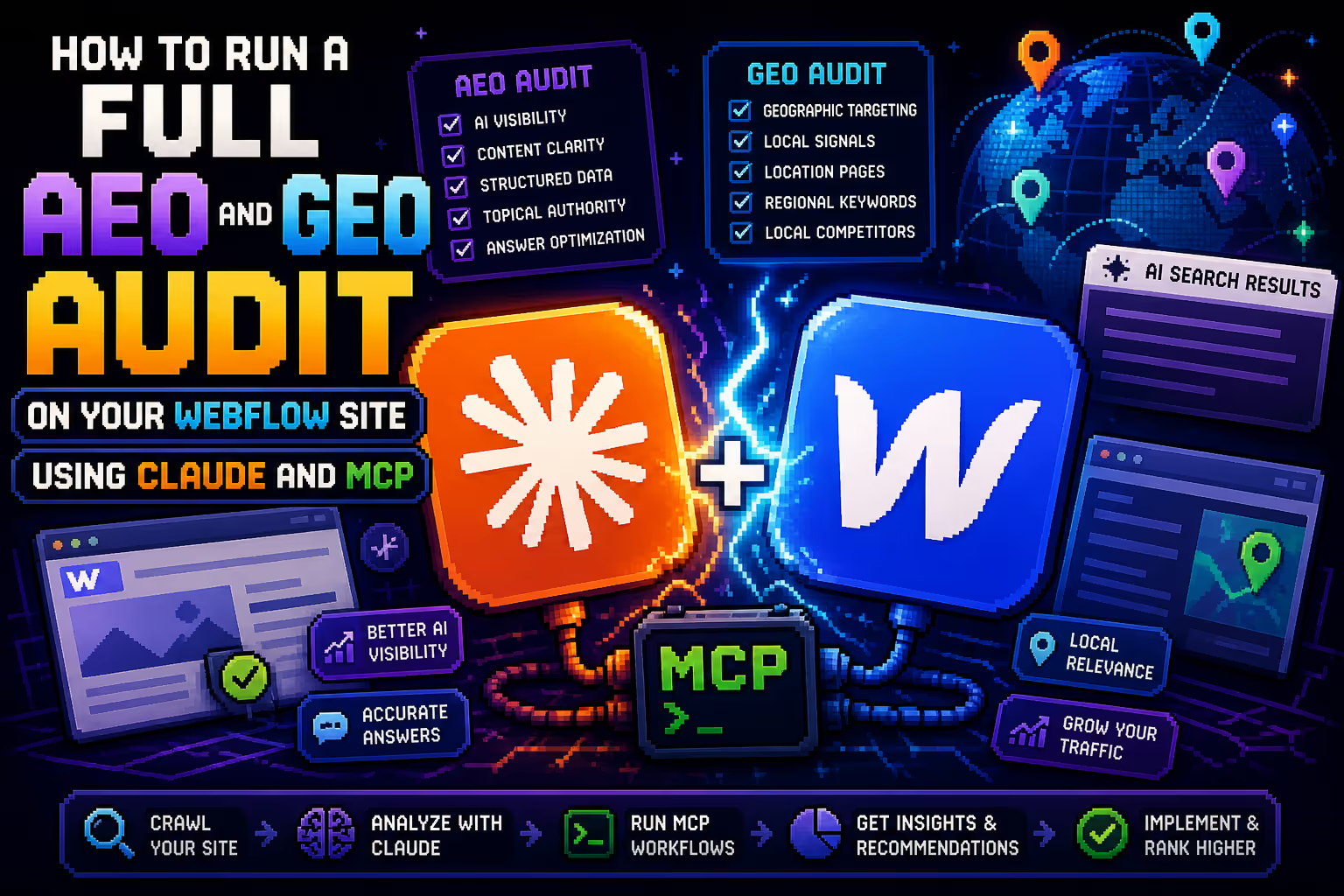
How to Run a Full AEO and GEO Audit on Your Webflow Site Using Claude and MCP

How to Run a Full AEO and GEO Audit on Your Webflow Site Using Claude and MCP

How to audit your Webflow site for AEO and GEO in under 30 minutes using Claude and MCP, with exact prompts for each step.

How to Optimize Your Webflow Site for AI Search Engines: Webflow for AEO

How to Optimize Your Webflow Site for AI Search Engines: Webflow for AEO

A practical guide to AEO for Webflow sites in 2026. How AI search engines discover, extract, and cite your content, and what to do about it.

The Best AI Tools for Startups in 2026. From Launch to Series A

The Best AI Tools for Startups in 2026. From Launch to Series A

A stage-by-stage breakdown of the best AI tools for startups in 2026, from building your first MVP and marketing site to scaling past Series A.

How the right website pays for itself

How the right website pays for itself

A poorly built website costs more than you think. Learn how the right website saves money, reduces ongoing expenses, and actively earns for your business.

Why I build every client website in Webflow (and what that means for you)

Why I build every client website in Webflow (and what that means for you)

There are dozens of platforms to build a website on. Here's why I use Webflow for every client, and what you actually get as a result.

Why your outdated website is costing you clients (and how to know if yours qualifies)

Why your outdated website is costing you clients (and how to know if yours qualifies)

60% of small businesses lose customers because of website issues. Most of them don't even know it's happening. Here's how to tell if your site is one of them.

Why blogging still works in 2026 (and how to do it without wasting time)

Why blogging still works in 2026 (and how to do it without wasting time)

Over 60% of internet users read blogs regularly. 81% of marketers say it still delivers results. So why does every small business owner I talk to have a blog they haven't touched in a year?

How to Use the Webflow Connector in Claude (Complete Guide)

How to Use the Webflow Connector in Claude (Complete Guide)

Learn how to set up the Webflow connector in Claude, what you can automate, and where the real limits are.

What is Webflow?

What is Webflow?

Learn what Webflow really is, why it's not just another website builder, and how it works.

What is Schema Markup? The Secret Language of High-Ranking Websites

What is Schema Markup? The Secret Language of High-Ranking Websites

What exactly is Schema markup? Learn how structured data helps Google understand your content and why it's the most underused growth asset in technical SEO.

How to Get a 100/100 Lighthouse Score on Webflow Mobile: A Full-Service Guide

How to Get a 100/100 Lighthouse Score on Webflow Mobile: A Full-Service Guide

Achieve a perfect 100/100 Lighthouse score on Webflow mobile. Learn expert strategies for AVIF images, font preloading, and script delays to boost your SEO ranking.

The Ultimate Webflow Migration Checklist for B2B & SaaS: A Stress-Free Guide to Scaling Without Losing SEO Juice

The Ultimate Webflow Migration Checklist for B2B & SaaS: A Stress-Free Guide to Scaling Without Losing SEO Juice

Moving your SaaS site to Webflow? Use this technical checklist to protect your SEO, automate CMS migration, and sync your CRM. Migrate without the stress.

The Ultimate Guide to Webflow SEO in 2026

The Ultimate Guide to Webflow SEO in 2026

Master Webflow SEO in 2026. Learn how to leverage AI, optimize for zero-click searches, and boost site speed with Webflow’s built-in tools. Start ranking higher!

From Figma to Webflow: The Definitive Guide for 2026

From Figma to Webflow: The Definitive Guide for 2026

Turn Figma designs into high-performance Webflow websites with a structured workflow, clean architecture, and modern best practices.

How much does a business website cost in the US?

How much does a business website cost in the US?

Learn how much a business website really costs in the US. A clear breakdown of pricing for small businesses, startups, landing pages, and larger projects.

Webflow vs Lovable: a platform comparison. Which one is better?

Webflow vs Lovable: a platform comparison. Which one is better?

A practical comparison of Webflow and Lovable. Learn which no-code platform is better for design flexibility, SEO, scalability, and long-term website growth.

Best No-Code Platforms for Websites in 2026: A Complete Comparison

Best No-Code Platforms for Websites in 2026: A Complete Comparison

A complete comparison of the best no-code platforms for building websites in 2026. Compare Webflow, Framer, Wordpress, and more to choose the right platform for your project.

Webflow and Framer: A Practical Comparison for 2026

Webflow and Framer: A Practical Comparison for 2026

Full 2026 Webflow vs Framer comparison covering CMS power, pricing, SEO tools, AI features, and which no-code platform fits your project.

Webflow App Gen: A Complete Guide to the AI Revolution in Web App Generation

Webflow App Gen: A Complete Guide to the AI Revolution in Web App Generation

Learn what Webflow App Gen is and how it uses AI to generate production-ready web applications directly inside Webflow. Features, CMS integration, and deployment explained.

Webflow Migration Guide: How to Move Your B2B Website Without Losing SEO Rankings

Webflow Migration Guide: How to Move Your B2B Website Without Losing SEO Rankings

Learn how to migrate your B2B website to Webflow without losing SEO rankings. A practical guide covering redirects, CMS structure, performance, and post-launch checks.

SEO, AEO, and GEO: what should you focus on in 2026?

SEO, AEO, and GEO: what should you focus on in 2026?

Learn the difference between SEO, AEO, and GEO, how search is evolving, and what to focus on in 2026 to stay visible in AI-driven and traditional search.

The difference between award-winning and high-converting websites

The difference between award-winning and high-converting websites

What’s the real difference between award-winning and high-converting websites? Learn how design goals, usability, and strategy impact business results.

How to fix conversion issues when you already have traffic

How to fix conversion issues when you already have traffic

Your website gets traffic but no leads? Learn why visitors aren’t converting and how better design, messaging, and structure can turn traffic into real business results.

Migrating to Webflow from other platforms

Migrating to Webflow from other platforms

Learn how migrating to Webflow from WordPress or other platforms works, what the real process looks like, and how it affects performance, scalability, and SEO.

Why SaaS companies should move to Webflow in 2026

Why SaaS companies should move to Webflow in 2026

Discover why SaaS companies are moving to Webflow in 2026 for better performance, SEO control, scalability, and faster marketing workflows.

Is Webflow Good for SEO? What Actually Matters

Is Webflow Good for SEO? What Actually Matters

Is Webflow good for SEO? Learn what actually affects rankings, from content and structure to technical setup, and why Webflow isn’t the problem.

Webflow vs WordPress which platform is right for your website

Webflow vs WordPress which platform is right for your website

This article breaks down whether Webflow is a better alternative to WordPress.

Should designers understand Webflow frameworks for smoother projects?

Should designers understand Webflow frameworks for smoother projects?

Learn why designers benefit from understanding Webflow frameworks and how shared structure improves collaboration, reduces friction, and keeps projects running smoothly.

Why the right Webflow framework matters for scalable websites?

Why the right Webflow framework matters for scalable websites?

Learn why the right Webflow framework is key to building scalable, consistent, and easy to maintain websites.

A closer look at Webflow components

A closer look at Webflow components

Learn why Webflow components are essential for scalable websites and how a component based approach improves consistency, speed, and long term growth.

When design breaks the development process and slows growth

When design breaks the development process and slows growth

Learn how poor design decisions create friction in development, introduce technical debt, and limit long term website scalability and growth.

Why marketing teams struggle to maintain Webflow projects on their own?

Why marketing teams struggle to maintain Webflow projects on their own?

Learn why marketing teams often struggle to manage Webflow websites, the structural mistakes behind it, and how to build a site that supports growth.

Why most Webflow websites do not scale well?

Why most Webflow websites do not scale well?

Learn why many Webflow websites struggle to scale, the structural mistakes behind them, and how to build a Webflow site that supports long term growth.

Webflow vs Custom code: How to choose the right approach for your website?

Webflow vs Custom code: How to choose the right approach for your website?

A clear comparison of Webflow and custom code, focused on choosing the right solution based on speed, flexibility, and business maturity.