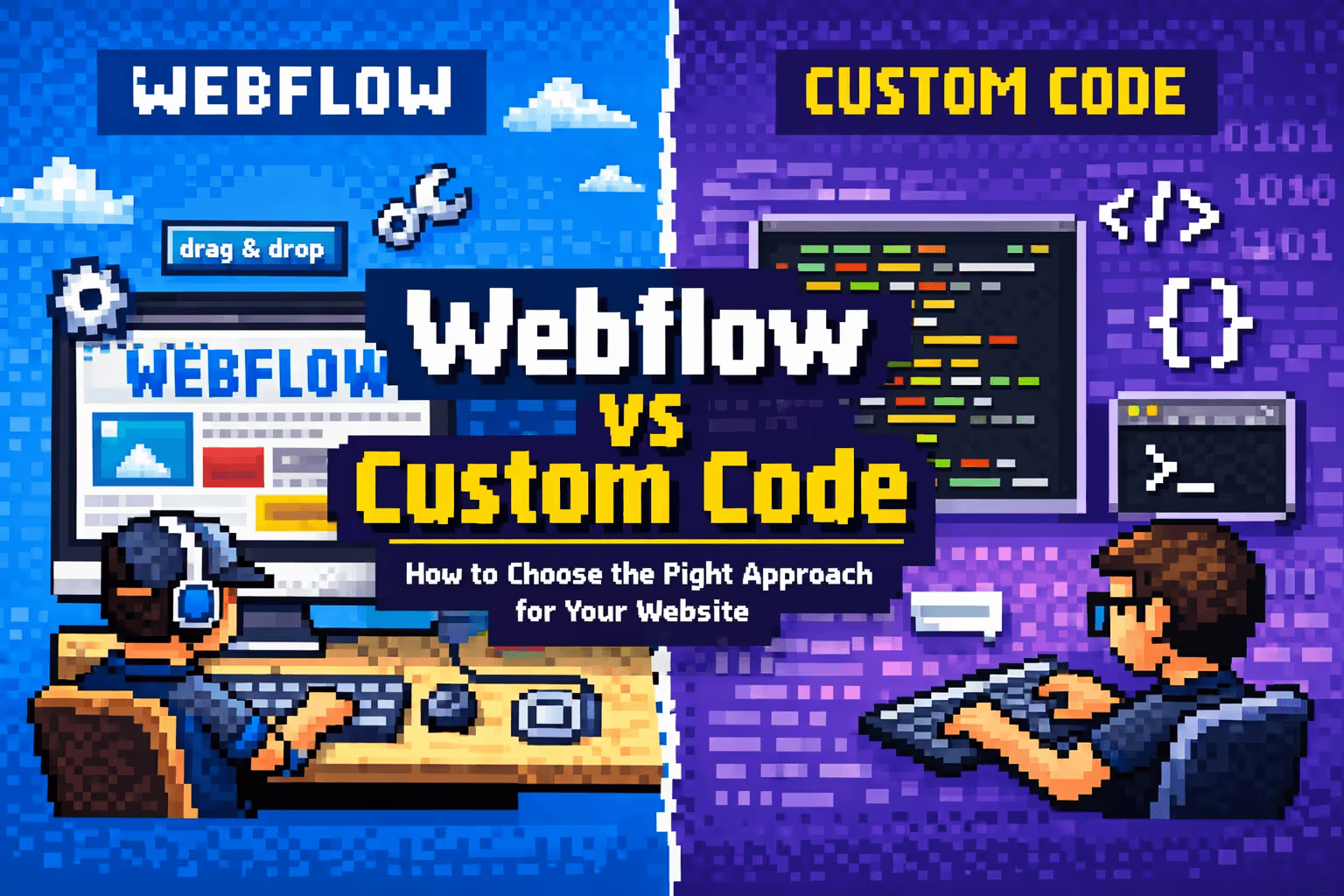
Webflow vs AI-Generated Websites (Next.js/Vercel): What's Better for Marketing Teams in 2026

The way websites get built has changed significantly over the past two years. Tools like Claude, v0, and Cursor can now generate a complete, production-ready website in a matter of hours. Next.js code, deployed to Vercel, live on a custom domain. Meanwhile, Webflow has continued to evolve as a visual development platform with an increasingly powerful CMS and a growing ecosystem of AI integrations.
Both are serious options in 2026. Neither is the obvious default for every situation.
This post breaks down what each approach actually looks like in practice, where each one performs well, and what questions you should be asking before you commit to either.
How AI Builds Websites Today
The workflow has matured considerably. You describe what you need to Claude, v0, or Cursor, and within a few hours you have a working Next.js codebase with components, routing, responsive layouts, and clean code. Connect it to GitHub, link it to Vercel, and your site is live.
The quality of output has improved to the point where a straightforward marketing site or landing page can be production-ready on the first pass, with performance scores that match or exceed hand-coded alternatives.
For teams with technical resources, this is a genuinely compelling option. The speed from idea to live site is difficult to match.
How Webflow Approaches the Same Problem
Webflow is a visual development platform. Designers and developers build production-quality sites through a GUI that exposes full CSS control without writing stylesheets. The CMS, hosting, and editor are all built into the same environment.
The pitch for Webflow has always been centered on what happens after launch. Marketing teams can update content, publish new pages, manage CMS collections, and handle day-to-day site operations without touching a codebase or waiting for a developer.
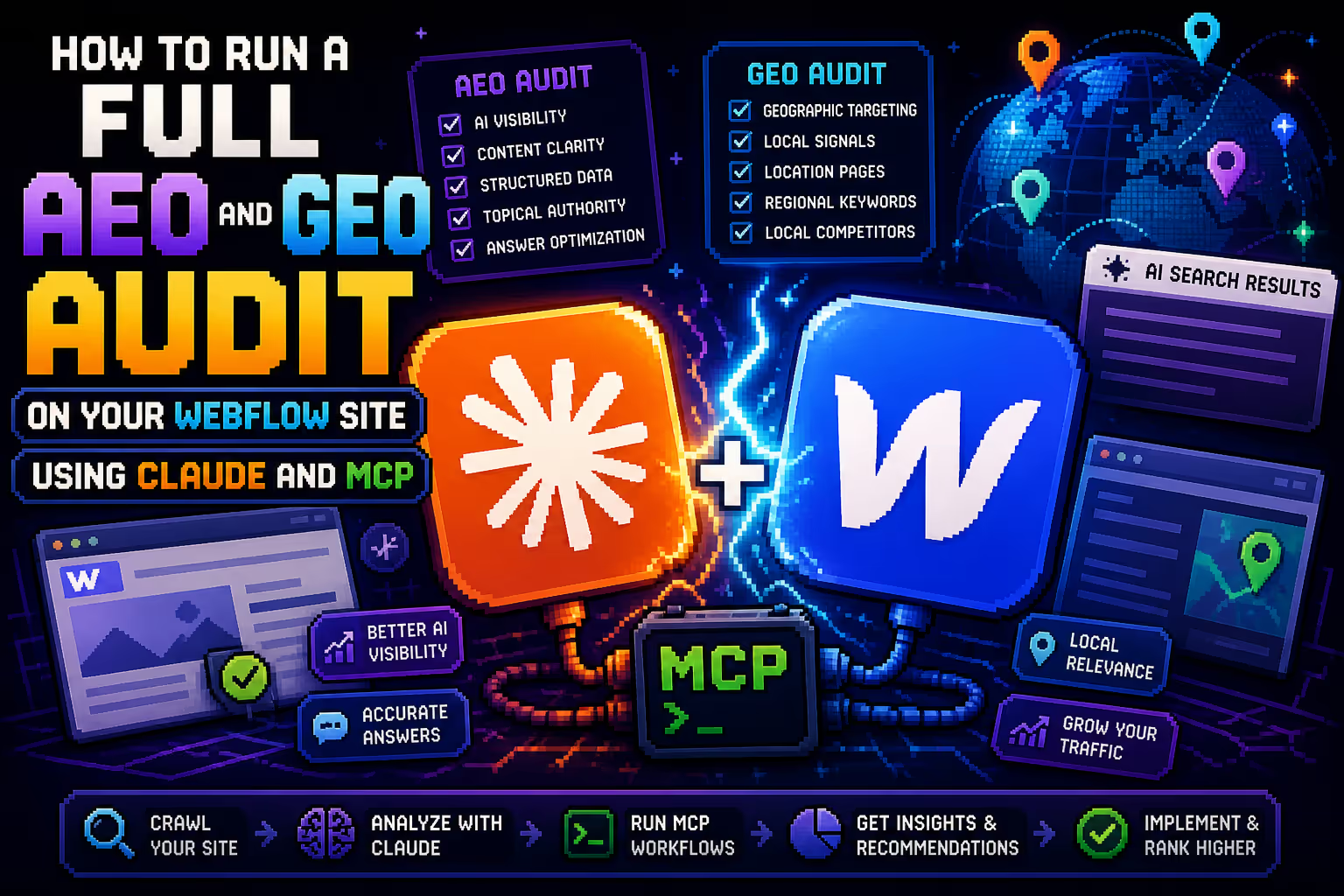
In 2026, Webflow has also added native AI integrations, including a first-party MCP connector for Claude that allows AI to operate directly inside a Webflow project, managing CMS content, metadata, and bulk operations through a conversation interface.
A Straightforward Comparison
Speed of First Launch
AI-generated sites are faster to get live, particularly for teams starting from scratch. A simple marketing site built with Claude and deployed to Vercel can be production-ready in a single day. Webflow requires more upfront planning around design systems, CMS structure, and collection architecture. For experienced Webflow developers the gap narrows, but for someone without prior Webflow experience, the initial build takes longer.
AI is faster for the first launch.
Editing and Content Management After Launch
This is where the two approaches diverge most clearly. In a Next.js codebase, content lives in components, markdown files, or an external CMS like Contentful or Sanity that needs to be configured separately. Any change, whether editorial or structural, typically requires either developer access or a separately configured headless CMS.
Webflow's CMS is built in. Editors can update text, swap images, publish new blog posts, duplicate pages, and manage collections directly in the visual editor without any developer involvement.
That said, headless CMS options like Contentful, Sanity, and Prismic have matured and can give non-technical editors a reasonable editing experience when paired with a Next.js frontend. It requires additional setup and cost, but it is a viable path.
Webflow has a simpler out-of-the-box editing experience. AI-generated sites can match it with additional configuration.
Design Flexibility
Next.js with Tailwind or a custom CSS setup gives developers complete control over every pixel. There are no platform constraints. You can build anything.
Webflow offers extensive design control through its visual editor, but it has limits. Highly custom animations, complex interactive components, and unconventional layouts occasionally require workarounds or custom code embeds. For most marketing sites these limits are rarely hit, but they exist.
Next.js wins on absolute design freedom. Webflow covers the vast majority of marketing site needs without hitting its limits.
SEO and Structured Data
Next.js has strong SEO fundamentals and gives developers full control over metadata, structured data, and page architecture. Implementing this well requires developer time and technical knowledge.
Webflow has SEO fields built into every page and CMS item. Meta titles, descriptions, Open Graph images, and canonical tags are manageable by non-technical team members. JSON-LD schema requires custom code embeds, which adds some complexity.
Both platforms can achieve strong SEO results. The difference is who on your team can manage it day to day.
Comparable results. Webflow is more accessible for non-technical SEO management.
Performance
Next.js with proper optimization delivers excellent Core Web Vitals and is the stronger choice for complex, data-heavy sites. Webflow's hosting infrastructure handles standard marketing site traffic well and its defaults produce solid performance without developer intervention.
For a standard marketing site, the performance difference between the two is unlikely to be a deciding factor.
Next.js has a higher performance ceiling. Both are adequate for most marketing sites.
Cost
This is the category that has changed most significantly in 2026, and it deserves a more honest breakdown than it usually gets.
Webflow plans range from around $14 to $212 per month. The number on your invoice is predictable and includes hosting, CMS, and the editor. Traffic increases do not change your bill. Publishing 50 new pages does not change your bill.
The AI-generated stack looks free on the surface. Next.js is open source. Vercel has a free Hobby tier. GitHub is free for public repos. But the real cost picture in 2026 is more complicated.
Vercel's Pro plan starts at $20 per developer seat per month, and costs scale with usage. Bandwidth overages are now billed at $40 per 100GB beyond the included 1TB, a rate increase that has pushed some growing startups from $50-80 per month to $200 or more. Serverless function executions, edge middleware, image optimization, and storage products each add their own line items. The total is usage-dependent and difficult to predict before your site has real traffic.
GitHub Copilot, which many teams use to build and maintain AI-generated codebases, moved from flat-fee to usage-based token billing on June 1, 2026. Teams running agentic coding sessions are reporting cost increases of 10x to 50x compared to the previous flat rate. GitHub Actions also introduced a per-minute platform charge for self-hosted runners starting in March 2026, ending what was previously a free orchestration layer.
Beyond the platform costs, a Next.js site typically requires additional tools that Webflow includes by default: a headless CMS like Contentful or Sanity, a form handling service, potentially a search solution, and developer time for ongoing updates and maintenance.
For teams with dedicated in-house developers who can manage the stack efficiently, the total cost can still be competitive. For teams that pay external developers for changes, the unpredictability of usage-based billing combined with developer dependency makes the true cost of ownership harder to justify against Webflow's flat monthly rate.
Webflow has predictable, flat pricing. The AI-generated stack has a lower floor but a much less predictable ceiling, and that ceiling has been rising in 2026.
Scalability and Custom Functionality
Next.js scales in ways Webflow cannot. User authentication, complex API integrations, dynamic data, custom backend logic, all of this is straightforward in Next.js and limited or impossible in Webflow natively.
Webflow scales well for content-heavy marketing sites, large CMS collections, multi-locale setups, and teams publishing frequently. It is not the right tool for building product features or authenticated experiences.
Next.js for products and complex applications. Webflow for content-driven marketing sites.
Where Each Approach Works Best
AI-Generated Next.js on Vercel Works Well When:
- You have a technical co-founder or in-house developer who will own the codebase
- You are building a prototype or MVP that needs to move fast
- Your site needs custom backend logic, user authentication, or deep API integrations
- You are building a product, not just a marketing front end
- Your team has the capacity to configure and maintain a headless CMS
Webflow Works Well When:
- Your marketing team publishes content regularly and needs editorial independence
- You want hosting, CMS, and editing in one platform without stitching tools together
- Brand consistency across a growing site needs to be manageable without developer oversight
- You are running campaigns that require frequent landing page creation and updates
- You want non-technical team members to manage SEO fields and page metadata directly
What Most Teams Are Actually Doing in 2026
The either-or framing is becoming less relevant. A growing number of companies use both platforms for different parts of their web presence.
Next.js and Vercel for the product, the authenticated app, the features behind the login. Webflow for the marketing site, the blog, the campaign pages. Each tool in the context where it performs best.
This is not always practical for smaller teams with limited resources, but it reflects how the two platforms have settled into complementary roles rather than direct competitors.
Questions Worth Asking Before You Decide
Rather than recommending one over the other, here are the questions that tend to clarify the decision for most teams:
Who will be making changes to this site six months from now, and do they know how to code? How often does your marketing team need to publish new content or update existing pages? Do you have the in-house technical capacity to configure and maintain a custom codebase? What is the actual total cost when you include developer time for ongoing updates? Does your site need custom backend functionality, or is it primarily a content and conversion surface?
The answers to these questions matter more than any general recommendation.
A Note on AI Inside Webflow
One development worth mentioning: the distinction between AI-built and Webflow is becoming less clear. Webflow's native MCP connector for Claude, launched in early 2026, allows AI to operate directly inside a Webflow project. Bulk CMS updates, metadata management, SEO audits, content operations at scale, all manageable through a conversation with Claude without leaving the Webflow environment.
This does not make Webflow and AI-generated code the same thing, but it does mean that using AI to build your site is no longer exclusive to the code-generation workflow.
Summary
Both approaches are legitimate in 2026. AI-generated Next.js sites on Vercel offer speed, flexibility, and no platform constraints. Webflow offers an integrated environment where non-technical teams can operate independently after launch.
The right choice depends on who owns the site, how it needs to grow, and what your team can realistically maintain. Neither answer applies to every situation.

Milan Kostic
Freelance Webflow Developer