What are LLMs and what does that mean for building websites

The last two years have changed how people find information. Instead of typing keywords into Google and clicking through results, more and more users simply ask ChatGPT, Claude, Perplexity, or Gemini and get a direct answer. That answer has to come from somewhere, and the question is whether it comes from your site or from your competitor's.
To understand how to prepare for that world, we first need to understand what LLMs are and how they actually work.
What is an LLM?
LLM stands for Large Language Model. It is a type of artificial intelligence trained on enormous amounts of text: books, articles, web pages, forums, documentation, and virtually everything that could be collected from the internet.
Through that process, the model did not memorize all that text as a database. Instead, it learned patterns in language, how words relate to each other, how sentences are constructed, how a particular type of question is typically answered, and what a given concept means in a given context.
When you ask ChatGPT or Claude a question, the model does not search a stored archive of answers. It generates a response token by token, word by word, based on everything it has learned. That is why it can answer almost any question phrased in almost any way, and also why it sometimes makes mistakes or confidently produces details that are not accurate.
How LLMs actually read the internet
This is the part that matters most for developers and website owners.
LLMs are not live systems that search the internet in real time when you ask them a question. They are trained up to a certain date, known as a knowledge cutoff, and everything they know was learned before that point. When someone asks ChatGPT about a topic covered on your site, it answers based on whether your site was part of the training data, and whether that content was written in a way the model could easily understand and extract.
A newer generation of AI tools, such as Perplexity or ChatGPT with web search enabled, goes a step further. They search the internet in real time, pull content from pages, and feed it to the LLM as context for forming a response. In that case the model does not need to have seen your site before, but it does need to be able to read it clearly, quickly, and without obstacles.
In both cases, the question is the same: is your site written and structured in a way that AI can easily understand?
Why classic SEO is no longer enough
Classic SEO is optimization for Google's crawler, an algorithm that scores pages based on hundreds of factors and ranks them in search results. We learned how to write for that system, how to choose keywords, build links, and structure headings.
AI search works differently. When Perplexity or ChatGPT searches the internet to answer a user's question, it does not pick the page with the highest PageRank authority. It picks the content that can most clearly answer that specific question. It looks for clear definitions, concrete answers, and structured information it can extract and relay to the user.
That means a site that ranks well on Google does not automatically get cited by AI. And the reverse is also true: a smaller site with exceptionally clear and well-structured content can get more visibility through AI channels than through classic search.
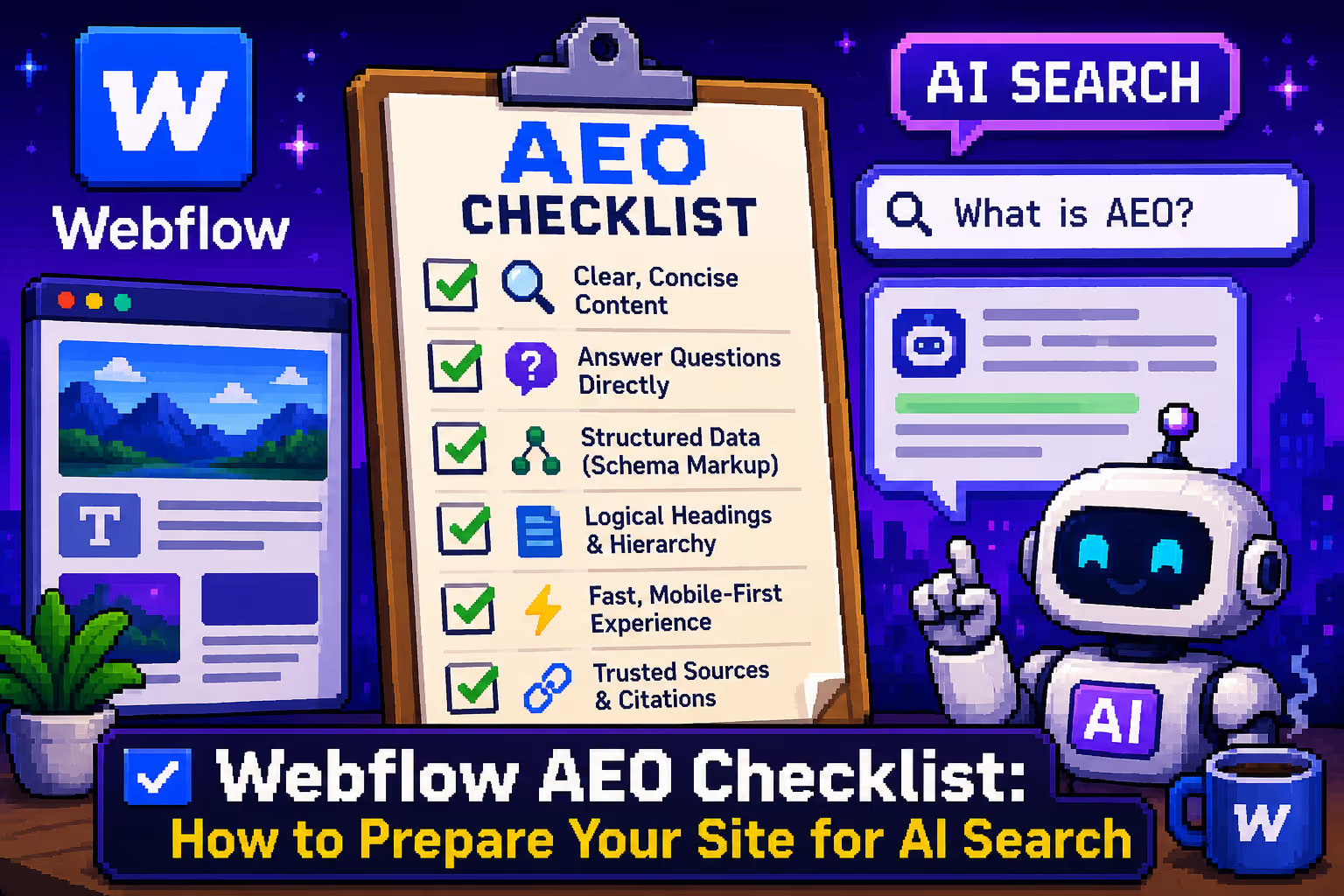
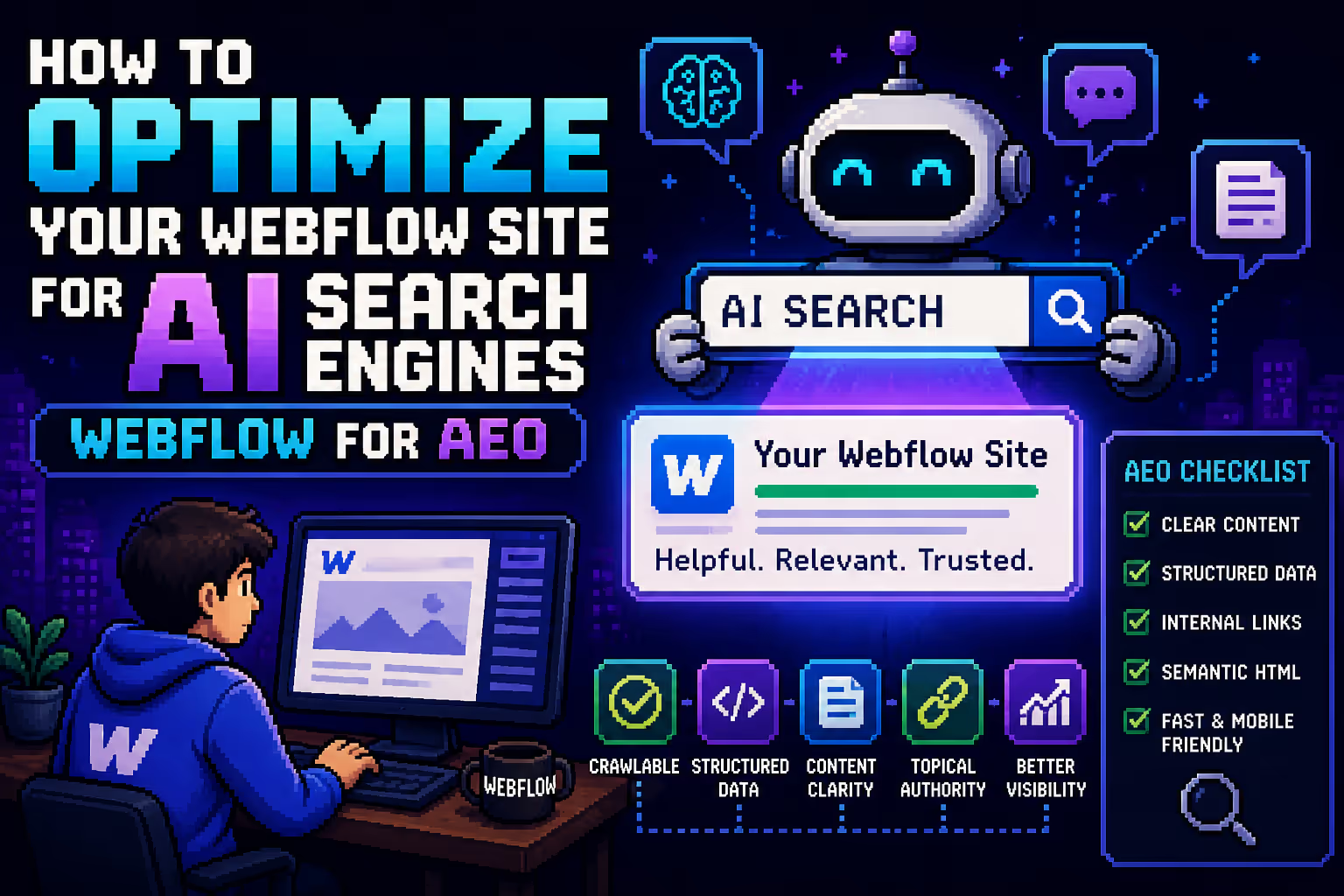
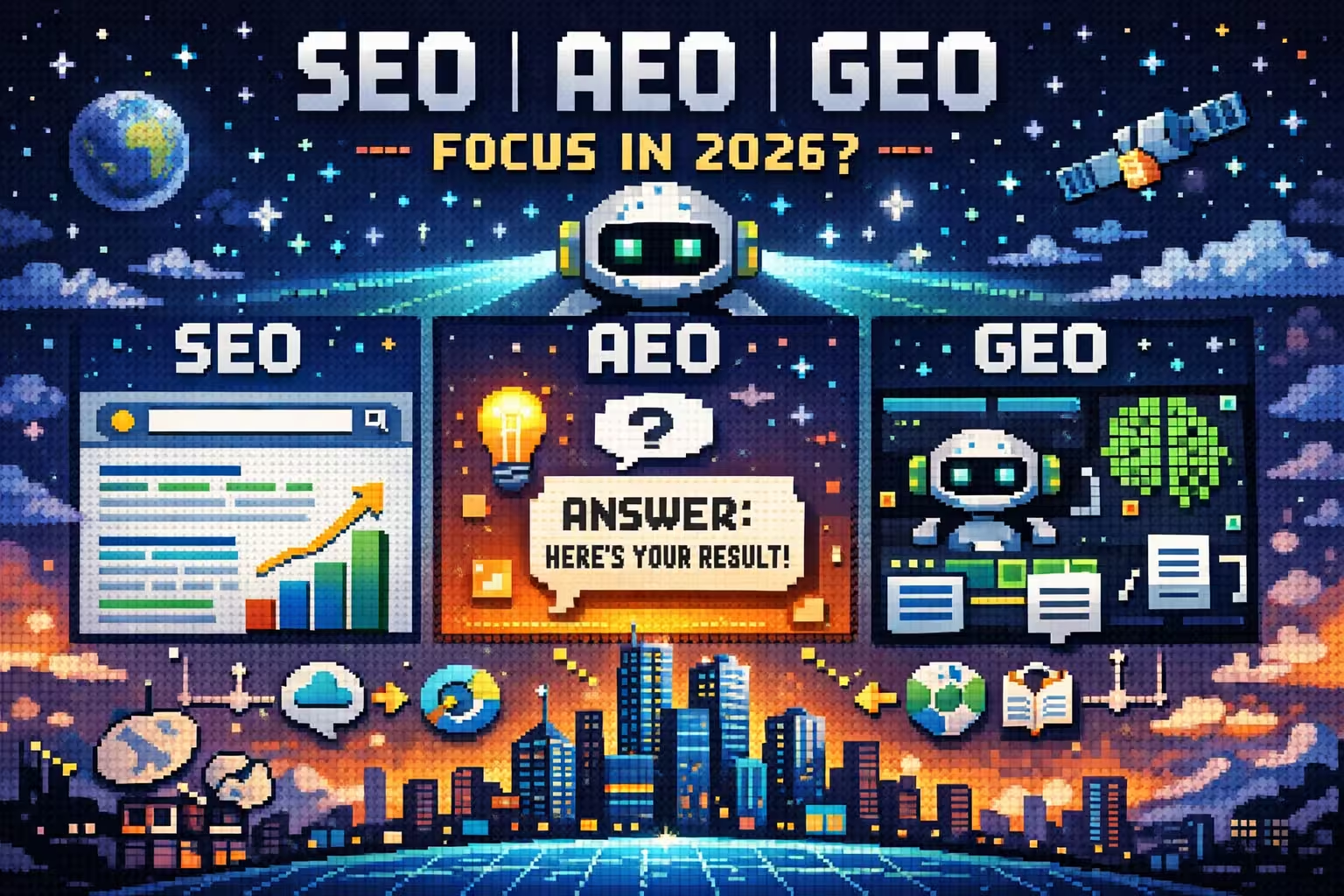
This shift has a name: AEO, or Answer Engine Optimization. It is not a replacement for SEO, but a layer on top of it. You are not just optimizing for a ranking position. You are optimizing to be the source an AI chooses when it answers a question your potential client is asking.
What this means for Webflow sites
Webflow as a platform has both advantages and disadvantages when it comes to AI readability. The advantage is that it generates clean HTML that is semantically correct when used properly. The disadvantage is that most Webflow sites are nowhere near their potential in this regard.
Here are the concrete things you can do.
1. Semantic HTML is the foundation
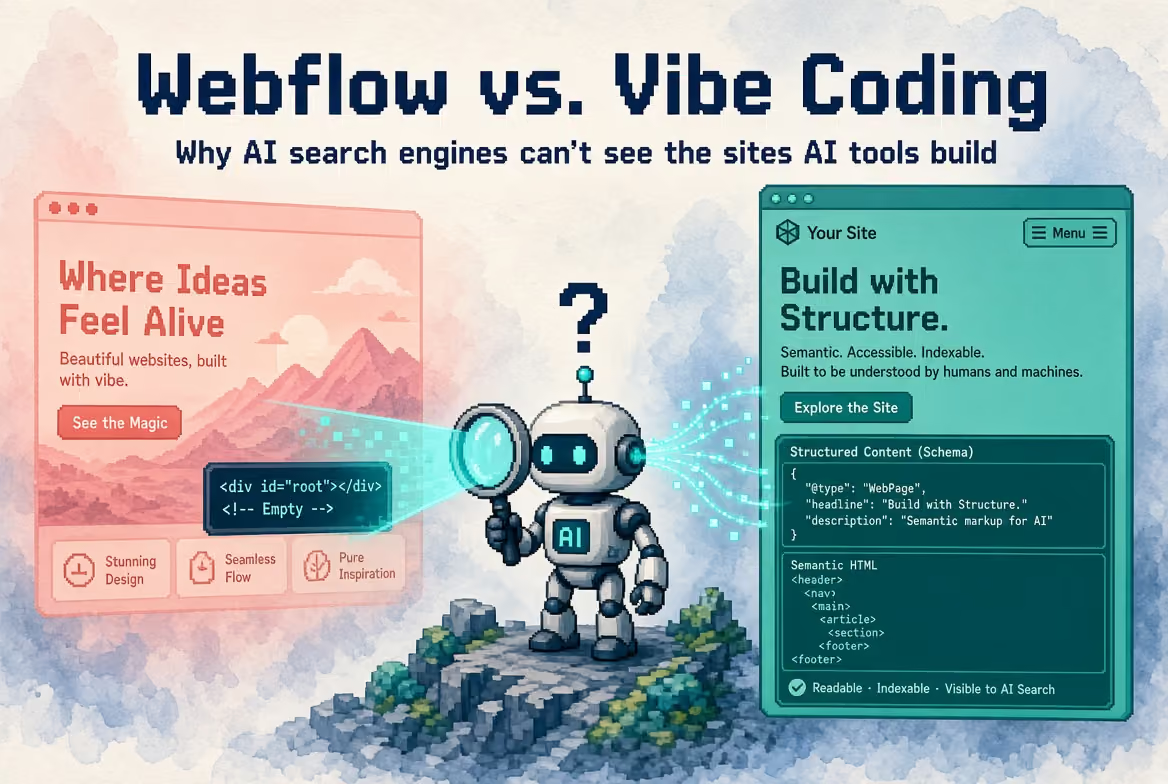
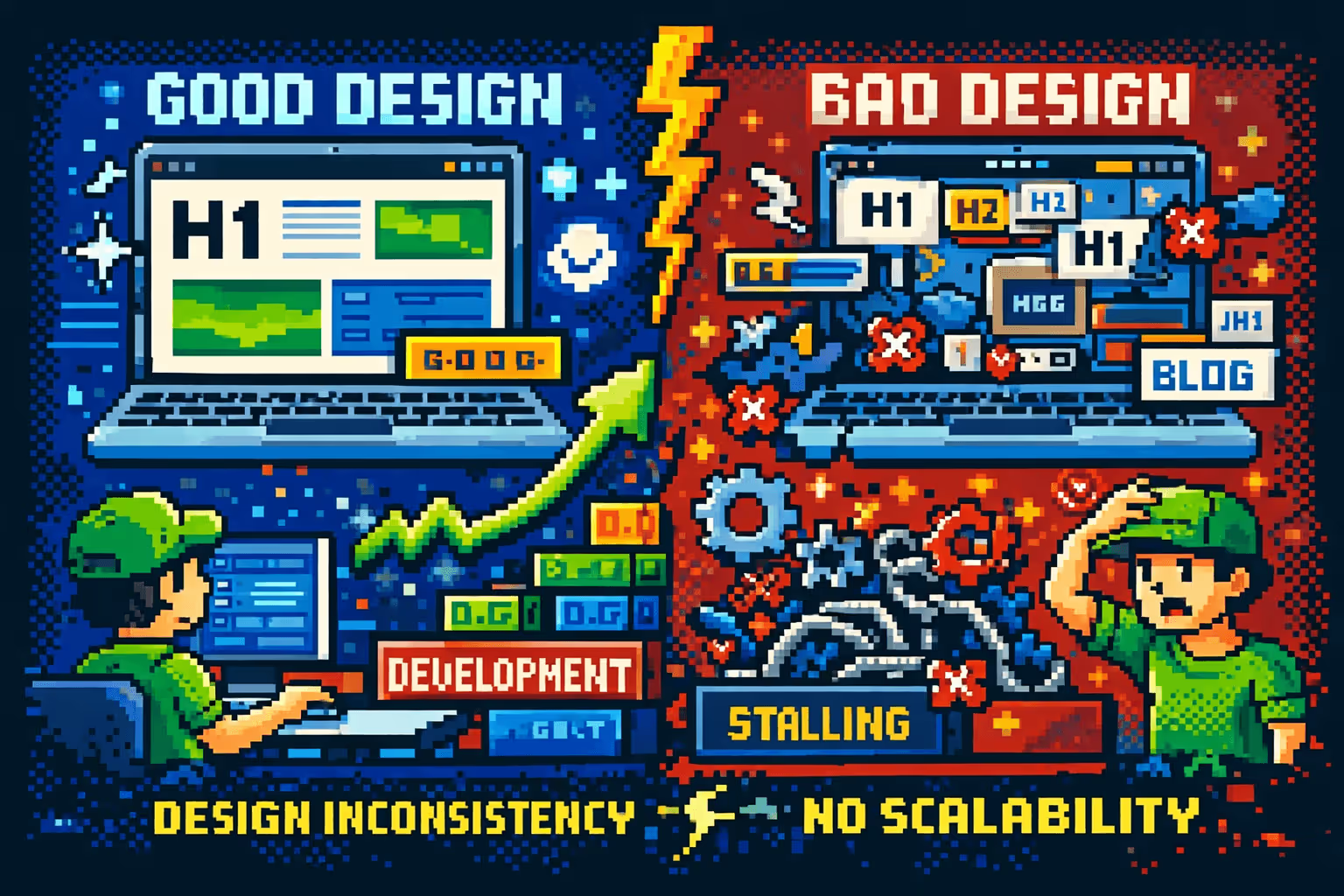
Webflow gives you the freedom to place any element on a page, but that freedom can work against you. When every heading is a styled div instead of an H1, H2, or H3 element, you lose the semantic structure that matters to both Google and AI.
The rule is simple. Every page should have one H1 that clearly describes what the page is about. Supporting sections use H2. Subsections within those use H3. This hierarchical order is the map AI tools use to understand the structure of your content.
In Webflow, always check the Element Settings panel and make sure you are using the correct HTML tags, not just visually styled divs.
2. Structured data via Schema markup
Schema markup is code you add to the Custom Code section of a page that explicitly tells AI tools and search engines what your content is. There are schemas for blog posts, organizations, FAQ sections, reviews, products, and much more.
For example, if you have a blog post, Schema markup tells the AI: this is an article, written by this person, published on this date, about this topic. Instead of the AI having to infer those details from the text, you give them explicitly.
In Webflow, add Schema markup through Page Settings, Custom Code tab, in the Head section. For blog posts using the CMS, you can dynamically inject values from CMS fields using a Webflow embed element inside the CMS template page.
3. FAQ sections are underrated
One of the most practical things you can do for AI readability is add a FAQ section to key pages. AI tools, especially those answering user questions, directly look for content organized in a question-and-answer format.
When someone asks ChatGPT how much Webflow development costs, and your page has a FAQ that directly answers that question, the chance of the AI using your answer as a source increases significantly.
Pair your FAQ section with FAQ Schema markup that describes those questions and answers to machines in a structured way.
4. Clear and direct copy
This is perhaps the most important point, and it is not technical. AI tools do not respond well to marketing language full of metaphors, abstract promises, and rhetorical questions. They look for clear statements, concrete information, and direct answers.
"We craft digital experiences that transform brands" tells the AI nothing useful. "Webflow agency based in London, specializing in SaaS and B2B website development" is something the AI can understand, extract, and relay to a user.
That does not mean your site needs to sound dry and corporate. It means it should contain clear, informative statements that describe who you are, what you do, who you do it for, and why you are good at it.
5. Sitemap and robots.txt
The technical minimum that many overlook. Webflow automatically generates a sitemap, but you should verify that all important pages are included and that robots.txt is not blocking content that AI crawlers need to see.
Go to yourdomain.com/sitemap.xml and yourdomain.com/robots.txt and check both.
6. Alt text on images
AI tools that crawl the web do not see your images. They see the alt text you wrote alongside them. Good alt text is not "team photo" but "Webflow development team during a code review session in Belgrade." A description that carries actual information.
In Webflow, alt text can be added directly in the Asset Manager or within CMS fields for each image.
7. Open Graph and meta data
When an AI tool pulls a page as a source, it also reads the metadata: page title, meta description, Open Graph tags. These influence how the AI understands and describes your content.
Every page should have a unique title tag and meta description that clearly and accurately describes the content of that page. In Webflow, this is set in Page Settings for static pages, or through CMS fields for template pages.
8. Internal linking with descriptive anchor text
AI tools follow the same link structure that crawlers do. When you link between pages on your site, the anchor text you use tells the AI what the destination page is about. "Click here" is meaningless. "How to set up Schema markup in Webflow" is a signal the AI can use to understand and connect your content.
A well-linked site is easier for AI to navigate, and easier for it to understand the relationship between your pages and topics.
9. Page speed and crawlability
AI crawlers, like search engine bots, have limited time per site. A slow-loading page or a site with poor technical structure gets less of that time. In Webflow, this means optimizing images, avoiding heavy third-party scripts that block rendering, and keeping your page structure clean.
Use Webflow's built-in asset compression and lazy loading where possible, and audit your site regularly with tools like Google PageSpeed Insights or Screaming Frog.
Conclusion
LLMs are not the future. They are the present. Users are already relying on them daily to find information, recommendations, and solutions. The question is not whether AI tools will read your site. The question is whether they will understand what is on it and whether they will cite it as a relevant source.
The good news is that Webflow, when used correctly, can produce exceptionally AI-readable sites. Semantic HTML, structured data, clear copy, and a solid technical foundation are all you need. No special technology or complex tooling required. Just a careful approach from the start of the project.
And that is exactly what separates good Webflow developers from average ones.

Milan Kostic
Freelance Webflow Developer