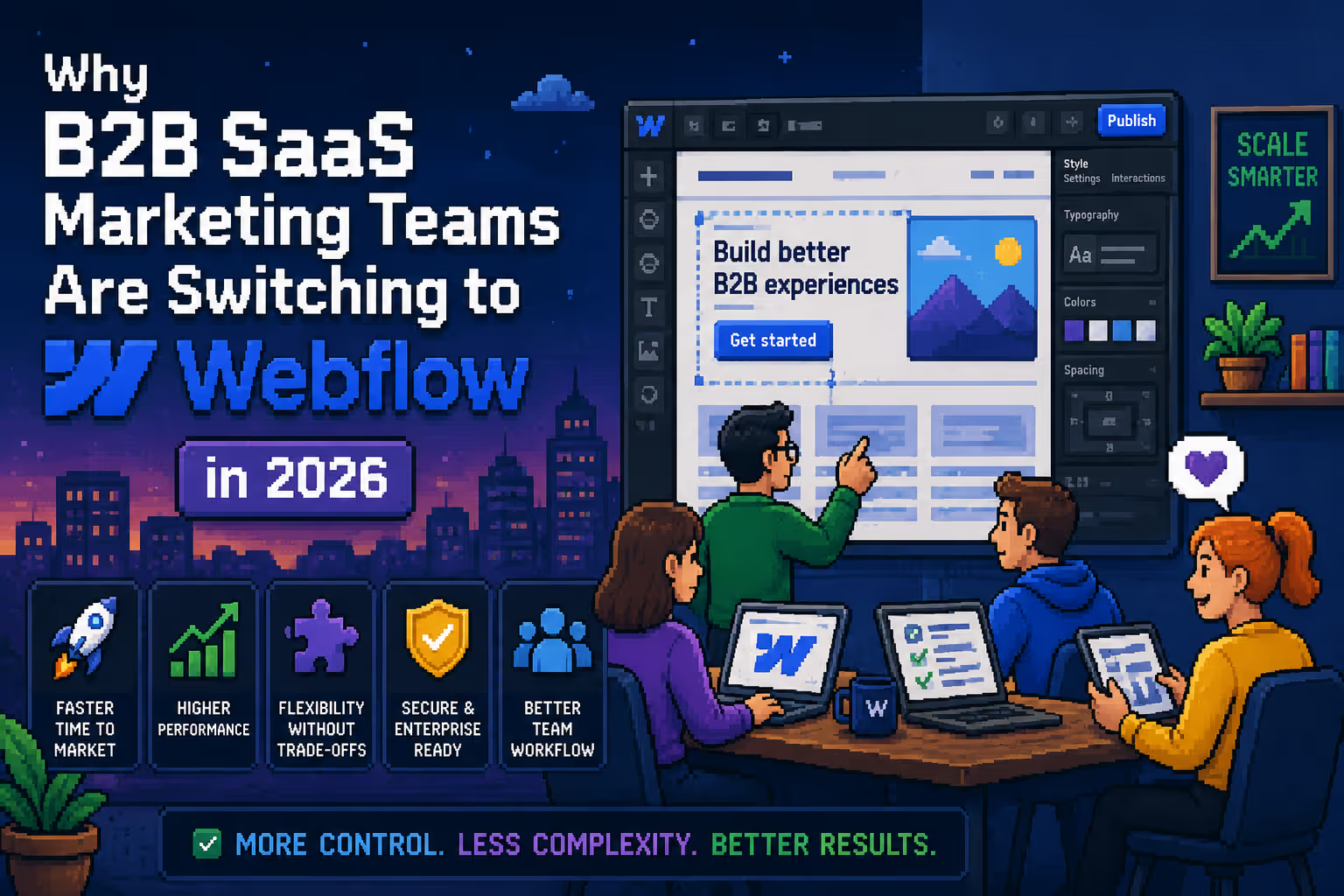
Why B2B SaaS Marketing Teams Are Switching to Webflow in 2026
May 11, 2026
Why B2B SaaS Marketing Teams Are Switching to Webflow in 2026

The marketing team that waits

Here's a scenario every B2B SaaS marketing leader knows well.

The team has an idea for a new landing page. A hero section needs A/B testing before a product launch. A feature just shipped and needs a new page to support it. A conference is three days away and the CTA needs updating.

The ticket goes into the backlog. Development is mid-sprint. Two weeks later, the conference has passed, the A/B test never ran, and the marketing team is already designing the next request in Figma, one that will also sit in a queue.

This is not a development problem. It is a structural problem with platforms that were never built to give marketing teams real autonomy.

In 2026, that model has a cost. And more B2B SaaS companies are finally doing the math.

Speed of iteration is the only moat left

In the current landscape, AI compresses every advantage that used to take months to build. Messaging, positioning, content production, competitive analysis: all of it moves faster now. The one thing AI cannot compress for you is the speed at which your own organization can act on what it learns.

If your marketing team has an insight on Tuesday and your website can only reflect it two sprints later, you are not running marketing. You are administering delay.

Webflow, when implemented correctly, solves this. Not by being a prettier page builder, but by fundamentally changing who controls the website and what they can do with it without waiting on anyone else.

What Webflow actually changes for marketing

The shift from WordPress, custom builds, or legacy CMS platforms to Webflow is not primarily about aesthetics. It is about operational speed.

Webflow gives marketing teams a visual editor that produces clean, semantic HTML, not bloated page builder output that breaks on mobile or slows down on load. The code Webflow generates is structured, readable, and performant by default.

Beyond the editor, Webflow's CMS is built for non-technical users. Blog posts, case studies, changelog entries, testimonials, pricing updates, new integration pages: marketing creates and publishes all of it independently. No server access. No FTP. No plugin conflicts that take the site down after an update.

Engineers get freed from sprint tickets about button colors and hero text. They go back to building the product. Marketing gets freed from dependency on engineering. They go back to actually running campaigns. This is exactly why marketing teams struggle to maintain Webflow projects on their own when the site was never built for their autonomy in the first place.

Switching is not enough. Most teams miss the real unlock

Here is where most Webflow migrations fall short.

A team moves from WordPress to Webflow, expects transformation, and six months later has a site that is still hard to maintain, slower than expected, and where marketing still cannot make changes without asking someone for help.

The platform is not the problem. The setup is.

Unlocking Webflow's full potential for a marketing team requires two things working together: the right CSS framework and a component-based architecture. Without both, Webflow becomes just another tool with a steeper learning curve. If you are planning a migration, the Ultimate Webflow Migration Checklist for B2B and SaaS covers exactly what needs to be in place before you make the move.

Why the framework choice matters, and why I use MAST

Webflow does not come with a built-in CSS framework. Every developer brings a structural decision to the project, and that decision determines everything downstream: page load speed, code maintainability, scalability, and ultimately how much autonomy the marketing team actually has.

The three most common approaches in the Webflow ecosystem are Client First, MAST, and Lumos. I build with MAST, and the reasons are practical. For a deeper look at how framework choice affects long-term project health, see why the right Webflow framework matters for scalable websites and why designers should understand Webflow frameworks for smoother collaboration.

MAST is lightweight by design. Client First can become bloated on larger projects because it relies more heavily on custom classes than on a utility-first approach. One developer who migrated a client project to MAST reduced the site's CSS file size by 60%. That is not a cosmetic improvement. Smaller CSS files load faster on mobile networks, which directly affects Core Web Vitals, which directly affects both search rankings and conversion rates.

MAST uses Webflow's native variables and modes natively. This means the design system, colors, typography, spacing, is defined once and applied consistently across the entire site. When a brand refreshes its palette, you change one variable. You do not hunt through 50 pages updating hex codes manually.

MAST follows a modified BEM methodology with short, semantic class names. The code is readable and predictable, easy to hand off, easy to pick back up six months later, easy for any experienced developer to understand without a two-week onboarding.

Webflow itself rebuilt its own Enterprise site using MAST specifically to allow its entire team to build more efficiently and consistently as the site grew. For B2B SaaS companies whose websites need to grow with the product, the framework is not a technical detail. It is a business decision.

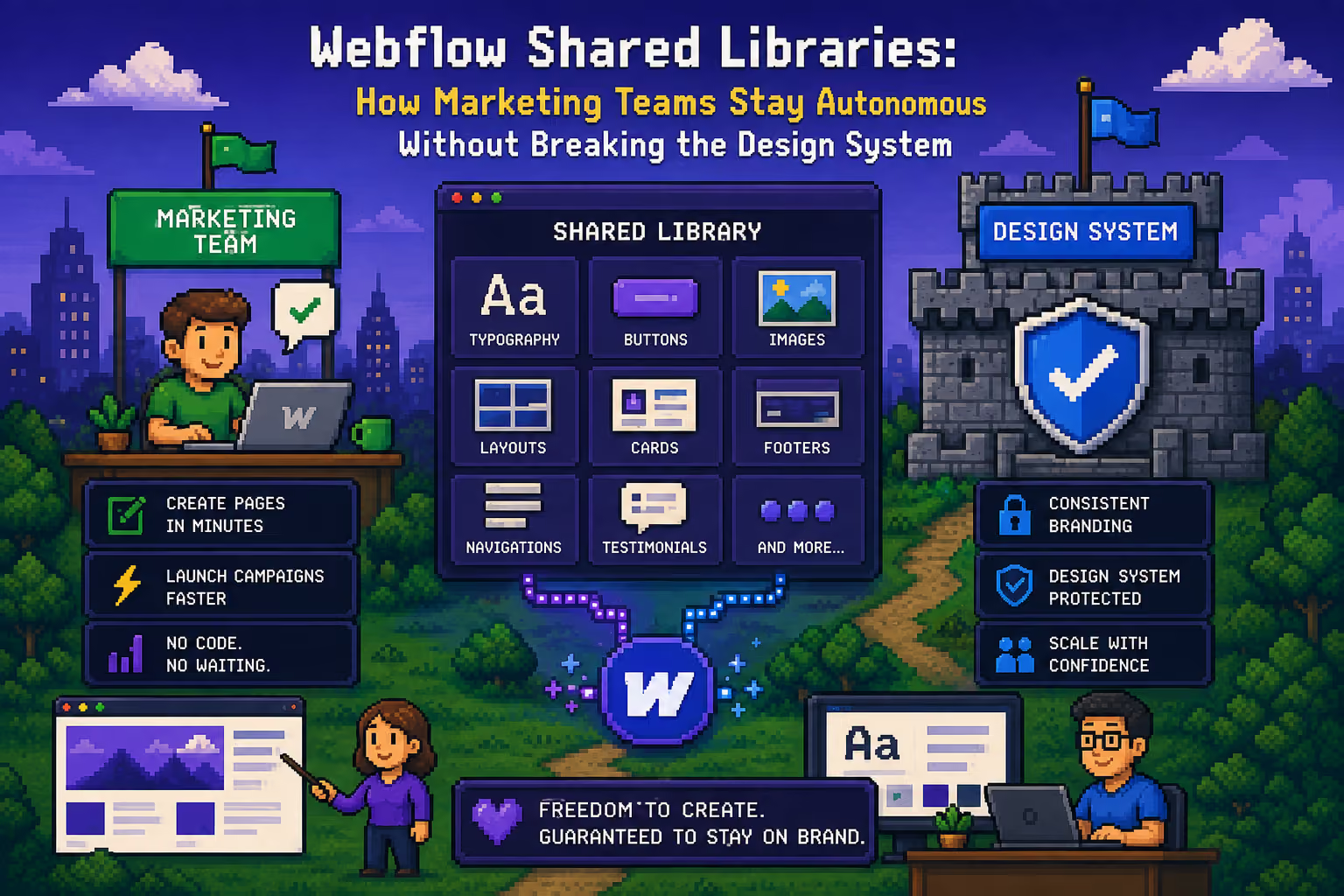
Component architecture: the Lego system your marketing team actually needs

MAST is component-first by design, and this is where the real marketing autonomy comes from.

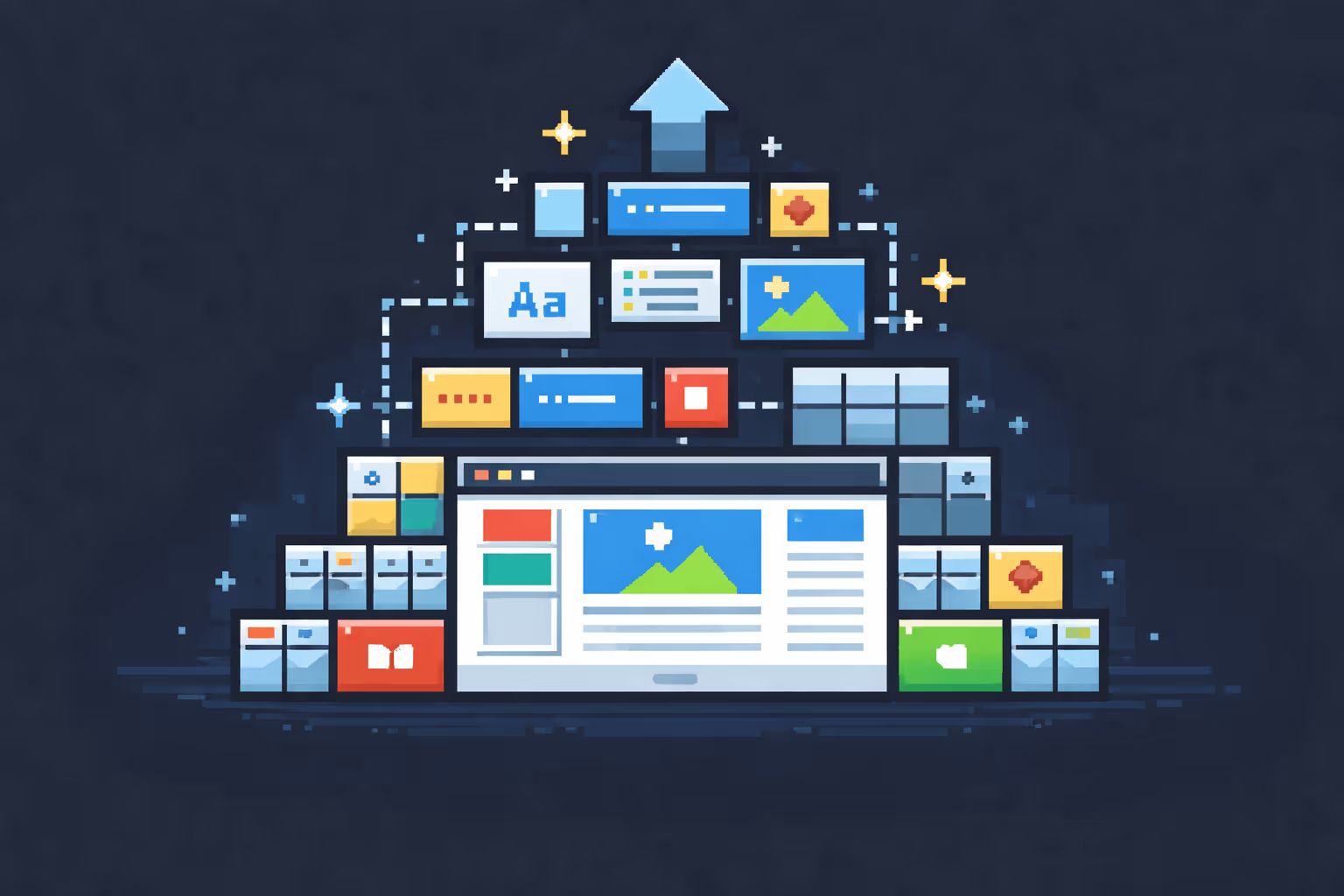
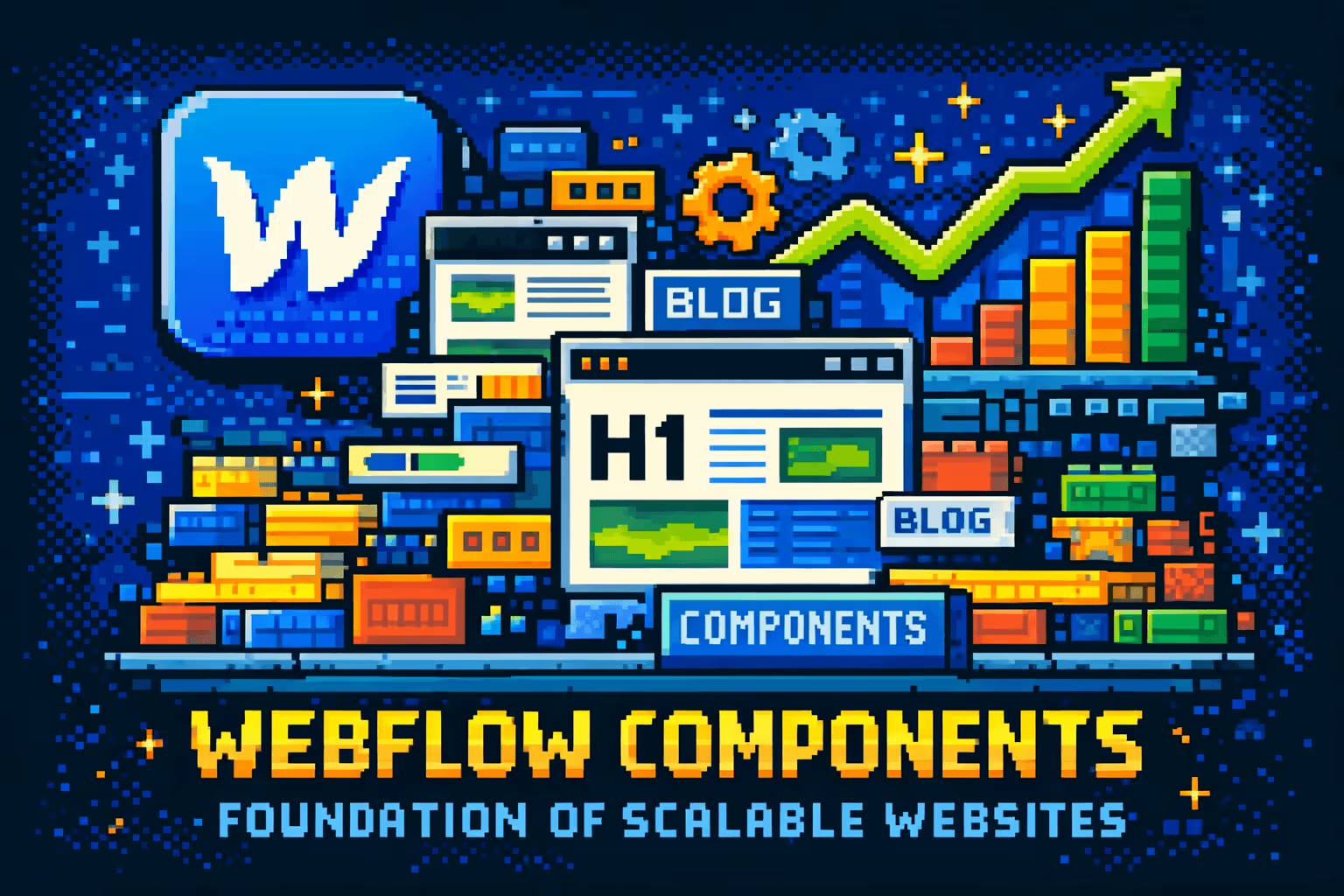
Component-based architecture means every repeatable element on the site, hero sections, pricing tables, feature grids, testimonial blocks, CTA banners, comparison tables, is built as a self-contained, reusable unit. Each component is designed, tested, and approved once. After that, it just works, at every breakpoint, in every context. For a full breakdown of how components work in Webflow, see a closer look at Webflow components.

For a marketing team, this changes the workflow entirely.

Need a new landing page for a campaign launching next week? Marketing pulls in a hero component, adds a feature grid, drops in a testimonial block, sets the CTA, and the page is live. No developer in the loop. No design review for brand consistency, because the components are already on-brand by definition.

A/B testing becomes a question of swapping a component variant, not rebuilding a page. A new product feature needs a dedicated page, and marketing creates it using existing blocks without a single ticket.

This is what Webflow is actually capable of. But it only exists if someone built the system that way in the first place. Most sites skip this step entirely, which is why most Webflow websites do not scale well.

The CMS that marketers will actually use

Webflow's CMS is designed for non-technical editors, and it shows.

Writing a blog post in Webflow's editor feels close to writing in Notion. Fields are clear. Images upload and display immediately. Publishing is a single click.

No staging environment confusion. No plugin update that broke the editor. No developer needed to create a new CMS collection field when the content strategy evolves.

For B2B SaaS marketing teams running content programs, this matters. Blog posts, case studies, customer stories, and resource pages should be owned by the team producing them, not routed through a development queue every time someone wants to publish.

Built for SEO and AEO, but only with the right foundation

In 2026, ranking on Google is no longer the complete picture.

Nearly half of B2B buyers now use AI platforms, ChatGPT, Perplexity, Claude, Gemini, for vendor research and evaluation. Gartner projects traditional search volume will drop 25% by 2026 as AI agents replace conventional search for product discovery. Buyers are forming shortlists, evaluating vendors, and making decisions without ever clicking a search result.

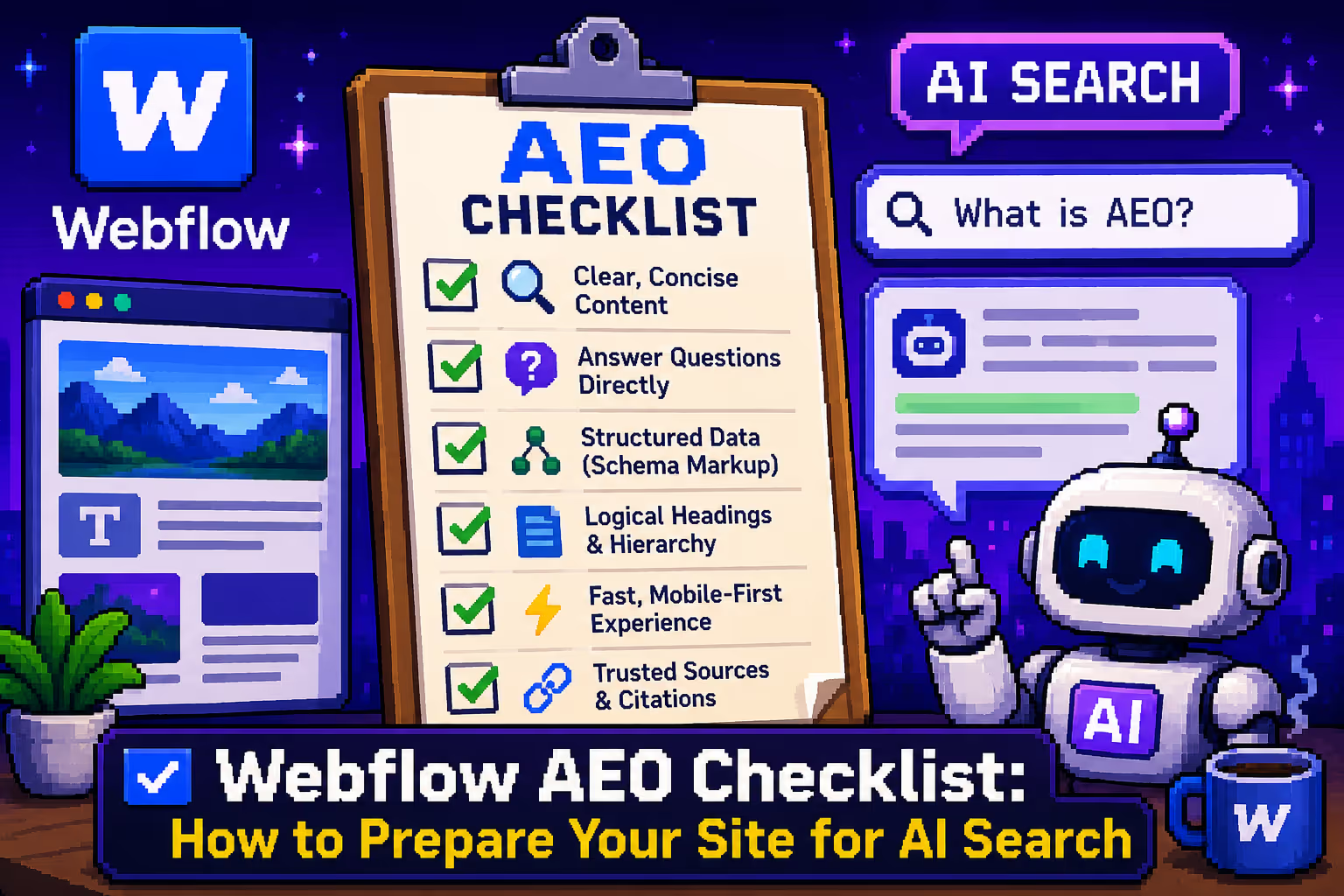
The implication for your website is direct: your content needs to be optimized not just for Google crawlers but for AI retrieval systems. That means semantically clean HTML, structured data implemented at the CMS level, clear question-and-answer content formatting, and content that AI systems can extract and cite as an authoritative source. For a practical guide on exactly how to do this, see how to optimize your Webflow site for AI search engines and SEO, AEO, and GEO: what should you focus on in 2026.

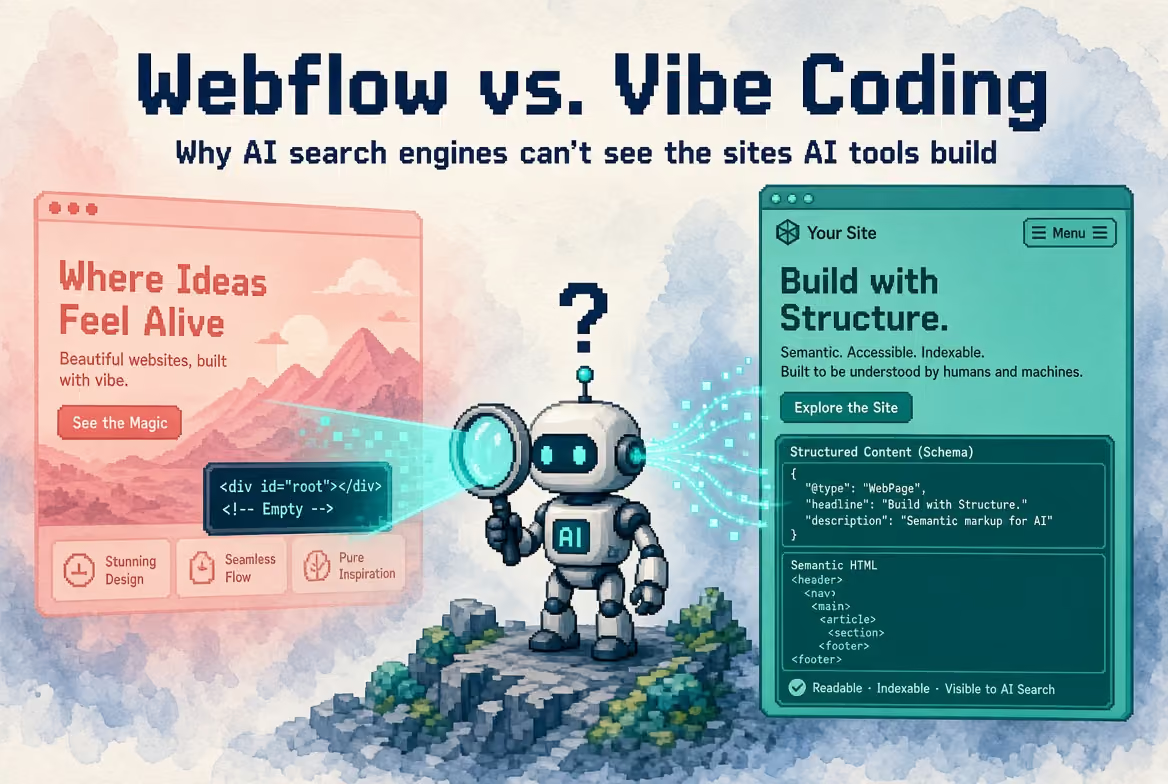
Webflow, built on a proper framework, produces exactly the kind of clean, structured output that both search engines and AI engines prefer. Page builders and bloated CMS platforms produce the opposite, disorganized HTML that is difficult for any crawler to parse meaningfully. If you want to go deeper on Webflow's SEO fundamentals, Is Webflow good for SEO covers what actually matters.

If your website cannot be read clearly by AI, you are invisible to the portion of your buyers who never make it to a search results page.

Claude MCP and the automation layer

This is not the headline, but it is worth knowing.

With Claude MCP integration, Webflow becomes a platform that marketing and SEO teams can partially automate in ways that were not practical before. Specifically: automated internal linking across blog posts, programmatic page creation for specific keyword clusters or industry verticals, and CMS updates without manual intervention. For a hands-on walkthrough, how to use the Webflow Connector in Claude is the practical starting point, and how to run a full AEO and GEO audit using Claude and MCP shows what the workflow looks like end to end.

For B2B SaaS teams building content programs at scale, this means an SEO workflow that compounds over time without requiring proportional headcount growth. You can build a content machine that gets smarter as it grows, and you can do a significant portion of it without a developer once the right Webflow infrastructure exists.

The setup determines everything

Webflow can be just as limiting as any no-code tool if the setup is wrong.

Without a clear component architecture, marketers cannot build pages independently. Without the right CSS framework, the site gets slower and harder to maintain as it grows. Without well-structured CMS collections and content models, publishing new content becomes as complicated as it was in whatever system the team left behind.

The right Webflow developer does not just build a website. They build a system, one where marketing operates without bottlenecks, performance holds as the site scales, and every new requirement can be addressed without accumulating technical debt that comes back to cost the team later.

Ready to set up your Webflow project the right way?

Most Webflow migrations underdeliver because the foundation was never built for marketing autonomy, performance at scale, or AI-ready content structure.

If you are considering a move to Webflow, or if you already have a Webflow site that is not performing the way you expected, let's talk about what a proper setup looks like for your specific situation.

Get in touch and let's build it right.

Frequently Asked Questions

Why are B2B SaaS companies switching to Webflow in 2026?

B2B SaaS marketing teams are switching to Webflow because it gives them direct control over the website without depending on engineering sprints. In 2026, iteration speed is a competitive advantage, and Webflow removes the main bottleneck between a marketing idea and a live change.

What is the MAST framework and why does it matter for Webflow?

MAST is a lightweight, component-first CSS framework for Webflow built by NoCodeSupplyCo. It uses Webflow's native variables, follows a modified BEM methodology, and produces minimal CSS output. Compared to alternatives like Client First, MAST keeps the codebase smaller, loads faster on mobile, and scales more cleanly as the site grows.

What does component-based architecture mean for a marketing team?

Component-based architecture means the website is built from reusable, pre-designed blocks: hero sections, feature grids, CTA banners, testimonial layouts. Once built and approved, marketing can assemble new landing pages and run A/B tests by combining these blocks without developer involvement.
How does Webflow help with AEO and AI search visibility?

Webflow built on a proper framework produces clean, semantic HTML that AI crawlers can parse and cite as an authoritative source. With structured data implemented at the CMS level and well-formatted content, Webflow sites are better positioned to appear in AI-generated answers on platforms like ChatGPT, Perplexity, and Google AI Overviews.

Can marketing teams really manage a Webflow site without a developer?

Yes, but only if the site was built correctly from the start. With a component-based setup and a clean CMS structure, marketing teams can publish blog posts, create landing pages, update content, and run A/B tests independently. The developer is needed for structural changes, not day-to-day marketing operations.
Let’s talk about your website

Other articles
What are LLMs and what does that mean for building websites
What are LLMs and what does that mean for building websites

A practical guide to understanding large language models and how to make your Webflow site more readable and citable by AI tools.

How to Run a Full AEO and GEO Audit on Your Webflow Site Using Claude and MCP

How to Run a Full AEO and GEO Audit on Your Webflow Site Using Claude and MCP

How to audit your Webflow site for AEO and GEO in under 30 minutes using Claude and MCP, with exact prompts for each step.

How to Run a Full Webflow SEO Audit Using Claude and MCP in Under 30 Minutes

How to Run a Full Webflow SEO Audit Using Claude and MCP in Under 30 Minutes

How to use Claude connected to your Webflow site via MCP to run a full SEO audit in under 30 minutes, with exact prompts you can copy and use today.

How to Optimize Your Webflow Site for AI Search Engines: Webflow for AEO

How to Optimize Your Webflow Site for AI Search Engines: Webflow for AEO

A practical guide to AEO for Webflow sites in 2026. How AI search engines discover, extract, and cite your content, and what to do about it.

The Best AI Tools for Startups in 2026. From Launch to Series A

The Best AI Tools for Startups in 2026. From Launch to Series A

A stage-by-stage breakdown of the best AI tools for startups in 2026, from building your first MVP and marketing site to scaling past Series A.

How the right website pays for itself

How the right website pays for itself

A poorly built website costs more than you think. Learn how the right website saves money, reduces ongoing expenses, and actively earns for your business.

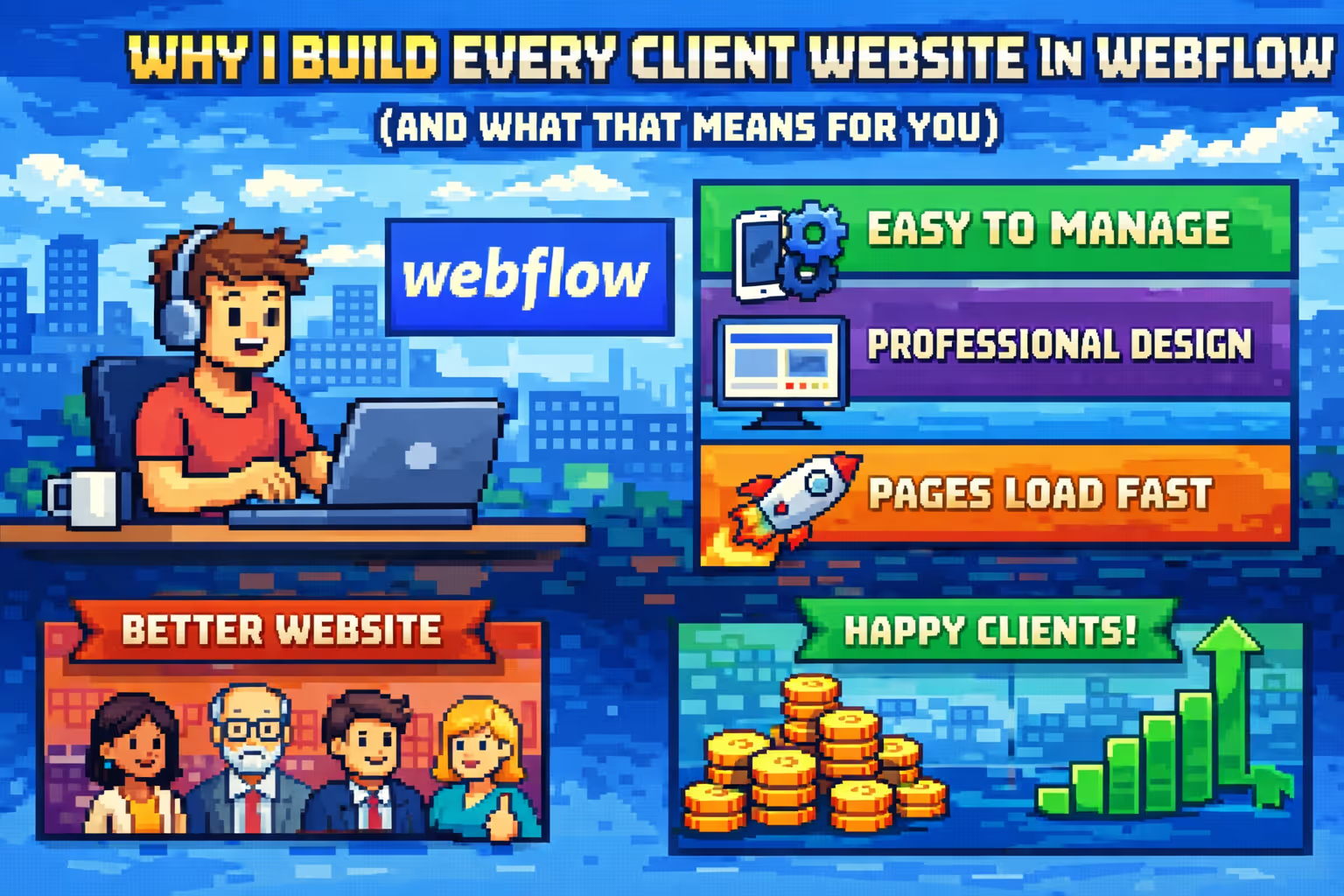
Why I build every client website in Webflow (and what that means for you)

Why I build every client website in Webflow (and what that means for you)

There are dozens of platforms to build a website on. Here's why I use Webflow for every client, and what you actually get as a result.

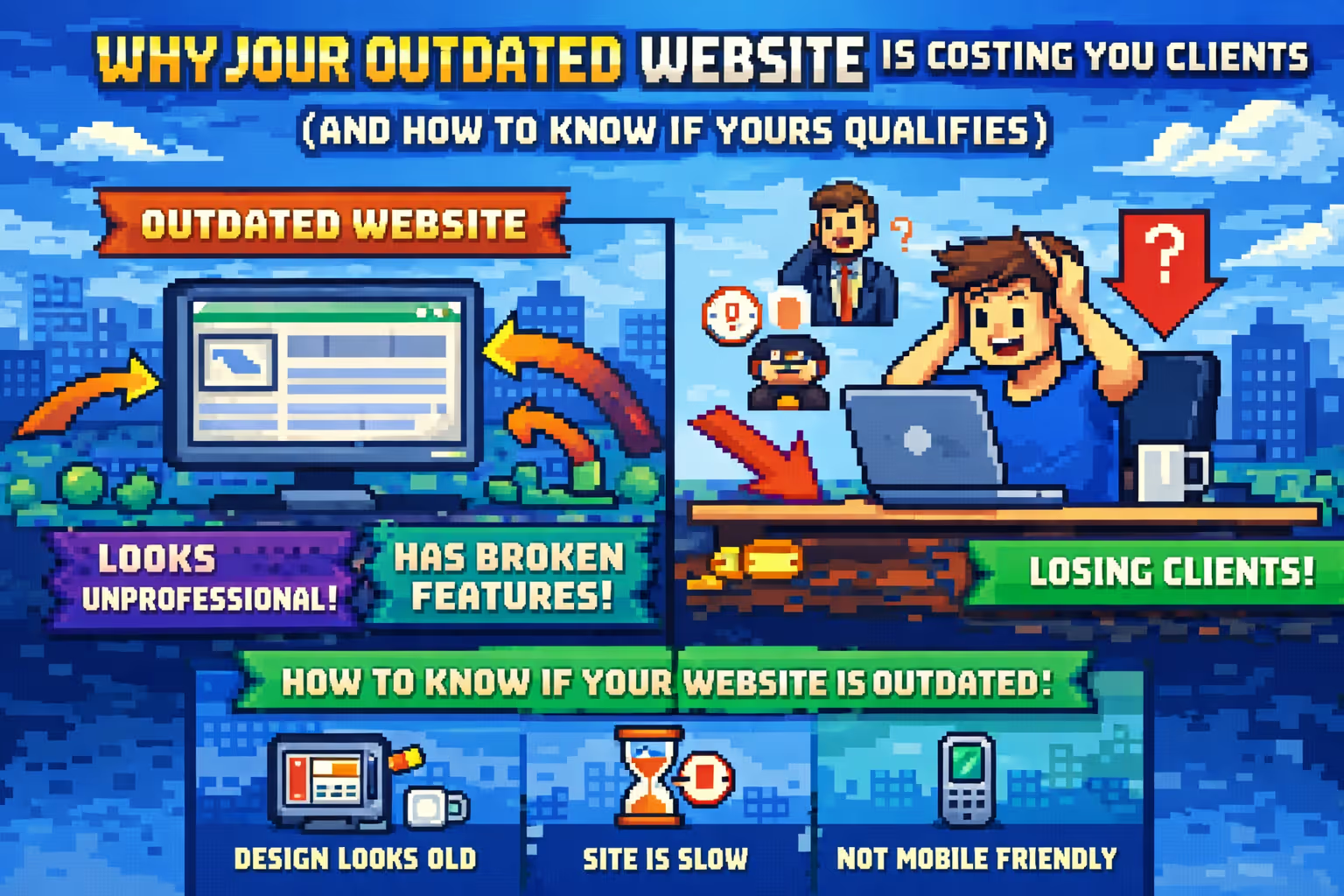
Why your outdated website is costing you clients (and how to know if yours qualifies)

Why your outdated website is costing you clients (and how to know if yours qualifies)

60% of small businesses lose customers because of website issues. Most of them don't even know it's happening. Here's how to tell if your site is one of them.

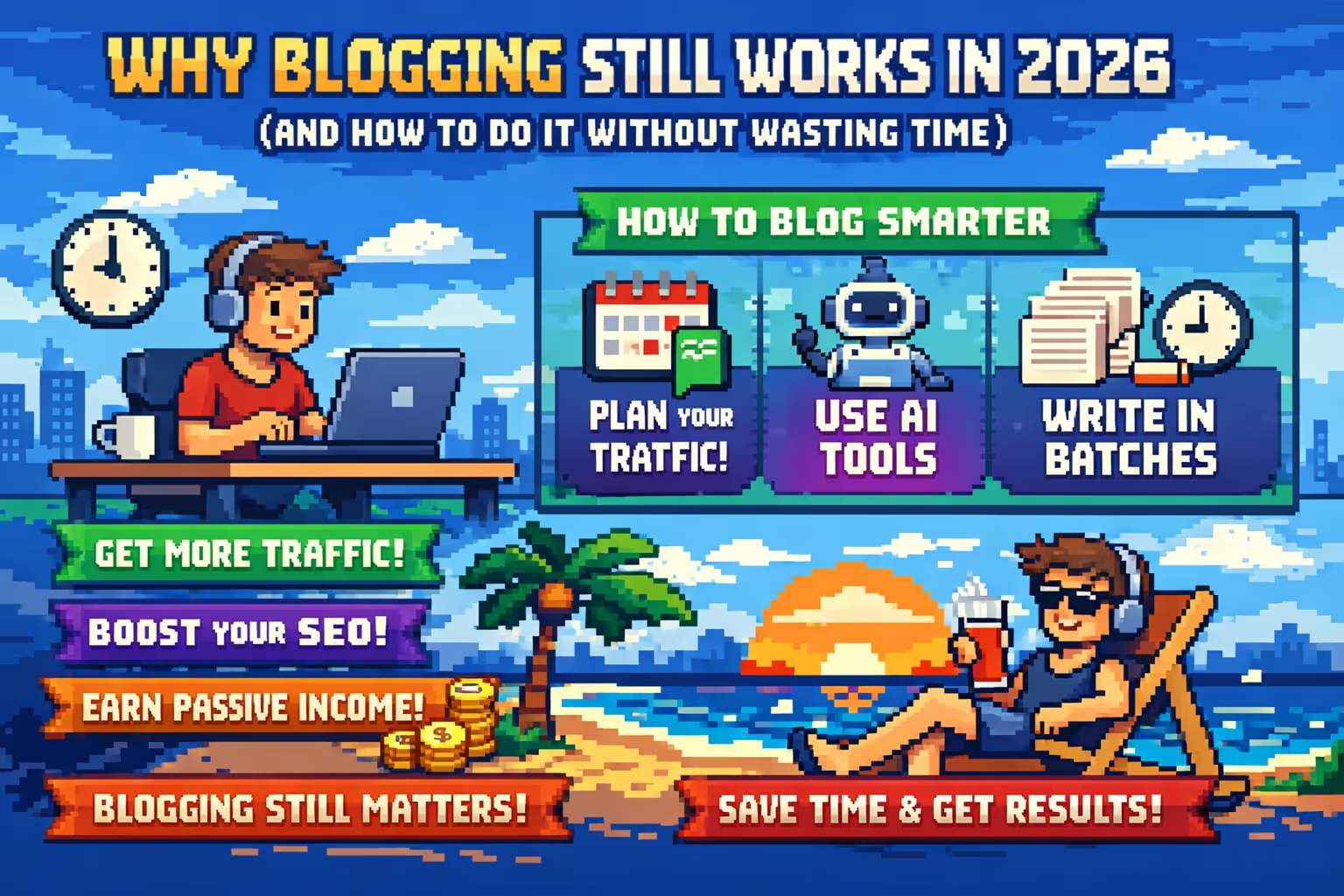
Why blogging still works in 2026 (and how to do it without wasting time)

Why blogging still works in 2026 (and how to do it without wasting time)

Over 60% of internet users read blogs regularly. 81% of marketers say it still delivers results. So why does every small business owner I talk to have a blog they haven't touched in a year?

How to Use the Webflow Connector in Claude (Complete Guide)

How to Use the Webflow Connector in Claude (Complete Guide)

Learn how to set up the Webflow connector in Claude, what you can automate, and where the real limits are.

What is Webflow?

What is Webflow?

Learn what Webflow really is, why it's not just another website builder, and how it works.

What is Schema Markup? The Secret Language of High-Ranking Websites

What is Schema Markup? The Secret Language of High-Ranking Websites

What exactly is Schema markup? Learn how structured data helps Google understand your content and why it's the most underused growth asset in technical SEO.

How to Get a 100/100 Lighthouse Score on Webflow Mobile: A Full-Service Guide

How to Get a 100/100 Lighthouse Score on Webflow Mobile: A Full-Service Guide

Achieve a perfect 100/100 Lighthouse score on Webflow mobile. Learn expert strategies for AVIF images, font preloading, and script delays to boost your SEO ranking.

The Ultimate Webflow Migration Checklist for B2B & SaaS: A Stress-Free Guide to Scaling Without Losing SEO Juice

The Ultimate Webflow Migration Checklist for B2B & SaaS: A Stress-Free Guide to Scaling Without Losing SEO Juice

Moving your SaaS site to Webflow? Use this technical checklist to protect your SEO, automate CMS migration, and sync your CRM. Migrate without the stress.

The Ultimate Guide to Webflow SEO in 2026

The Ultimate Guide to Webflow SEO in 2026

Master Webflow SEO in 2026. Learn how to leverage AI, optimize for zero-click searches, and boost site speed with Webflow’s built-in tools. Start ranking higher!

From Figma to Webflow: The Definitive Guide for 2026

From Figma to Webflow: The Definitive Guide for 2026

Turn Figma designs into high-performance Webflow websites with a structured workflow, clean architecture, and modern best practices.

How much does a business website cost in the US?

How much does a business website cost in the US?

Learn how much a business website really costs in the US. A clear breakdown of pricing for small businesses, startups, landing pages, and larger projects.

Webflow vs Lovable: a platform comparison. Which one is better?

Webflow vs Lovable: a platform comparison. Which one is better?

A practical comparison of Webflow and Lovable. Learn which no-code platform is better for design flexibility, SEO, scalability, and long-term website growth.

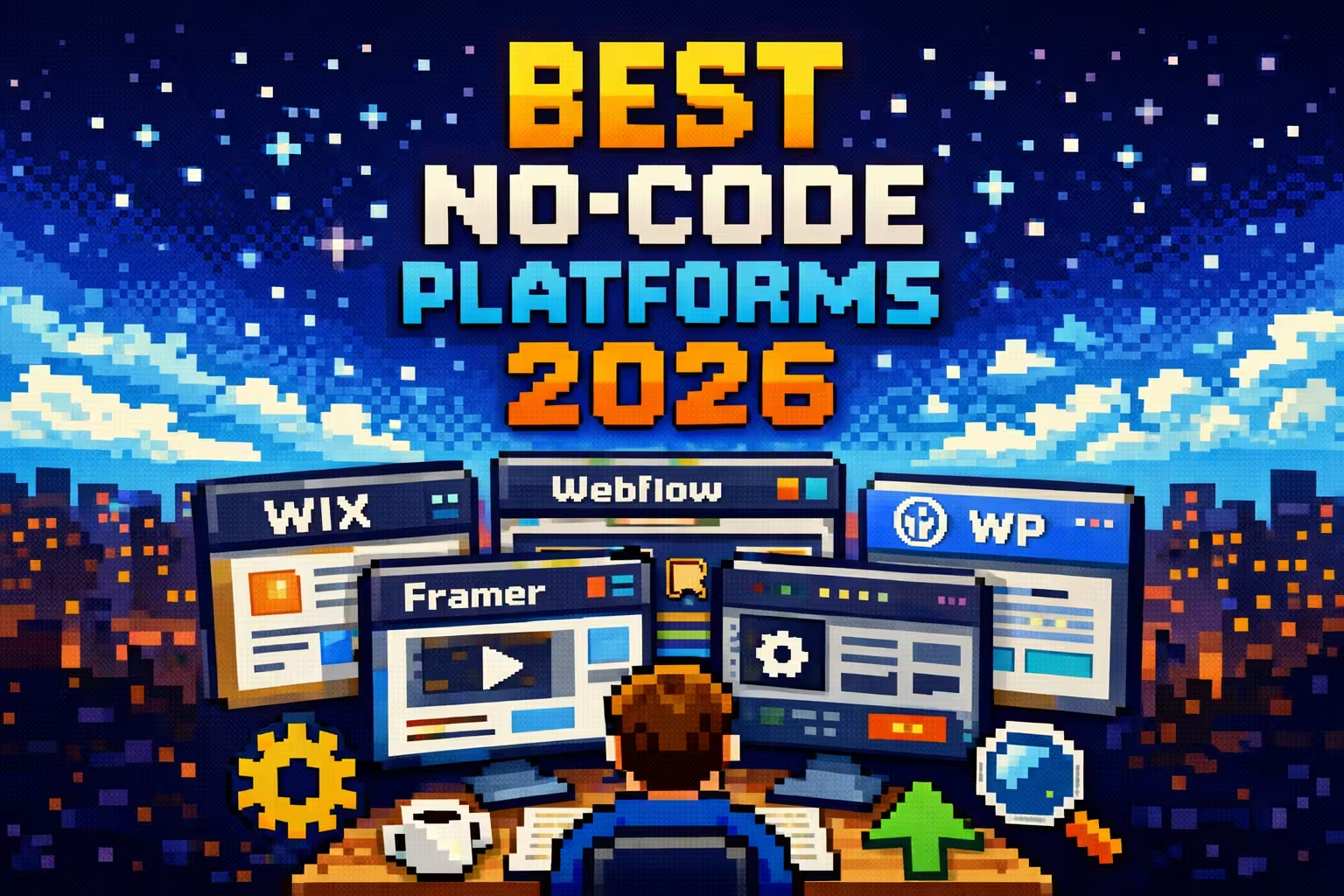
Best No-Code Platforms for Websites in 2026: A Complete Comparison

Best No-Code Platforms for Websites in 2026: A Complete Comparison

A complete comparison of the best no-code platforms for building websites in 2026. Compare Webflow, Framer, Wordpress, and more to choose the right platform for your project.

Webflow and Framer: A Practical Comparison for 2026

Webflow and Framer: A Practical Comparison for 2026

Full 2026 Webflow vs Framer comparison covering CMS power, pricing, SEO tools, AI features, and which no-code platform fits your project.

Webflow App Gen: A Complete Guide to the AI Revolution in Web App Generation

Webflow App Gen: A Complete Guide to the AI Revolution in Web App Generation

Learn what Webflow App Gen is and how it uses AI to generate production-ready web applications directly inside Webflow. Features, CMS integration, and deployment explained.

Webflow Migration Guide: How to Move Your B2B Website Without Losing SEO Rankings

Webflow Migration Guide: How to Move Your B2B Website Without Losing SEO Rankings

Learn how to migrate your B2B website to Webflow without losing SEO rankings. A practical guide covering redirects, CMS structure, performance, and post-launch checks.

SEO, AEO, and GEO: what should you focus on in 2026?

SEO, AEO, and GEO: what should you focus on in 2026?

Learn the difference between SEO, AEO, and GEO, how search is evolving, and what to focus on in 2026 to stay visible in AI-driven and traditional search.

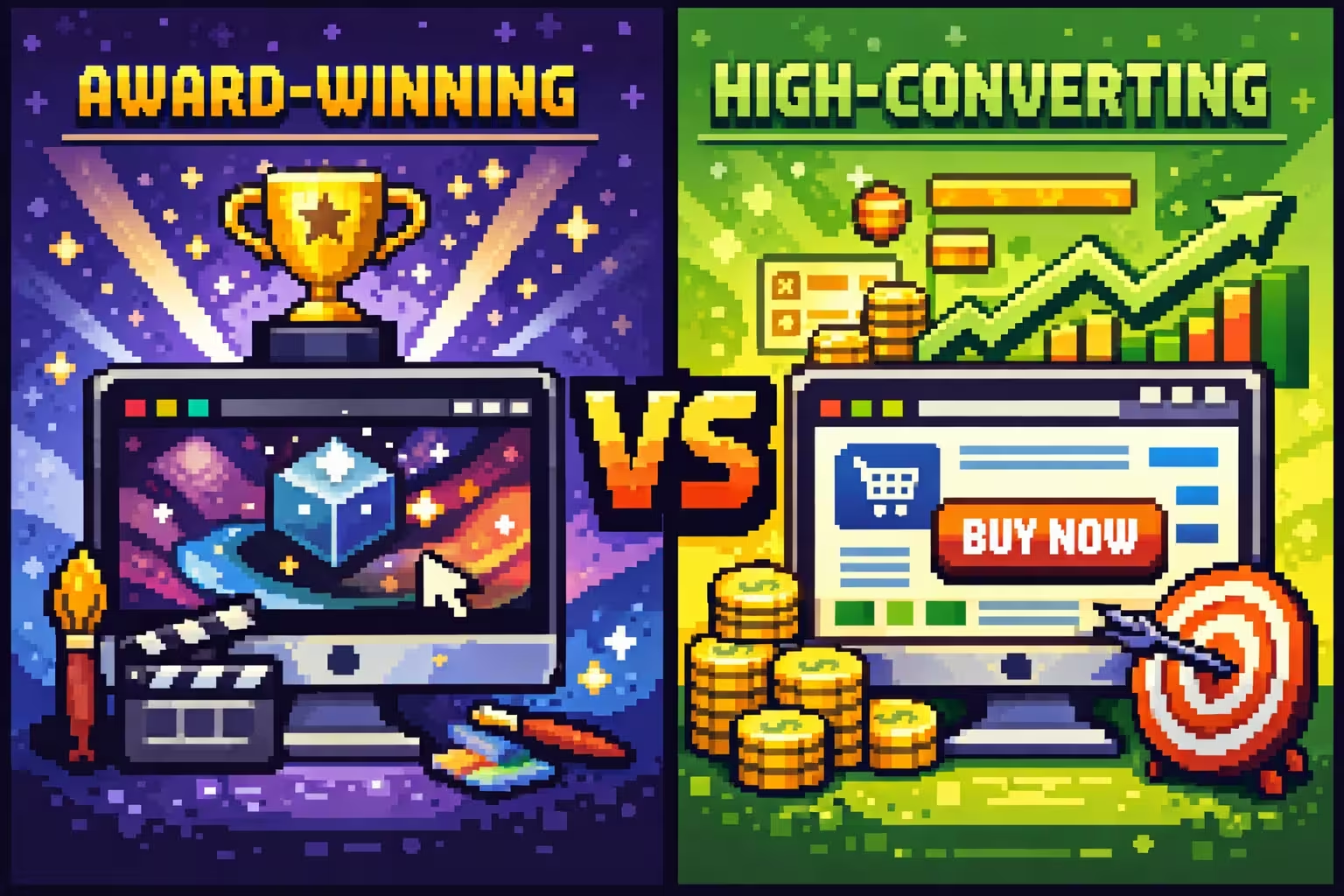
The difference between award-winning and high-converting websites

The difference between award-winning and high-converting websites

What’s the real difference between award-winning and high-converting websites? Learn how design goals, usability, and strategy impact business results.

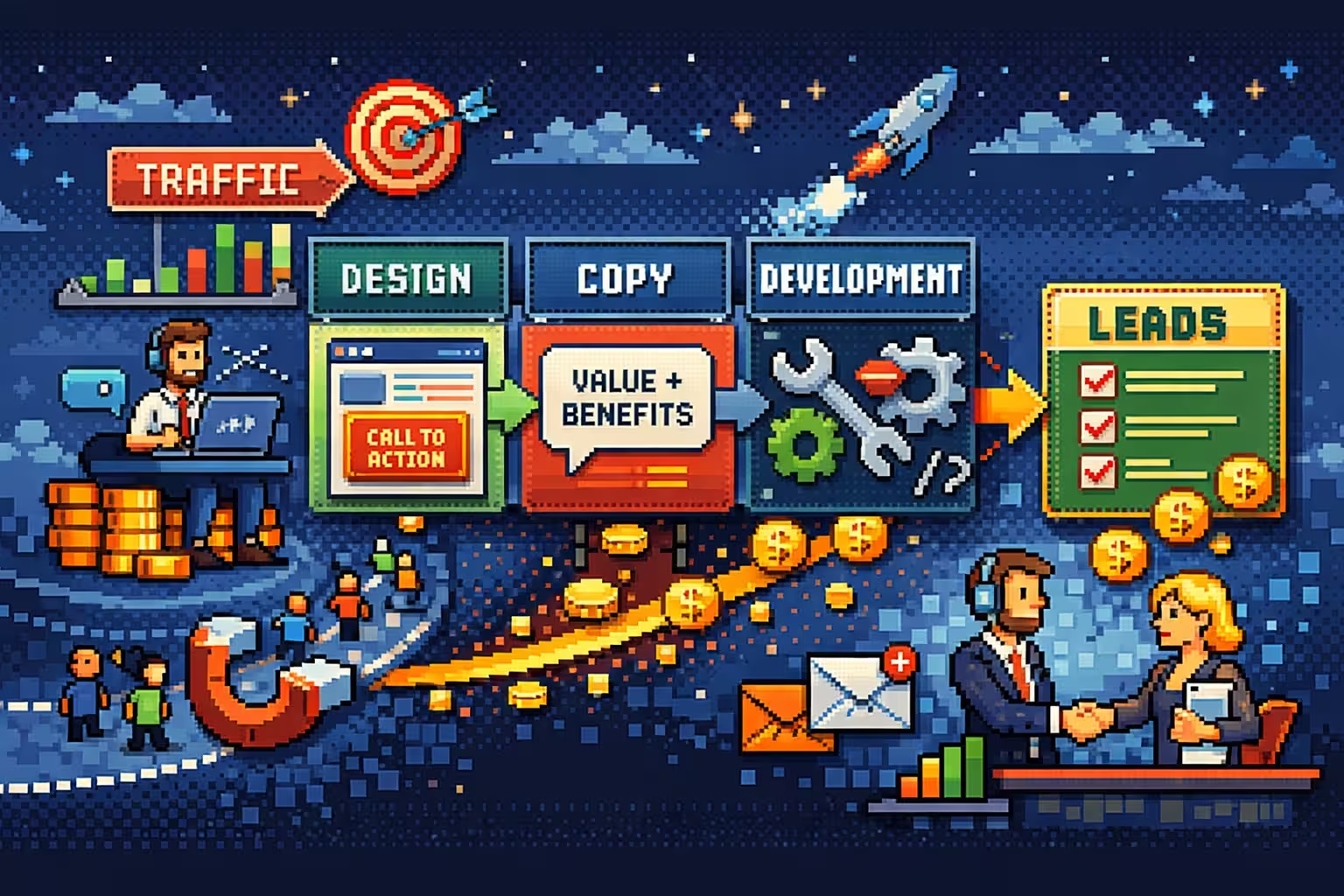
How to fix conversion issues when you already have traffic

How to fix conversion issues when you already have traffic

Your website gets traffic but no leads? Learn why visitors aren’t converting and how better design, messaging, and structure can turn traffic into real business results.

Migrating to Webflow from other platforms

Migrating to Webflow from other platforms

Learn how migrating to Webflow from WordPress or other platforms works, what the real process looks like, and how it affects performance, scalability, and SEO.

Why SaaS companies should move to Webflow in 2026

Why SaaS companies should move to Webflow in 2026

Discover why SaaS companies are moving to Webflow in 2026 for better performance, SEO control, scalability, and faster marketing workflows.

Is Webflow Good for SEO? What Actually Matters

Is Webflow Good for SEO? What Actually Matters

Is Webflow good for SEO? Learn what actually affects rankings, from content and structure to technical setup, and why Webflow isn’t the problem.

Webflow vs WordPress which platform is right for your website

Webflow vs WordPress which platform is right for your website

This article breaks down whether Webflow is a better alternative to WordPress.

Should designers understand Webflow frameworks for smoother projects?

Should designers understand Webflow frameworks for smoother projects?

Learn why designers benefit from understanding Webflow frameworks and how shared structure improves collaboration, reduces friction, and keeps projects running smoothly.

Why the right Webflow framework matters for scalable websites?

Why the right Webflow framework matters for scalable websites?

Learn why the right Webflow framework is key to building scalable, consistent, and easy to maintain websites.

A closer look at Webflow components

A closer look at Webflow components

Learn why Webflow components are essential for scalable websites and how a component based approach improves consistency, speed, and long term growth.

When design breaks the development process and slows growth

When design breaks the development process and slows growth

Learn how poor design decisions create friction in development, introduce technical debt, and limit long term website scalability and growth.

Why marketing teams struggle to maintain Webflow projects on their own?

Why marketing teams struggle to maintain Webflow projects on their own?

Learn why marketing teams often struggle to manage Webflow websites, the structural mistakes behind it, and how to build a site that supports growth.

Why most Webflow websites do not scale well?

Why most Webflow websites do not scale well?

Learn why many Webflow websites struggle to scale, the structural mistakes behind them, and how to build a Webflow site that supports long term growth.

Webflow vs Custom code: How to choose the right approach for your website?

Webflow vs Custom code: How to choose the right approach for your website?

A clear comparison of Webflow and custom code, focused on choosing the right solution based on speed, flexibility, and business maturity.