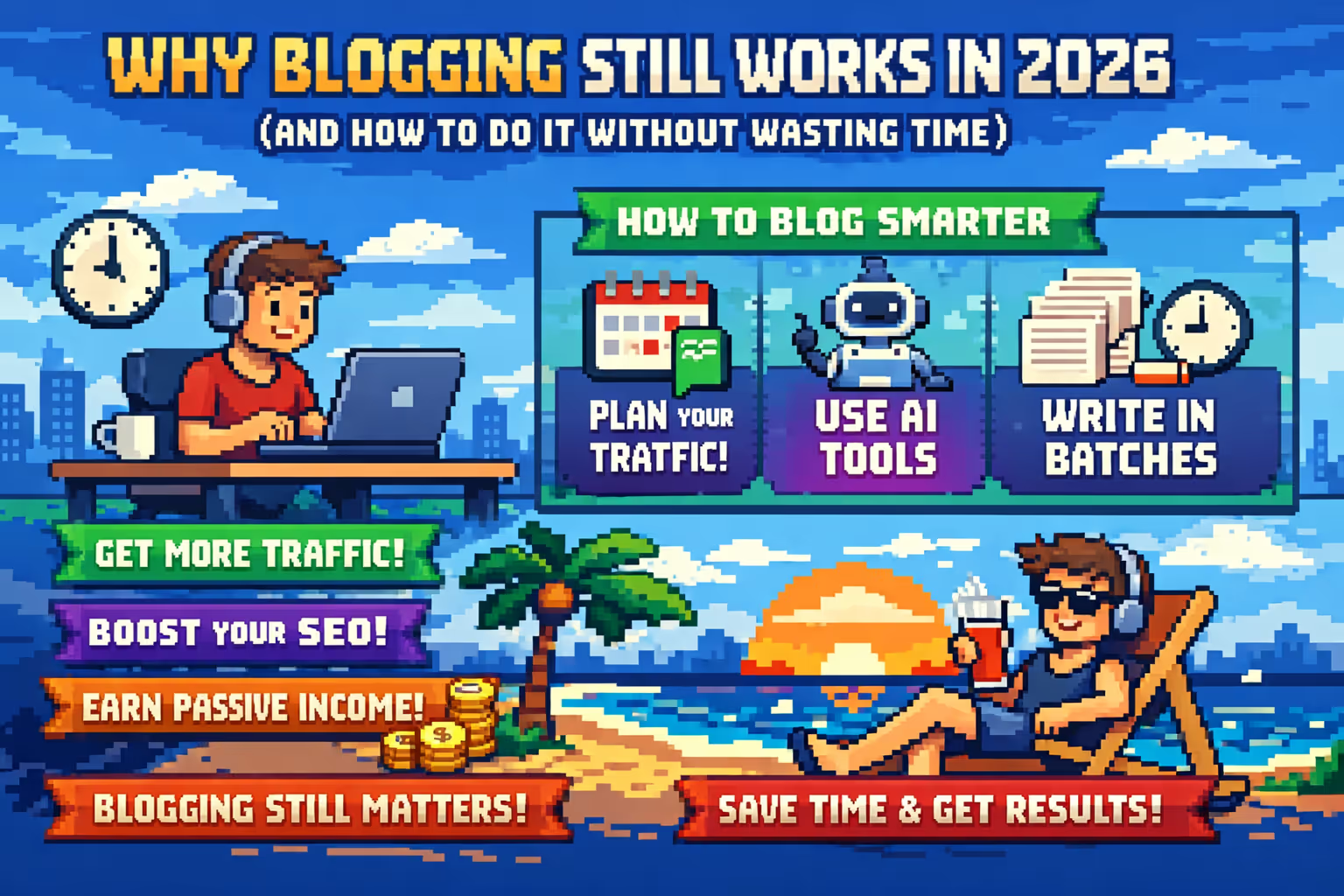
Why blogging still works in 2026 (and how to do it without wasting time)
Over 60% of internet users read blogs regularly. 81% of marketers say blog content still delivers measurable results. And yet, most small business owners haven't published a post in over a year.
Not because blogging stopped working. Because nobody showed them a way to do it without it taking over their week.
This post is that guide.
What actually changed about blogging
The way people search has changed. Your potential clients are no longer just typing into Google. They're asking ChatGPT for recommendations, using Perplexity to compare options, and getting answers from Google's AI Overviews before they even click a link.
Here's what that means for you: every single one of those tools pulls its answers from written content. For a deeper look at this shift, read our breakdown of SEO, AEO, and GEO in 2026. A well-written blog post doesn't just rank on Google anymore. It feeds the AI tools your clients are already using to make decisions.
And the numbers back this up. Visitors who arrive through AI search tools are estimated to be 4.4x more valuable than regular organic traffic, because they come already informed and ready to act.
Your blog post isn't just a marketing exercise. It's becoming the source that AI cites when someone asks who should I hire to build my website.
Why most small businesses stop blogging
It's rarely laziness. It usually comes down to one of three things: they don't know what to write about, they publish a few posts and see no immediate results, or writing one post takes so long it stops feeling sustainable.
All three are fixable. But the fix starts with understanding what blogging is actually for in 2026.
It's not about chasing pageviews. It's about placing your expertise exactly where your ideal client is looking, and staying there long enough for them to trust you. And that starts with having a website that doesn't drive people away. Read how an outdated website is silently costing you clients.
The one thing most people get wrong
Most business owners treat every blog post like a thesis. They aim for 2,000 words, spend three hours writing, get frustrated, and give up.
You don't need 2,000 words. You need the right words.
A 600-word post that fully answers one specific question will outperform a 2,000-word post that wanders. Length matters less than clarity and usefulness.
How to blog without it consuming your week
Start with one real question. Think about the last thing a client asked you before signing. Write the answer to that question. That's your first post. It doesn't need to be creative. It needs to be honest and clear.
Use the same structure every time. Open with the problem your reader is experiencing, tell them what they'll learn, give them the answer in clear sections, and close with a next step. Once you have a structure, the writing becomes the easy part.
Publish consistently, not constantly. Two posts per month, done consistently over a year, will outperform a burst of ten posts followed by silence. Google rewards consistency. So does your audience.
One post per week means 52 pieces of content working for your business by the end of the year. Each one indexed, each one findable, each one building the case that you're the right person to hire.
What to write about as a small business
You don't need to be a writer. You need to think like your client. These are the categories that consistently work for service businesses:
Answer questions you get asked before a client signs. Compare options your clients are weighing, honestly. Explain your process so people know what working with you actually looks like. Share results from client projects with context. Address the objections you hear before someone says no.
If you are not sure where to start, write a post that answers: Is your service worth it for a business like mine? That is what your clients are searching for right now, on Google and on ChatGPT.
The bottom line
Blogging isn't dead. Inconsistent, generic blogging is dead.
Businesses that blog get around 55% more website visitors than those that don't. Nearly half of all marketers reported their ROI from blogging increased in 2024. The content you publish today can bring in traffic, leads, and AI citations for years.
Your website is your digital office. Your blog is what keeps it working when you're not in the room. If you're wondering what platform to build that office on, here's why I build every client website in Webflow.

Milan Kostic
Freelance Webflow Developer