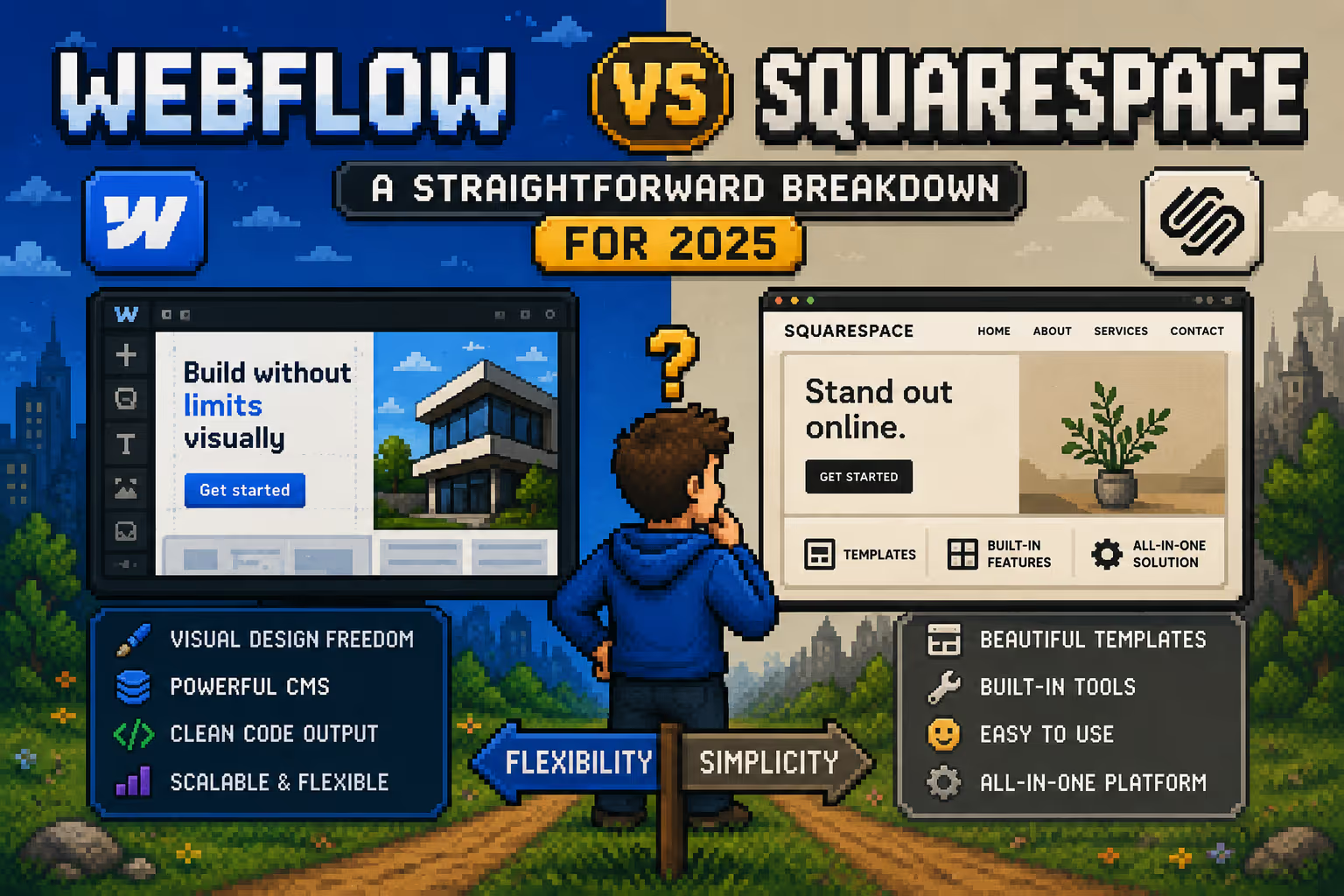
Webflow vs Squarespace: A Straightforward Breakdown for 2026
May 12, 2025
Webflow vs Squarespace: A Straightforward Breakdown for 2026

What Is Squarespace?

Squarespace is a template-based website builder. You pick a design, customise it within the boundaries of that template, add your content, and publish. The whole experience is guided and beginner-friendly, which is exactly the point.

It covers hosting, SSL, basic ecommerce, and a visual drag-and-drop editor all under one roof. For freelancers, small business owners, and anyone who needs a functional site up quickly without touching code, it gets the job done.

The limitation is built into the model: you are always working inside a template's structure. Customisation beyond that requires injecting custom code, which the platform does not handle gracefully.

What Is Webflow?

Webflow is a professional no-code platform that combines visual design, development, and content management in one environment. Instead of choosing a template and staying inside it, you are working on a blank canvas with full control over layout, animations, responsive behaviour, and CMS structure.

The platform generates clean HTML, CSS, and JavaScript as you build, so the output is equivalent to a custom-coded site. Teams can design, test, and publish without passing files between designers and developers.

Webflow also has templates, and they are highly customisable, but most serious projects eventually move beyond them into fully custom builds.

Design Flexibility

Squarespace templates are modern and polished. They are designed to look good out of the box, and for many small businesses, that is enough. The tradeoff is that deep design customisation is off the table unless you are comfortable with code injection, which feels like a workaround rather than a feature.

Webflow gives you pixel-accurate control. You can replicate any brand system, prototype interactions visually, build reusable components, and manage responsive layouts at a granular level. Designers familiar with Figma or similar tools will find the workflow intuitive.

If your brief is a clean site that goes live fast, Squarespace handles it. If your brief is pixel-perfect and fully custom, Webflow is the stronger option of the two.

CMS

Squarespace has a CMS and it is simple to navigate, but it is limited in scope. Editing is confined to specific content areas on a page, which means broad structural changes require more effort than they should. It works for basic content like blog posts and product listings.

Webflow's CMS is a different category. You define your own content fields, create dynamic collection pages, link content across the site, and update everything visually. Marketing teams regularly take full ownership of content publishing without any developer involvement. It also supports CMS-driven design, so a layout built from one CMS item scales cleanly to thousands.

For blogs and simple content sites, Squarespace is manageable. For anything with structured, dynamic content at scale, Webflow is considerably more capable.

SEO

Squarespace covers the basics: clean URLs, SSL, mobile responsiveness, and a built-in meta settings panel. For straightforward sites with modest SEO goals, it holds up. Where it falls short is in advanced control. Technical SEO, custom schema markup, and deeper sitemap management require workarounds.

Webflow gives you granular control over meta titles, descriptions, Open Graph tags, canonical URLs, and sitemap configuration. You can add custom schema markup directly, control indexing at the page level, and rely on clean semantic HTML output by default. No plugins required for any of it.

If you want to go deeper on the technical SEO side, the Webflow SEO audit guide is a good starting point for auditing either platform.

Ecommerce

This is one area where Squarespace has a genuine edge. Ecommerce is central to what Squarespace was built for. Product management, checkout, payment processing, and inventory tools are all tightly integrated and easy to set up. It works well for small to mid-sized stores.

Webflow has ecommerce functionality, but it is not the platform's strongest suit. The design flexibility is there, and the checkout experience can be fully branded, but the feature depth is more limited compared to Squarespace for pure commerce use cases. Webflow ecommerce plans start at $29/month and include a 2% transaction fee on the entry tier, which adds up for stores with real sales volume. Many Webflow users pair the platform with Shopify instead, using Webflow for the marketing site and Shopify for the store, which is a common and effective setup.

If ecommerce is your primary purpose, Squarespace is the simpler all-in-one path. If you need ecommerce alongside a complex marketing site with custom design, Shopify plus Webflow is worth considering.

Security

Both platforms handle the fundamentals: SSL certificates, DDoS protection, and two-factor authentication. Neither requires you to manage server configuration.

Squarespace is PCI-DSS compliant, which matters for ecommerce, and the platform handles updates automatically within its closed ecosystem.

Webflow goes further. It is SOC 2 compliant, hosted on AWS, includes custom SSL certificate support, automatic backups, and per-page password protection. For organisations with stricter security requirements, Webflow's infrastructure is more robust.

Collaboration

Squarespace offers basic role-based permissions: admins, editors, contributors. It covers small team workflows but lacks real-time collaborative editing and has limited version control.

Webflow's workspace and site-level roles are more detailed. You can have Designers, Limited Designers, Content Editors, and Reviewers all operating in the same project without stepping on each other. Real-time editing is supported, and content editors can publish CMS items independently without touching the design layer. For agencies, in-house marketing teams, or any multi-person setup, Webflow's collaboration model is significantly more practical.

Pricing

Squarespace is the more affordable entry point. Its standard plans cover hosting, SSL, and templates under one subscription. You can review the full breakdown on the Squarespace pricing page.

Webflow's pricing in 2026 is structured around two separate systems: Site Plans, which cover hosting and CMS per published site, and Workspace Plans, which cover team collaboration and are billed per seat. Site Plans range from a free Starter tier (with a webflow.io subdomain and limited features) through Basic, CMS, and Business, up to Enterprise. The CMS plan starts at $23/month billed annually, and the Business plan starts at $39/month. Workspace Plans add on top of that, so the total cost for a team is higher than the number on the pricing page alone. You can see the full breakdown on the Webflow pricing page.

One thing worth noting: Webflow is moving toward a more usage-based model in 2026, with add-ons for Localization, A/B testing (Optimize), and analytics (Analyze) available as separate costs on top of the base plan.

If budget is the deciding factor and the scope is small, Squarespace is the practical choice. If you are building a professional marketing site with long-term growth in mind, Webflow's pricing reflects the investment in capability.

Who Each Platform Is For

Squarespace is a good fit for freelancers, small businesses, personal portfolios, simple stores, and anyone who needs a site up quickly without technical knowledge or a development budget.

Webflow is a good fit for design and marketing teams, agencies, SaaS companies, startups with growth ambitions, and anyone building a site where design quality, SEO depth, and content scalability matter. If you are thinking about what makes Webflow the go-to choice for serious marketing sites, the what is Webflow post covers the fundamentals in detail.

The Short Version

Squarespace makes websites fast and simple. That simplicity is the product. You trade customisation for speed and ease, and for a lot of use cases, that trade is worth making.

Webflow is a professional tool with a learning curve. Once you are past that curve, you get design freedom, a powerful CMS, stronger SEO controls, and a platform that scales with you. If you are evaluating tools for a larger marketing stack and wondering how AI fits in, the best AI tools for startups in 2026 post is worth a read alongside this one.

Neither is better in absolute terms. They are designed for different things, and the right choice depends entirely on what you are building and who is building it.

Frequently Asked Questions

Is Webflow better than Squarespace?

It depends on the use case. Webflow is better for custom design, advanced SEO, and scalable content. Squarespace is better for quick launches, small businesses, and built-in ecommerce without a steep learning curve.

Can I switch from Squarespace to Webflow?

Yes. You can migrate content from Squarespace to Webflow manually or with the help of a developer. The migration process involves rebuilding the design in Webflow and importing CMS content, which is straightforward for most site types.

Which is cheaper, Webflow or Squarespace?

Squarespace is generally cheaper at the entry level. Webflow's pricing in 2026 is split across Site Plans and Workspace Plans, billed separately, so the real cost for a team is higher than the base plan number suggests. That said, Webflow offers significantly more control and capability for professional use cases.

Does Webflow have ecommerce?

Yes, Webflow has native ecommerce functionality, but it is more limited than Squarespace's offering. Many Webflow users integrate Shopify instead for more advanced store features.

Which platform is better for SEO?

Webflow gives you more granular SEO control: custom schema markup, clean semantic HTML, full meta tag management, and sitemap configuration without plugins. Squarespace covers the basics well but offers less flexibility for advanced technical SEO.

Let’s talk about your website

Other articles

AI Project Management Tools: An Honest Review for 2026

AI Project Management Tools: An Honest Review for 2026

Not every project management tool that says AI-powered actually is. Here is an honest breakdown of ten tools organized by what your team actually needs.

The Developer-First Web Designer: How to Design in Figma Like a Developer Thinks
The Developer-First Web Designer: How to Design in Figma Like a Developer Thinks
Most web designers hand off beautiful Figma files that are painful to build. Here is how to design with a developer-first mindset from the very first frame.

What are LLMs and what does that mean for building websites

What are LLMs and what does that mean for building websites

A practical guide to understanding large language models and how to make your Webflow site more readable and citable by AI tools.

Why B2B SaaS Marketing Teams Are Switching to Webflow in 2026

Why B2B SaaS Marketing Teams Are Switching to Webflow in 2026

The real question isn't whether Webflow is a good tool. It's why so many B2B SaaS companies spent years accepting that their website was the slowest part of their organization.
How to Run a Full AEO and GEO Audit on Your Webflow Site Using Claude and MCP

How to Run a Full AEO and GEO Audit on Your Webflow Site Using Claude and MCP

How to audit your Webflow site for AEO and GEO in under 30 minutes using Claude and MCP, with exact prompts for each step.

How to Run a Full Webflow SEO Audit Using Claude and MCP in Under 30 Minutes

How to Run a Full Webflow SEO Audit Using Claude and MCP in Under 30 Minutes

How to use Claude connected to your Webflow site via MCP to run a full SEO audit in under 30 minutes, with exact prompts you can copy and use today.

How to Optimize Your Webflow Site for AI Search Engines: Webflow for AEO

How to Optimize Your Webflow Site for AI Search Engines: Webflow for AEO

A practical guide to AEO for Webflow sites in 2026. How AI search engines discover, extract, and cite your content, and what to do about it.

The Best AI Tools for Startups in 2026. From Launch to Series A

The Best AI Tools for Startups in 2026. From Launch to Series A

A stage-by-stage breakdown of the best AI tools for startups in 2026, from building your first MVP and marketing site to scaling past Series A.

How the right website pays for itself

How the right website pays for itself

A poorly built website costs more than you think. Learn how the right website saves money, reduces ongoing expenses, and actively earns for your business.

Why I build every client website in Webflow (and what that means for you)

Why I build every client website in Webflow (and what that means for you)

There are dozens of platforms to build a website on. Here's why I use Webflow for every client, and what you actually get as a result.

Why your outdated website is costing you clients (and how to know if yours qualifies)

Why your outdated website is costing you clients (and how to know if yours qualifies)

60% of small businesses lose customers because of website issues. Most of them don't even know it's happening. Here's how to tell if your site is one of them.

Why blogging still works in 2026 (and how to do it without wasting time)

Why blogging still works in 2026 (and how to do it without wasting time)

Over 60% of internet users read blogs regularly. 81% of marketers say it still delivers results. So why does every small business owner I talk to have a blog they haven't touched in a year?

How to Use the Webflow Connector in Claude (Complete Guide)

How to Use the Webflow Connector in Claude (Complete Guide)

Learn how to set up the Webflow connector in Claude, what you can automate, and where the real limits are.

What is Webflow?

What is Webflow?

Learn what Webflow really is, why it's not just another website builder, and how it works.

What is Schema Markup? The Secret Language of High-Ranking Websites

What is Schema Markup? The Secret Language of High-Ranking Websites

What exactly is Schema markup? Learn how structured data helps Google understand your content and why it's the most underused growth asset in technical SEO.

How to Get a 100/100 Lighthouse Score on Webflow Mobile: A Full-Service Guide

How to Get a 100/100 Lighthouse Score on Webflow Mobile: A Full-Service Guide

Achieve a perfect 100/100 Lighthouse score on Webflow mobile. Learn expert strategies for AVIF images, font preloading, and script delays to boost your SEO ranking.

The Ultimate Webflow Migration Checklist for B2B & SaaS: A Stress-Free Guide to Scaling Without Losing SEO Juice

The Ultimate Webflow Migration Checklist for B2B & SaaS: A Stress-Free Guide to Scaling Without Losing SEO Juice

Moving your SaaS site to Webflow? Use this technical checklist to protect your SEO, automate CMS migration, and sync your CRM. Migrate without the stress.

The Ultimate Guide to Webflow SEO in 2026

The Ultimate Guide to Webflow SEO in 2026

Master Webflow SEO in 2026. Learn how to leverage AI, optimize for zero-click searches, and boost site speed with Webflow’s built-in tools. Start ranking higher!

From Figma to Webflow: The Definitive Guide for 2026

From Figma to Webflow: The Definitive Guide for 2026

Turn Figma designs into high-performance Webflow websites with a structured workflow, clean architecture, and modern best practices.

How much does a business website cost in the US?

How much does a business website cost in the US?

Learn how much a business website really costs in the US. A clear breakdown of pricing for small businesses, startups, landing pages, and larger projects.

Webflow vs Lovable: a platform comparison. Which one is better?

Webflow vs Lovable: a platform comparison. Which one is better?

A practical comparison of Webflow and Lovable. Learn which no-code platform is better for design flexibility, SEO, scalability, and long-term website growth.

Best No-Code Platforms for Websites in 2026: A Complete Comparison

Best No-Code Platforms for Websites in 2026: A Complete Comparison

A complete comparison of the best no-code platforms for building websites in 2026. Compare Webflow, Framer, Wordpress, and more to choose the right platform for your project.

Webflow and Framer: A Practical Comparison for 2026

Webflow and Framer: A Practical Comparison for 2026

Full 2026 Webflow vs Framer comparison covering CMS power, pricing, SEO tools, AI features, and which no-code platform fits your project.

Webflow App Gen: A Complete Guide to the AI Revolution in Web App Generation

Webflow App Gen: A Complete Guide to the AI Revolution in Web App Generation

Learn what Webflow App Gen is and how it uses AI to generate production-ready web applications directly inside Webflow. Features, CMS integration, and deployment explained.

Webflow Migration Guide: How to Move Your B2B Website Without Losing SEO Rankings

Webflow Migration Guide: How to Move Your B2B Website Without Losing SEO Rankings

Learn how to migrate your B2B website to Webflow without losing SEO rankings. A practical guide covering redirects, CMS structure, performance, and post-launch checks.

SEO, AEO, and GEO: what should you focus on in 2026?

SEO, AEO, and GEO: what should you focus on in 2026?

Learn the difference between SEO, AEO, and GEO, how search is evolving, and what to focus on in 2026 to stay visible in AI-driven and traditional search.

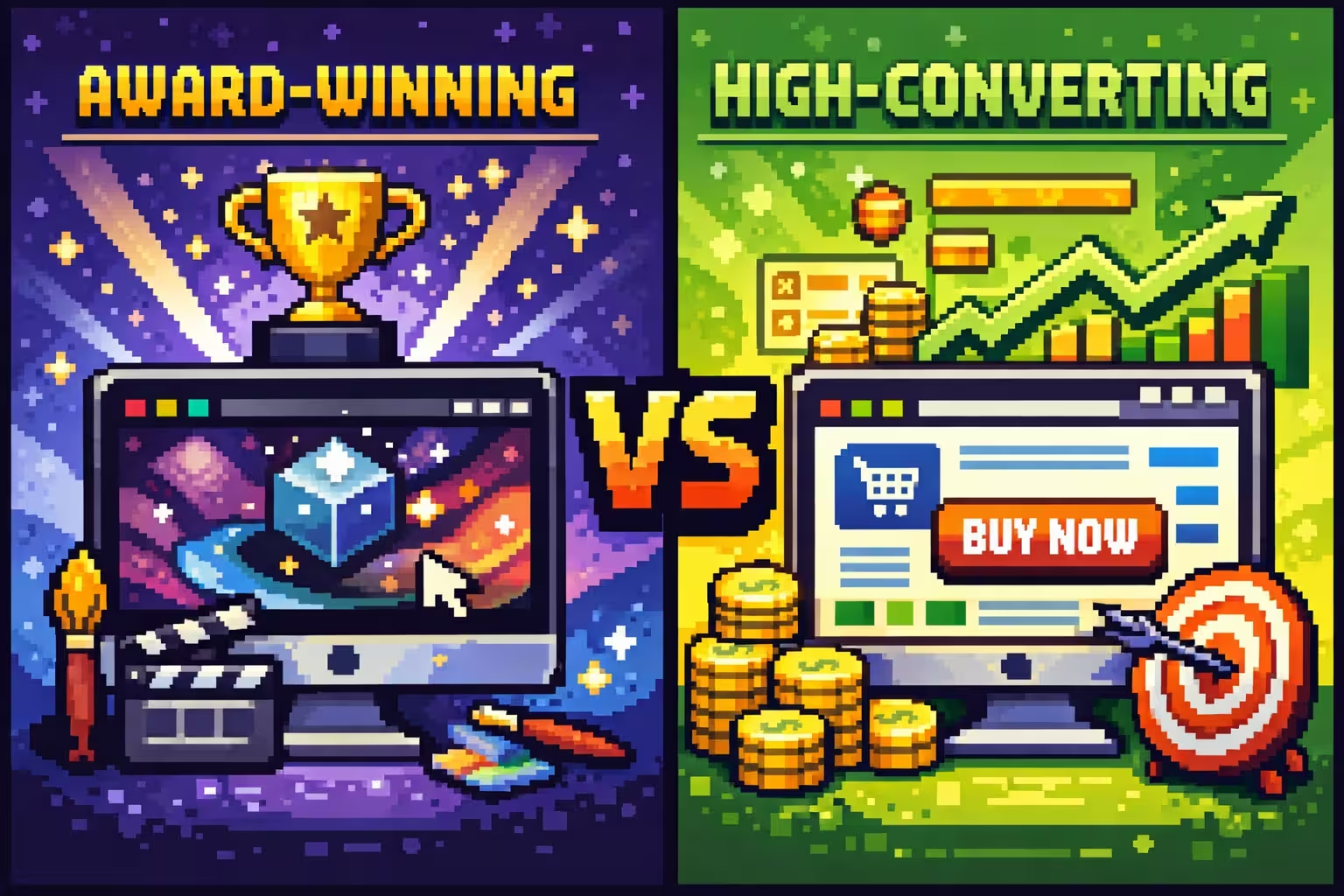
The difference between award-winning and high-converting websites

The difference between award-winning and high-converting websites

What’s the real difference between award-winning and high-converting websites? Learn how design goals, usability, and strategy impact business results.

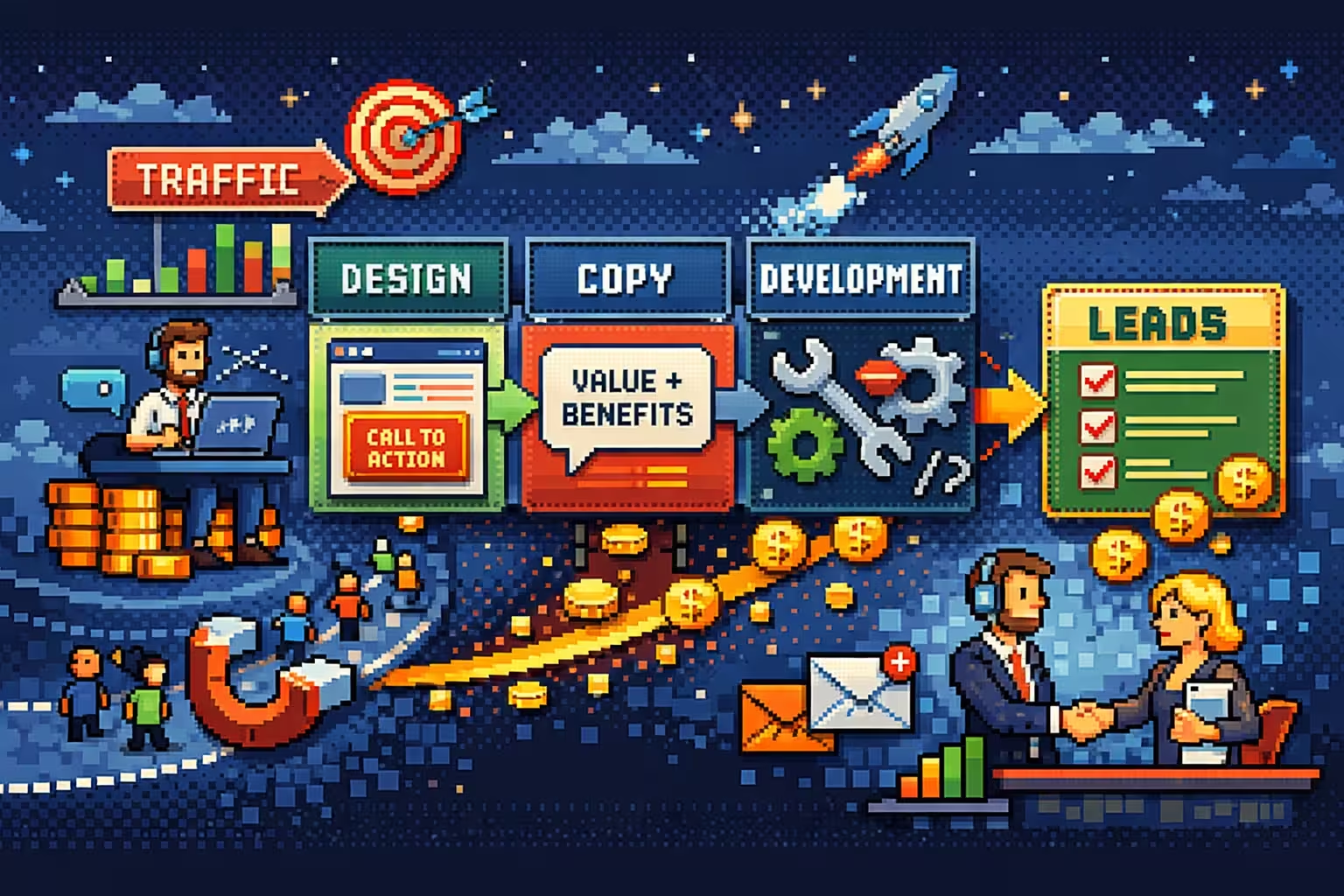
How to fix conversion issues when you already have traffic

How to fix conversion issues when you already have traffic

Your website gets traffic but no leads? Learn why visitors aren’t converting and how better design, messaging, and structure can turn traffic into real business results.

Migrating to Webflow from other platforms

Migrating to Webflow from other platforms

Learn how migrating to Webflow from WordPress or other platforms works, what the real process looks like, and how it affects performance, scalability, and SEO.

Why SaaS companies should move to Webflow in 2026

Why SaaS companies should move to Webflow in 2026

Discover why SaaS companies are moving to Webflow in 2026 for better performance, SEO control, scalability, and faster marketing workflows.

Is Webflow Good for SEO? What Actually Matters

Is Webflow Good for SEO? What Actually Matters

Is Webflow good for SEO? Learn what actually affects rankings, from content and structure to technical setup, and why Webflow isn’t the problem.

Webflow vs WordPress which platform is right for your website

Webflow vs WordPress which platform is right for your website

This article breaks down whether Webflow is a better alternative to WordPress.

Should designers understand Webflow frameworks for smoother projects?

Should designers understand Webflow frameworks for smoother projects?

Learn why designers benefit from understanding Webflow frameworks and how shared structure improves collaboration, reduces friction, and keeps projects running smoothly.

Why the right Webflow framework matters for scalable websites?

Why the right Webflow framework matters for scalable websites?

Learn why the right Webflow framework is key to building scalable, consistent, and easy to maintain websites.

A closer look at Webflow components

A closer look at Webflow components

Learn why Webflow components are essential for scalable websites and how a component based approach improves consistency, speed, and long term growth.

When design breaks the development process and slows growth

When design breaks the development process and slows growth

Learn how poor design decisions create friction in development, introduce technical debt, and limit long term website scalability and growth.

Why marketing teams struggle to maintain Webflow projects on their own?

Why marketing teams struggle to maintain Webflow projects on their own?

Learn why marketing teams often struggle to manage Webflow websites, the structural mistakes behind it, and how to build a site that supports growth.

Why most Webflow websites do not scale well?

Why most Webflow websites do not scale well?

Learn why many Webflow websites struggle to scale, the structural mistakes behind them, and how to build a Webflow site that supports long term growth.

Webflow vs Custom code: How to choose the right approach for your website?

Webflow vs Custom code: How to choose the right approach for your website?

A clear comparison of Webflow and custom code, focused on choosing the right solution based on speed, flexibility, and business maturity.