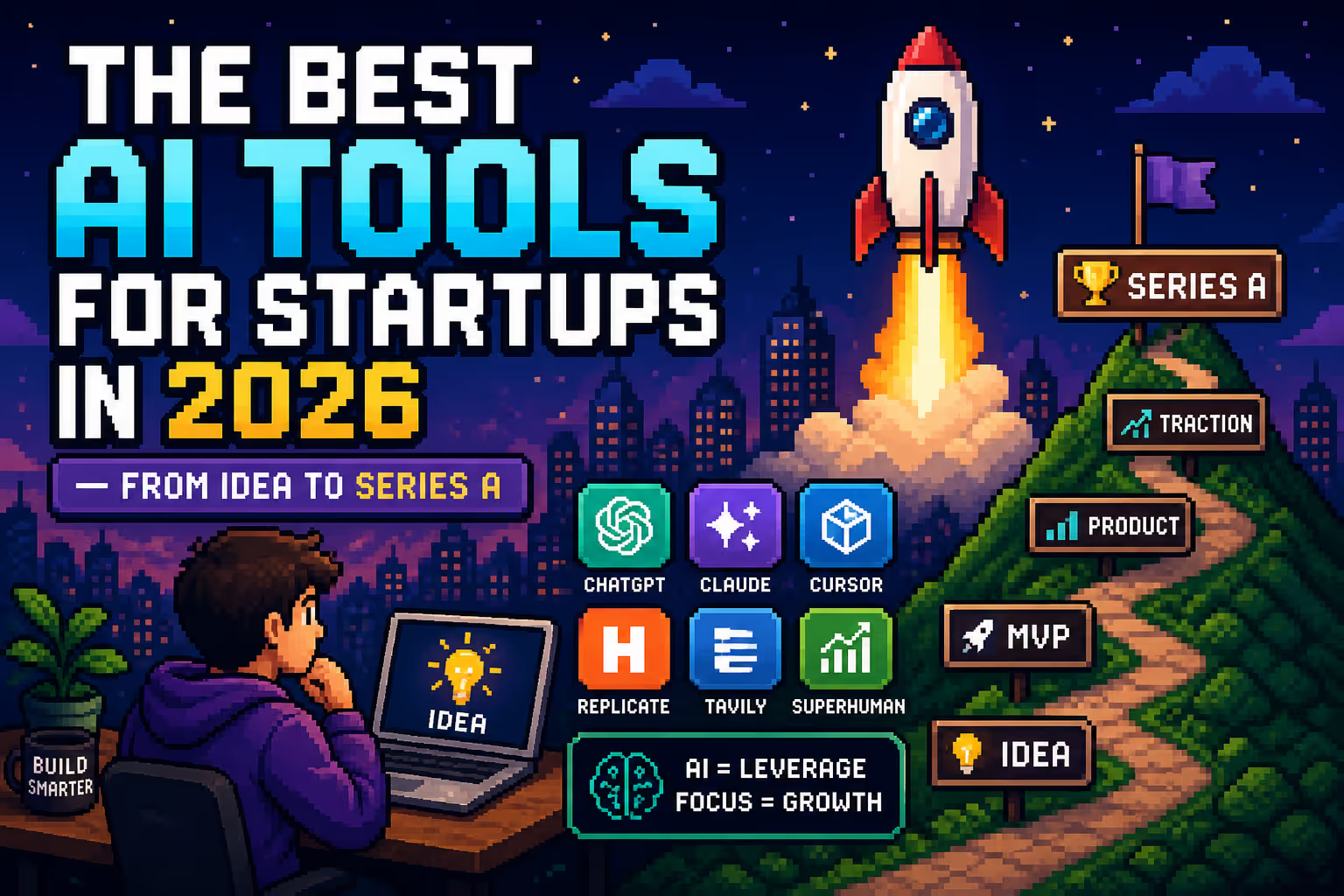
The Best AI Tools for Startups in 2026. From Launch to Series A
Building a startup used to mean one of two things: either you had a technical co-founder who could write code, or you burned through budget hiring developers before you'd validated a single assumption. In 2026, that's no longer the constraint it once was.
The real shift isn't just that AI tools exist. It's that the entire mental model of "how do I build this?" has changed. An AI-native founder today doesn't think "I need a developer to build my website." They think "which tool gets me live in 48 hours, looks credible to investors, and lets my team update content without touching anyone technical?" Two completely different questions, two completely different answers.
This guide walks through every major function a startup needs to cover, from building your product and website, to content, visuals, workflow automation, and team management, and maps the right AI tools to each stage of growth. We'll also look at real costs across pre-seed, seed, and Series A, because the tools that make sense when you're bootstrapping are not the same ones you need when you have a team of twenty.
1. Building Your Product: The AI-Native Approach
Before we even talk about marketing websites, let's address the question every technical founder and every non-technical founder is asking in 2026: what's the fastest, most practical way to turn an idea into working software?
The landscape has exploded. Terms like "vibe coding" went from a meme coined by AI researcher Andrej Karpathy to a category of tools that collectively raised over $8 billion in venture funding in 2025 alone. The market has matured quickly, and the tools have real distinctions worth understanding.
Lovable: Full-Stack MVPs Without a Developer
Lovable took the world by storm when it launched in late 2024, quickly becoming synonymous with prompt-to-app creation. The platform's ability to transform a few sentences into a working full-stack web application captured massive attention, and by mid-2025 it had reached over 750,000 apps built in a single month and crossed $100 million in ARR in just eight months, one of the fastest growth rates in software history.
The honest case for Lovable: it's the best tool for a non-technical founder who needs a working MVP with a real backend. It integrates natively with Supabase, which handles your database, authentication, and RLS policies. It exports clean React code to GitHub, meaning you can hand the project off to a developer later without starting from scratch. If you're a founder with an idea but no technical background, Lovable is designed for people who think in terms of outcomes rather than implementation details.
The honest caveat: Lovable produces code, not running applications. To actually launch, you need to configure user authentication via Supabase, manage your data persistence, and handle deployment via Vercel or Netlify.
Pricing: Free tier available. Pro at $25/month, Business at $50/month.
Bolt.new: Fastest From Prompt to Live Preview
Bolt is the fastest path from a prompt to a live preview. Running on StackBlitz's WebContainers technology, it compiles Node.js to WebAssembly and runs it entirely in your browser. Zero local installation, no Docker containers, instant startup. If you need a working prototype to test with users or pitch to stakeholders, and your team has engineers who'll build the real thing, Bolt gets you there fast.
Pricing: Free tier with limited credits. Paid plans from $20/month.
v0 by Vercel: Best UI Quality, Clean Handoff
v0 is Vercel's AI-powered UI generation tool that turns plain English prompts into production-ready React components styled with Tailwind CSS. It's not a full-stack builder in the way Lovable is. It's a UI generator that excels at component-level quality and integrates seamlessly with Vercel's ecosystem. Many developers use them in combination: v0 for UI components, Lovable for backend integration, or Bolt for quick demos.
Pricing: Token/credit based system.
Cursor: For Founders Who Can Write Some Code
Cursor puts you closest to the code. It's a VS Code fork with AI capabilities built at the architectural level, meaning it understands your entire codebase context across files. For technical founders or developers who want to stay in control of what gets shipped, Cursor dramatically accelerates the work without handing over the keys entirely.
Pricing: Free tier. Pro at $20/month.
The Honest Summary on Vibe Coding
None of these tools are magic. All require significant manual finishing to reach production-ready code. The right move for most early-stage startups: use Lovable or Bolt to validate your idea with a prototype, then invest in a proper developer or use Cursor to build the production version when you've confirmed users will pay for it.
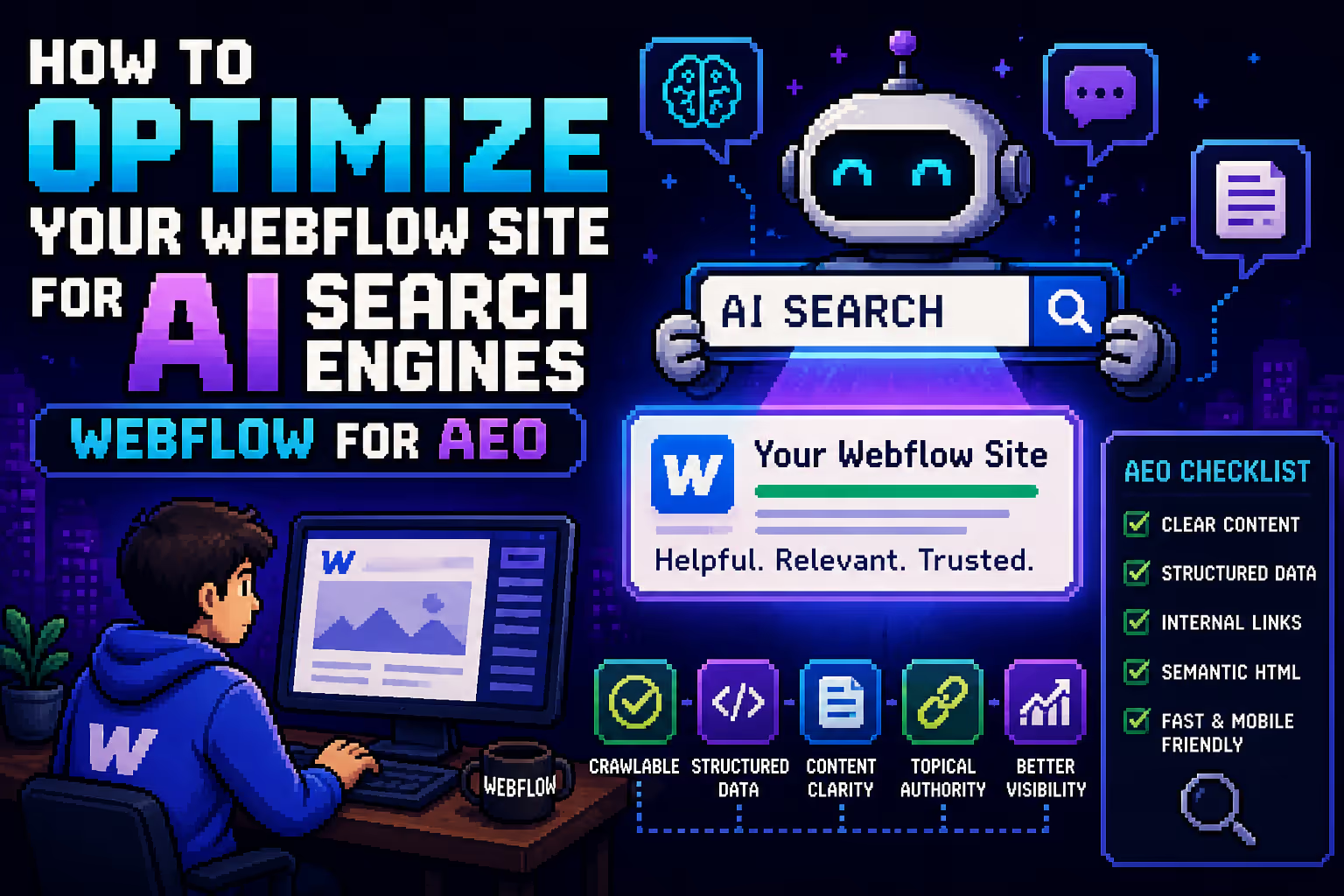
2. Your Marketing Website: Webflow Is the Right Foundation
Once you've decided what you're building, you need a face for it. Your marketing site is your credibility signal, your conversion layer, and your content engine. And the decision you make here matters more than most founders realize.
Why AI Website Generators Fall Short
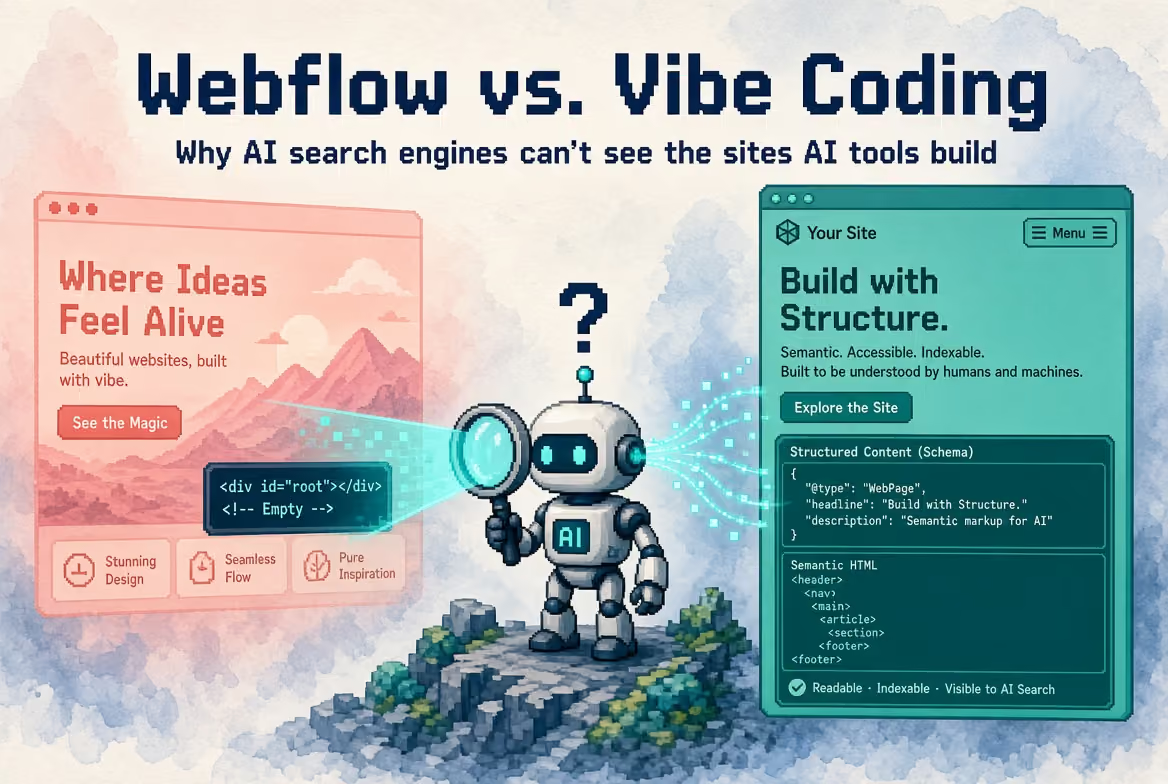
The instinct for many founders is to reach for the fastest possible solution. Tools like Durable, Wix ADI, and similar AI website generators are fast and cheap, but they lock you in immediately. When you want to change your pricing page layout, add a custom interaction, or restructure your blog for SEO three months later, you're working against the platform rather than with it. These tools are built for permanence, not iteration, which is the opposite of what a startup needs.
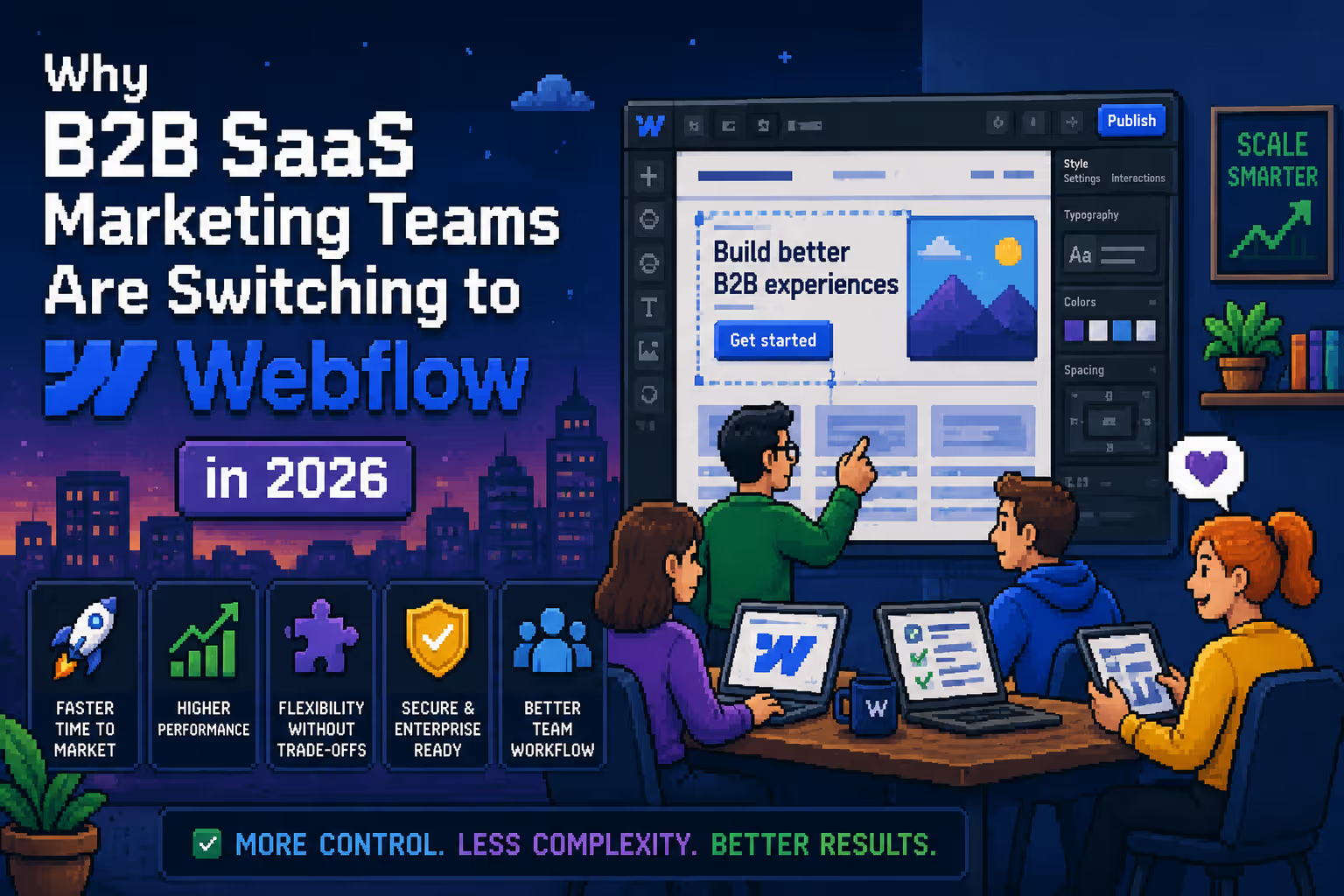
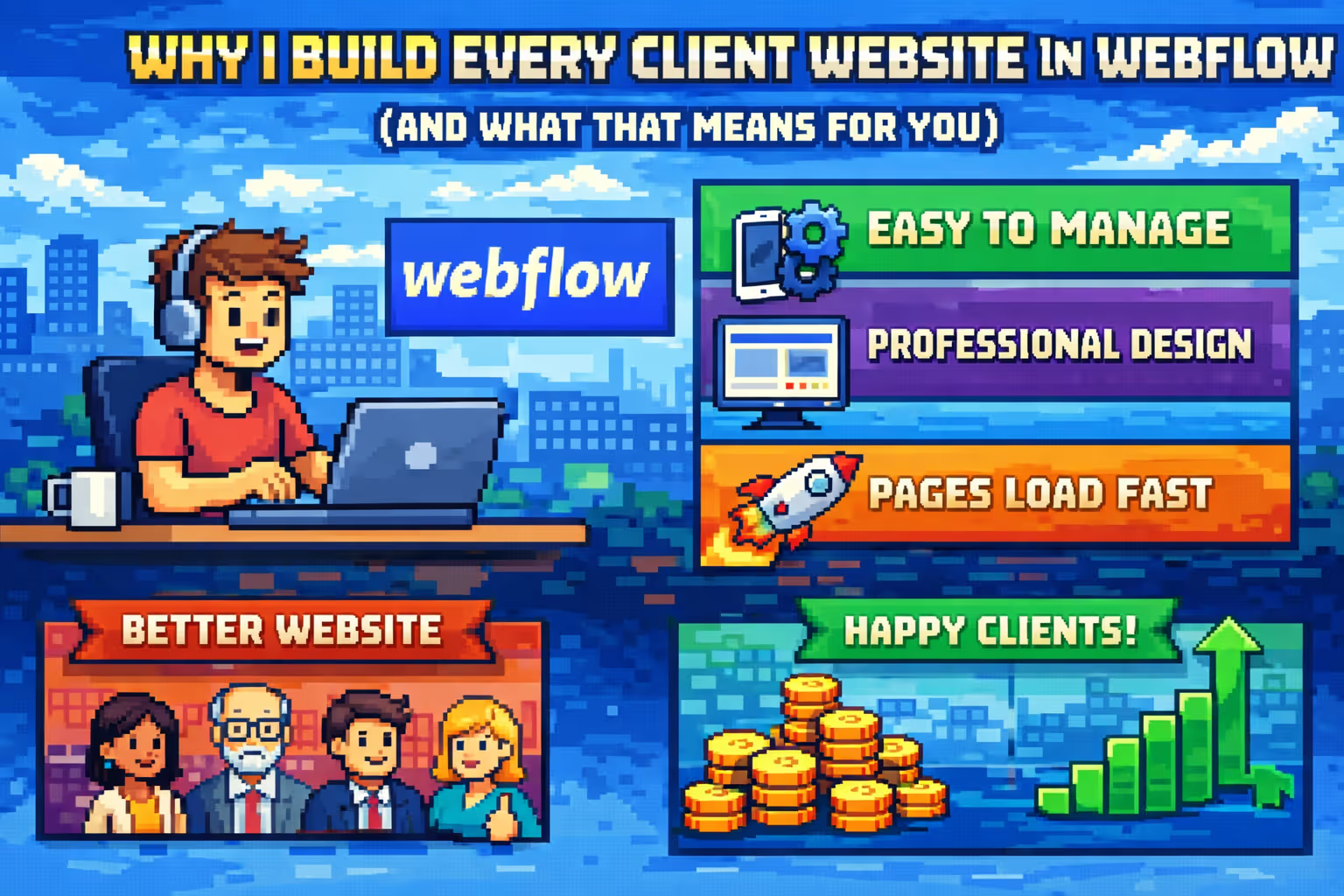
Why Webflow Is the Smart Choice for Startups
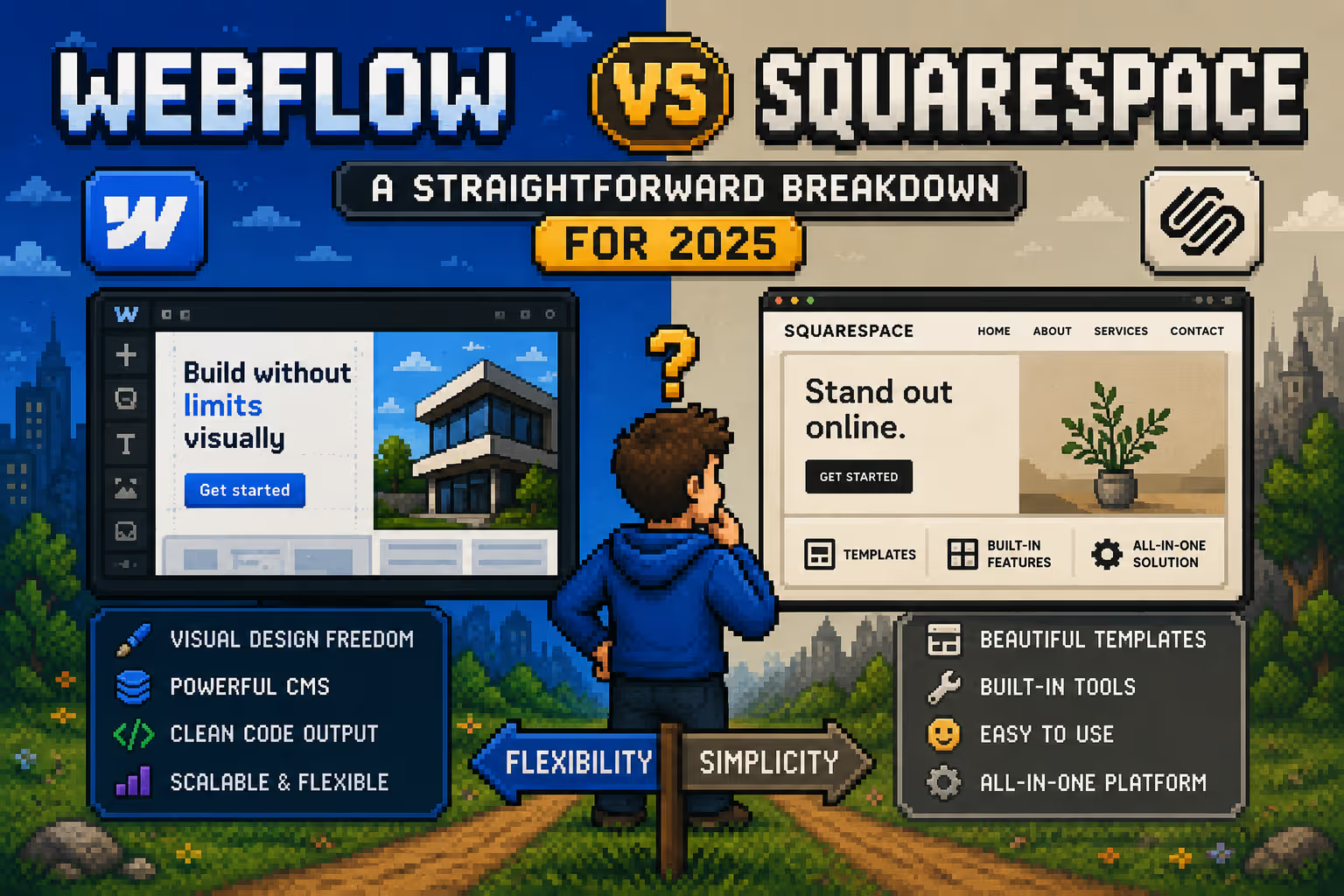
Webflow isn't just another website builder. It's a powerful no-code platform used by over 3.5 million designers, developers, and teams across 190 countries, backed by over $215M in investment and a $4+ billion valuation. Serious teams choose it, and there's a practical reason for that.
Real design freedom. Unlike platforms that rely heavily on plugins to extend functionality, Webflow allows you to customize every element without the need for third-party add-ons. This means fewer security risks and faster load times. You're not fighting a template. You're building.
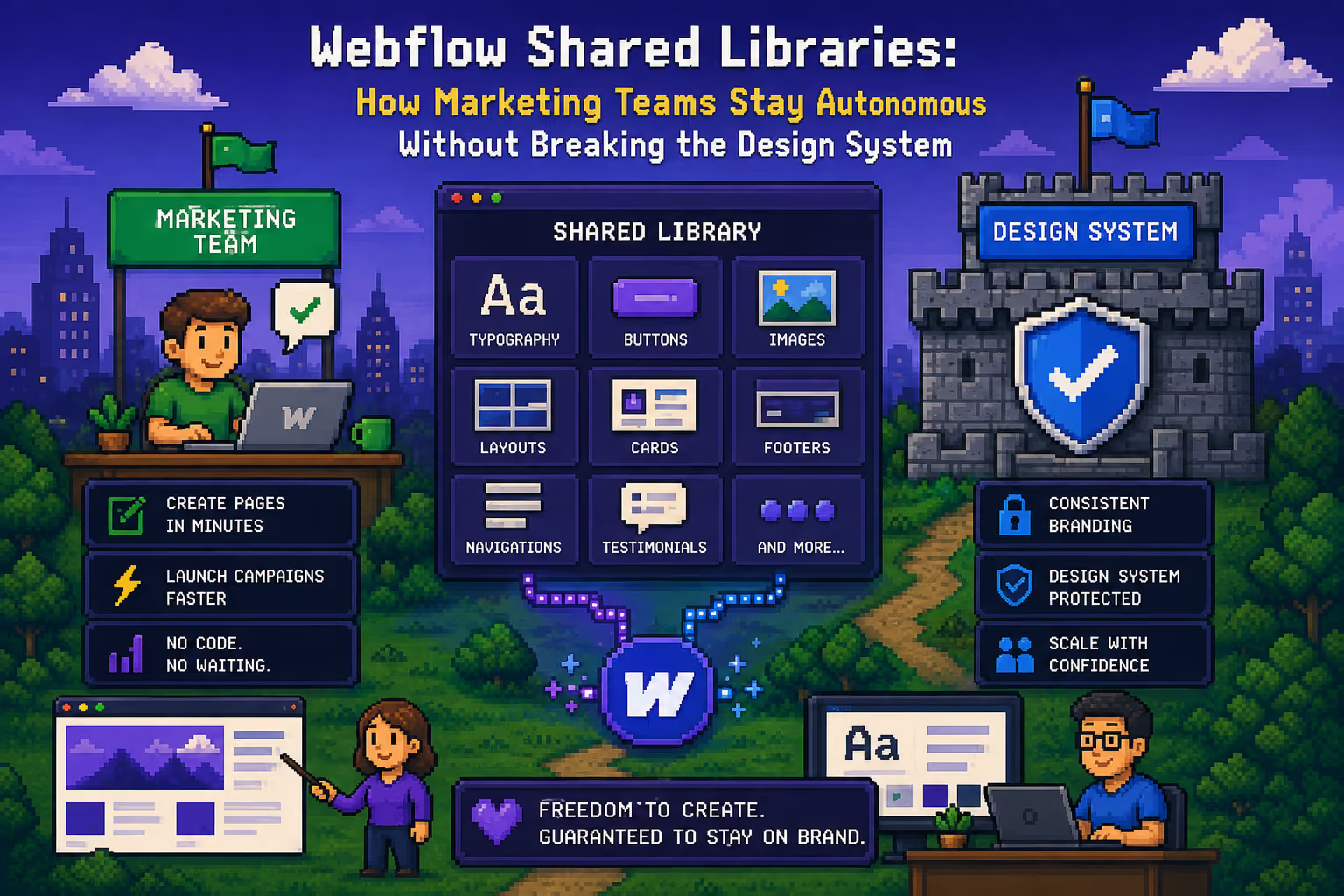
Marketing teams move independently. Webflow's CMS supports nested collection lists, auto-save for drafts, live preview before publishing, and localization controls, so marketing teams can update pages, launch landing pages, and run tests without touching a developer.
Performance that holds up at scale. Webflow offers ultra-fast hosting with a performance grade of 97 and an average peak loading time of about one second, powered by Amazon Web Services and Fastly.
It grows with you. Webflow is used by Dell Technologies, TED, Rakuten, Discord, and Upwork. Even enterprises with complex models still choose the platform, which signals it's not something you'll outgrow at Series A or Series B. For a full breakdown of the platform, see the complete Webflow guide for 2026.
Webflow + Claude + MCP: The Integration That Changes the Game
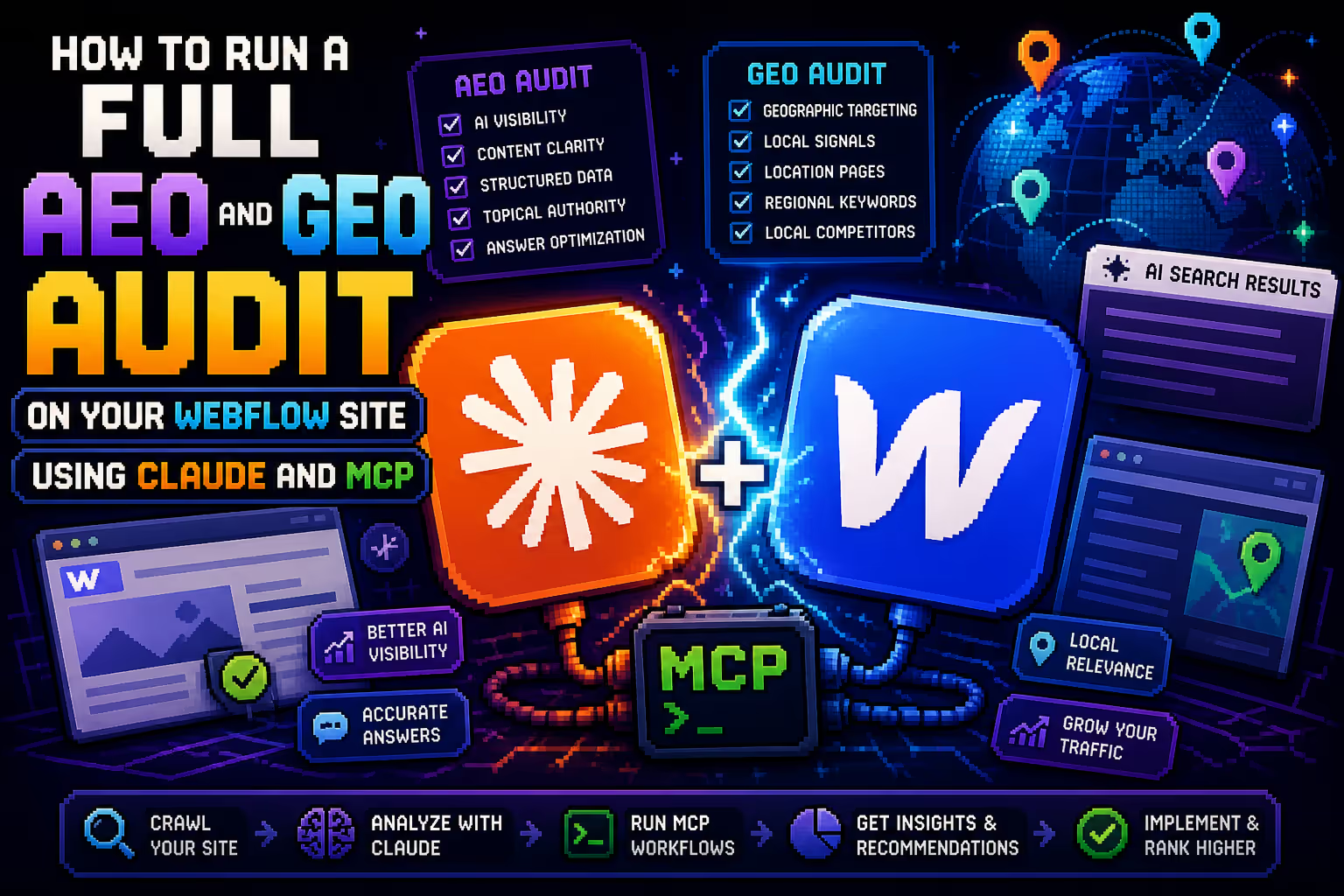
But here's what makes Webflow genuinely compelling for an AI-native startup in 2026. Something most comparisons miss entirely: Webflow connects natively with Claude through MCP.
On February 9, 2026, Webflow and Anthropic officially launched a native connector. Not a Zapier integration, not a Claude Code script to maintain. An official connector that can be activated in minutes from the Claude interface, giving the AI direct read and write access to your CMS, pages, metadata, and variables.
MCP, or Model Context Protocol, is an open standard developed by Anthropic that lets Claude talk directly to external tools in real time, without intermediaries. The MCP server connects your AI tools directly to your Webflow projects, exposing Webflow's APIs as tools your AI agent can use to create elements, styles, and variables on the canvas, as well as manage collections, custom code, assets, and other site data.
In practice this means: you open Claude, connect the Webflow connector in two minutes via OAuth, and you can then instruct Claude in plain English to write a blog post and publish it as a draft directly into your CMS, audit your entire site's SEO fields, clean up duplicate CSS classes across your design system, or generate localized page variations. What used to take 30 minutes to an hour per page now takes five minutes. For a detailed walkthrough of how to set this up and what you can do with it, see the complete guide to the Claude + Webflow connector.
For content-driven startups, this is one of the highest-leverage integrations available in 2026. Your competitors using other platforms are copying and pasting. You're prompting.
The one honest caveat: Webflow has a learning curve. For most startups the right setup is to bring in a Webflow developer for the initial build, then hand CMS management off to the team. Once the structure is in place, even non-technical people can run it, and with the Claude connector, they can run it faster than ever.
Pricing: Free Starter plan. Paid site plans from $14/month, CMS plans from $23/month.
3. Content Automation: Removing the Bottleneck
Consistent, high-quality content is the growth engine for most B2B and SaaS startups. It's also the function that gets dropped first when the team is stretched. AI has fundamentally changed the math here.
ChatGPT: Still the Most Versatile Starting Point
ChatGPT can generate content, explain code, analyze trends, create reports, and brainstorm on demand. It develops social media posts and pitch decks, generates blog posts, and creates compelling content for your audience. The teams getting the most out of it treat it as a thinking partner, not a content factory, using it to collapse the time between "I should write something about this" and "here's a solid first draft." The widely cited stat is around a 60 to 70% reduction in writing time.
One important nuance: AI-generated content needs human editing to carry a genuine brand voice. Use it to eliminate the blank page, not to eliminate the editor.
Pricing: Free tier. Plus at $20/month, Pro at $200/month.
Jasper: Brand Consistency at Team Scale
Jasper's brand voice training sets it apart from generic AI writers. You feed it your existing content and style guide, and the AI learns to write in your specific voice. The platform works well for startups transitioning from founder-written content to team-based production, with approval workflows and team workspaces that prevent quality from slipping as you scale.
Pricing: From $49/month.
Zapier and Make: Automating the In-Between
Neither of these creates content, but both are essential infrastructure. Zapier is a no-code automation platform that connects content tools and enables custom workflows between apps without developer resources. Its value isn't in content creation. It's in eliminating the manual busywork between your tools. When a new blog post is published in Webflow, push a Slack notification. When a lead fills in a form, trigger a personalized email sequence. This is table-stakes infrastructure for any startup with more than two or three tools in their stack.
Pricing: Zapier Starter at $29.99/month. Make has a free tier, paid plans from $9/month.
4. Visual Content: Look Like a Real Company Without a Design Team
Canva: The Practical Workhorse
Canva is a design platform with AI-powered features for visual content creation, offering brand consistency tools and multi-format export. In 2026 it covers social posts, pitch decks, one-pagers, investor updates, and internal documents, with AI tools for background removal, Magic Write, and image generation built in. It's not a replacement for a brand designer when establishing your visual identity, but for ongoing content production it handles the majority of a startup's visual needs.
Pricing: Free tier. Pro at $15/month per person.
ChatGPT Image Generation and Midjourney: Custom Visuals on Demand
AI image generation has reached a quality level where the results are genuinely usable in professional contexts. ChatGPT's built-in image generation is the practical daily-use tool, fast and good for blog thumbnails and quick ideation. Midjourney produces higher-fidelity, more stylistically controlled results and is the better choice for anything brand-defining or client-facing. The combination covers most of what a startup needs before it can justify a brand photographer or illustrator.
Pricing: ChatGPT image generation included in Plus ($20/month). Midjourney Basic from $10/month.
5. Connecting Claude and Webflow: The Integration That Changes the CMS Game
This is the workflow shift worth paying close attention to. On February 9, 2026, Webflow and Anthropic officially launched their native connector, an official connector activatable in minutes from the Claude interface, giving the AI direct read and write access to your CMS, pages, metadata, and variables.
The underlying technology is MCP. The MCP server connects your AI tools directly to your Webflow projects, exposing Webflow's APIs as tools your AI agent can use to create elements, styles, and variables on the canvas, as well as manage collections, custom code, assets, and other site data.
In practice: marketers can create and update CMS content, adjust site structure, and make routine changes without leaving their workflow. Developers can run audits for SEO, content, and usability and optimize the site based on Claude's recommendations. What used to take 30 minutes to an hour per page now takes five minutes. For the full technical setup and use cases, read the Claude + Webflow connector guide.
For content-driven startups, this is one of the highest-leverage integrations available. The combination of Webflow's CMS structure and Claude's ability to read, reason, and write to it directly eliminates one of the most time-consuming parts of running a content operation.
6. Project Management: Keeping the Team Aligned
Notion: The Default Home Base
Notion with Notion AI is a single home base where your team can keep docs, SOPs, roadmaps, and notes. For early-stage teams, it handles the majority of internal knowledge management: product specs, meeting notes, project tracking, content calendars, and onboarding docs. The AI features accelerate summarization, drafting, and turning notes into structured documents.
Pricing: Free for small teams. Plus at $10/user/month.
Linear: For Engineering-Driven Startups
For startups with engineering teams, Linear has become the default issue tracking tool. It's fast, opinionated, and designed for teams that move quickly. Where Jira is built for process, Linear is built for velocity.
Pricing: Free for small teams. Standard at $8/user/month.
Monday.com: For Operations-Heavy Teams
Monday offers visual boards for almost any workflow. You can start with a template, sales pipeline, content calendar, or ops tracker, then automate updates and create dashboards. It has strong integrations with Gmail, Slack, Salesforce, and Jira, and visual dashboards that help you see progress and spot bottlenecks.
Pricing: From $9/user/month.
7. What Does This All Cost? A Stage-by-Stage Breakdown
Pre-Seed / Bootstrapped: Target Under $200/month
At this stage you're validating with minimal spend. The realistic stack: Webflow Starter (free) or Basic plan ($14/month), ChatGPT Plus ($20/month), Canva Pro ($15/month), Notion free tier, Zapier free tier or Starter ($30/month), Lovable or Bolt free tier for product prototyping, Midjourney Basic ($10/month). Total: roughly $90 to $130/month. This is a legitimate professional stack.
Seed Stage: Target $500 to $1,500/month
At seed, you have funding and are building a small team. Content volume increases, you need a proper CMS setup, and your tooling needs to support two to ten people. Add Webflow CMS plan ($23/month), Jasper for brand-consistent content ($49/month), Notion Plus ($10/user/month for three to five users), Linear Standard ($8/user/month), and HubSpot Starter ($20/month). You're at roughly $300 to $600/month in core tooling, with room for credit-based tools on top.
Series A and Growth: $2,000 to $8,000+/month
At Series A the team is larger, the content operation is serious, and you're running paid acquisition alongside organic. You need enterprise plans, proper seat counts, sophisticated automation, and analytics tooling. Webflow Business plan, HubSpot Marketing Hub at scale, Jasper Business, advanced Zapier or Make plans, Claude Pro or team plans for the MCP Webflow integration, Monday.com or Asana for cross-functional project management, SEO tools like Ahrefs or Semrush ($120 to $200/month). Realistic range: $3,000 to $8,000/month depending on team size. This sounds like a lot until you compare it to the cost of a single mid-level hire per month.
The Framework for Choosing
If there's one mental model worth taking from this guide, it's this: the best tool for a startup is not the most powerful one. It's the one that keeps your team unblocked at your current stage.
In the pre-seed phase, speed and cost dominate. One good tool that does 80% of the job beats three perfect tools that slow you down with complexity. At seed, reliability and team collaboration matter more. At Series A, you're optimizing for output at scale, and the per-user costs that seemed expensive at five people become irrelevant when the alternative is another full-time hire.
The AI-native startup of 2026 doesn't need a ten-person team to match what a three-person team with the right tools can produce. That's the actual advantage on offer. If you're ready to build the web presence that makes the whole stack work, here's why Webflow is the platform serious startups choose.

Milan Kostic
Freelance Webflow Developer