How the right website pays for itself
March 10, 2026
How the right website pays for itself

Most business owners think of a website as a cost. Something you pay for once, maybe update every few years, and hope it does something useful in the meantime.

But a website built the right way is not a cost. It is an asset that works for your business around the clock, brings in leads while you sleep, and saves you money every single month compared to the alternative.

The question is not whether you can afford a good website. The question is how much a bad one is costing you right now.

What a poorly built website actually costs

The expenses are rarely obvious. They accumulate quietly.

If your site is built on WordPress with a stack of plugins, you are likely paying for hosting, a security plugin, a caching plugin, an SEO plugin, a form plugin, and a page builder, separately. That adds up to anywhere from $600 to $2,000 per year before you touch the design. For a detailed comparison of what these platforms actually cost long term, see the Webflow vs WordPress breakdown.

Then there is developer time. Every time you need to change a price, update a service description, or add a new page, you either wait for a developer or pay for one. At $80 to $120 per hour, small updates that should take minutes turn into real expenses.

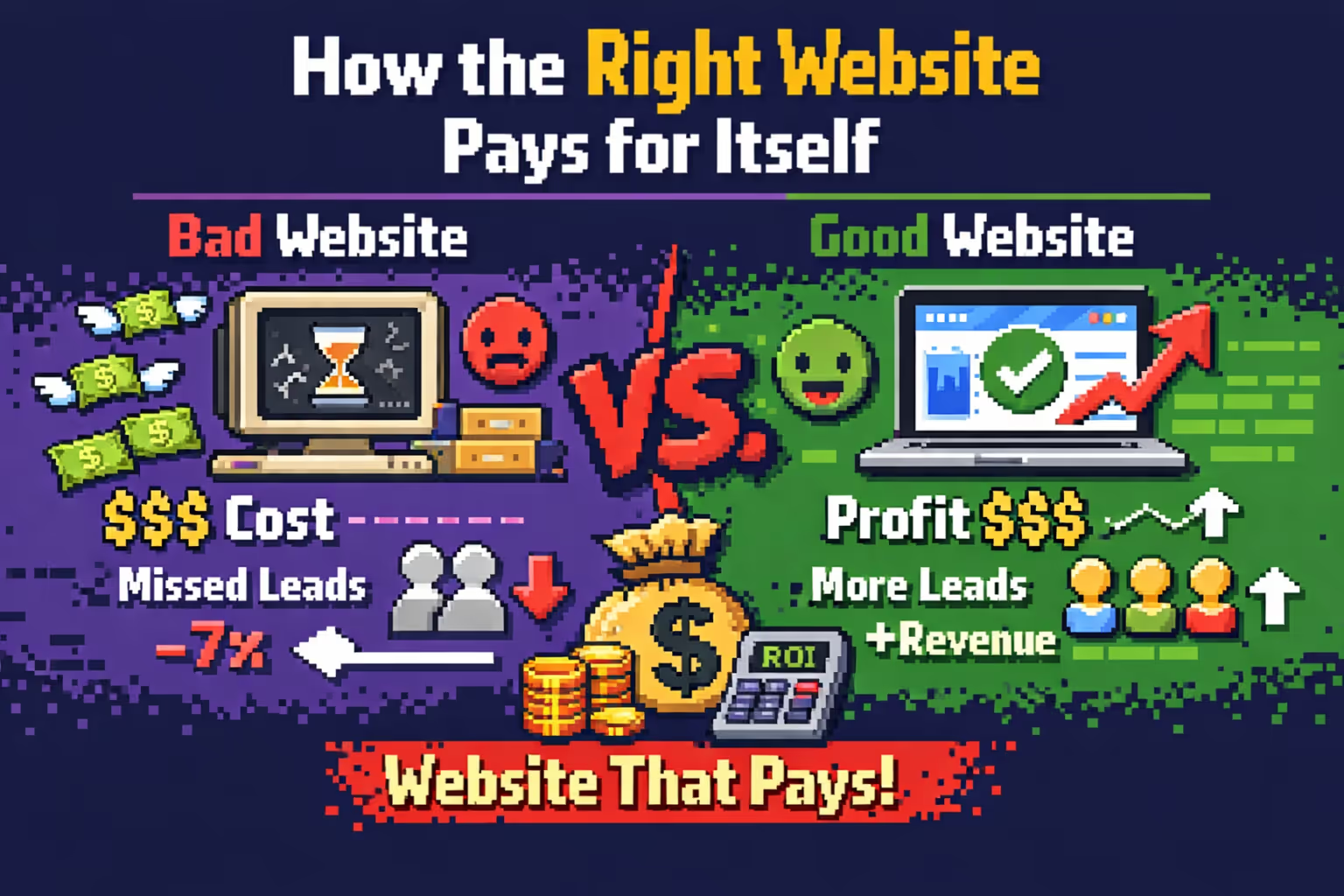
And none of that accounts for the leads you are not getting because the site is slow, unclear, or looks like it was built five years ago. A one-second delay in page load time reduces conversions by up to 7 percent. That is not a hypothetical. That is revenue quietly leaving through the back door. If any of this sounds familiar, chances are your outdated website is already costing you clients.

What the right website saves

A well-built Webflow website removes most of these costs by design.

There are no plugins. Hosting, security, SSL, and a global CDN are included in the platform. You are not paying separately for tools that should be part of the foundation.

Your team can update content directly, without a developer. Change a price, publish a blog post, add a new team member. These are actions that take a few minutes, not a few hundred dollars.

The code is clean and fast by default. That means better performance scores, better SEO, and a site that actually converts the traffic you are already getting. If your site has traffic but still is not converting, the issue is usually structural, and it can be fixed without a full rebuild. See how to fix conversion issues when you already have traffic.

What the right website earns

Beyond saving money, a well-built website actively earns it.

When someone gets a referral to your business, the first thing they do is look you up. If your website builds trust immediately, you are halfway there before the first conversation. If it raises doubts, you may never get that call.

A website with clear messaging, a fast load time, and a logical structure converts more visitors into leads. Not because of tricks, but because it removes friction at exactly the moment someone is deciding whether to contact you. Understanding the difference between a site that looks good and one that actually performs is covered in detail in the difference between award-winning and high-converting websites.

For a small business doing $300,000 in revenue, improving website conversion by even two percent can mean tens of thousands in additional revenue from traffic you are already receiving.

The real return on investment

A professionally built Webflow website typically costs between $3,000 and $8,000 for a small business. That sounds like a lot until you calculate what you are currently spending on plugins, developer fees, and missed conversions. For a full breakdown of what websites actually cost in the US market, see the business website pricing guide.

For most businesses, the website pays for itself within the first year. After that, it runs at a fraction of the cost of a poorly maintained site, while working harder for the business every single month.

A website is not a one-time expense. It is a decision that compounds over time, in one direction or the other.

Is your website working for your business or against it?

If you are not sure, that is usually the answer. A website audit takes less than 30 minutes and gives you a clear picture of what is holding your site back and what it would take to fix it.

Get in touch and let's take a look together.

Frequently Asked Questions

How do I know if my current website is actually costing me money?

The clearest signals are: you need a developer for simple content changes, your site loads slowly on mobile, you are paying for multiple plugin subscriptions, or you are getting traffic but few inquiries. Any of these individually is worth addressing. All of them together usually means the site is working against you rather than for you.
Is Webflow really cheaper than WordPress in the long run?

For most small businesses, yes. WordPress appears cheaper upfront but the real costs accumulate through hosting, premium plugins, security tools, and developer time for maintenance. A well-built Webflow site eliminates most of these ongoing expenses because hosting, security, and core functionality are included in the platform.

How long does a professionally built website typically last before needing a rebuild?

A well-structured Webflow website built on a solid framework typically stays relevant and functional for three to five years with only content updates. The sites that need rebuilding after 12 to 18 months are usually ones built for speed rather than longevity, without a proper content system or scalable structure.
Can a better website really increase revenue without increasing traffic?

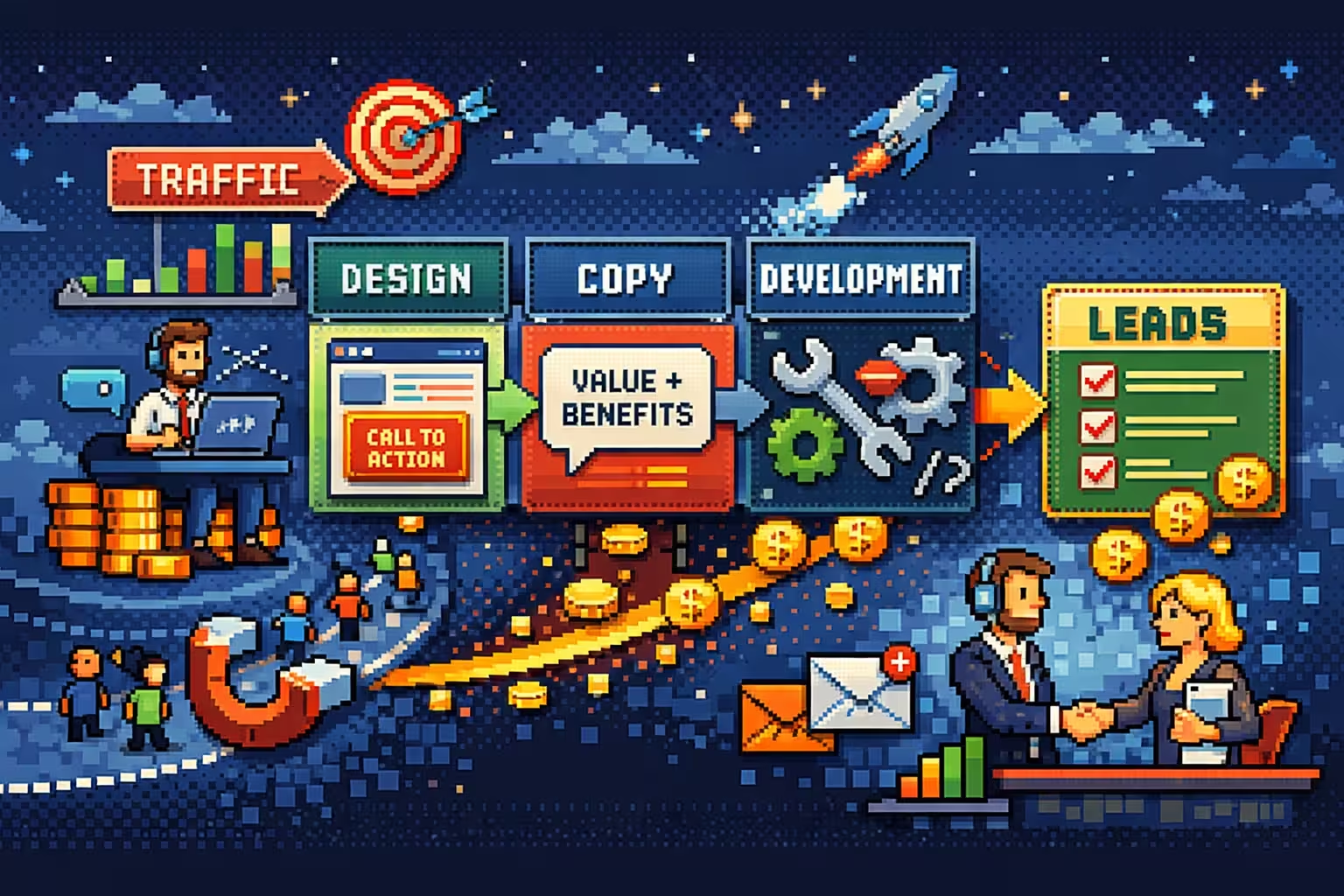
Yes. If your site currently converts one percent of visitors into inquiries, improving that to two percent doubles your leads without spending anything on advertising. Most small business websites have significant room for improvement in conversion, simply through clearer messaging, better structure, and faster load times.
What does a website audit actually involve?

A basic audit covers page speed and performance scores, mobile experience, clarity of messaging and calls to action, SEO fundamentals like meta titles and headings, and an honest assessment of whether the site structure supports your business goals. It takes less than 30 minutes and usually surfaces two or three specific improvements that would have the biggest impact.

Let’s talk about your website

Other articles

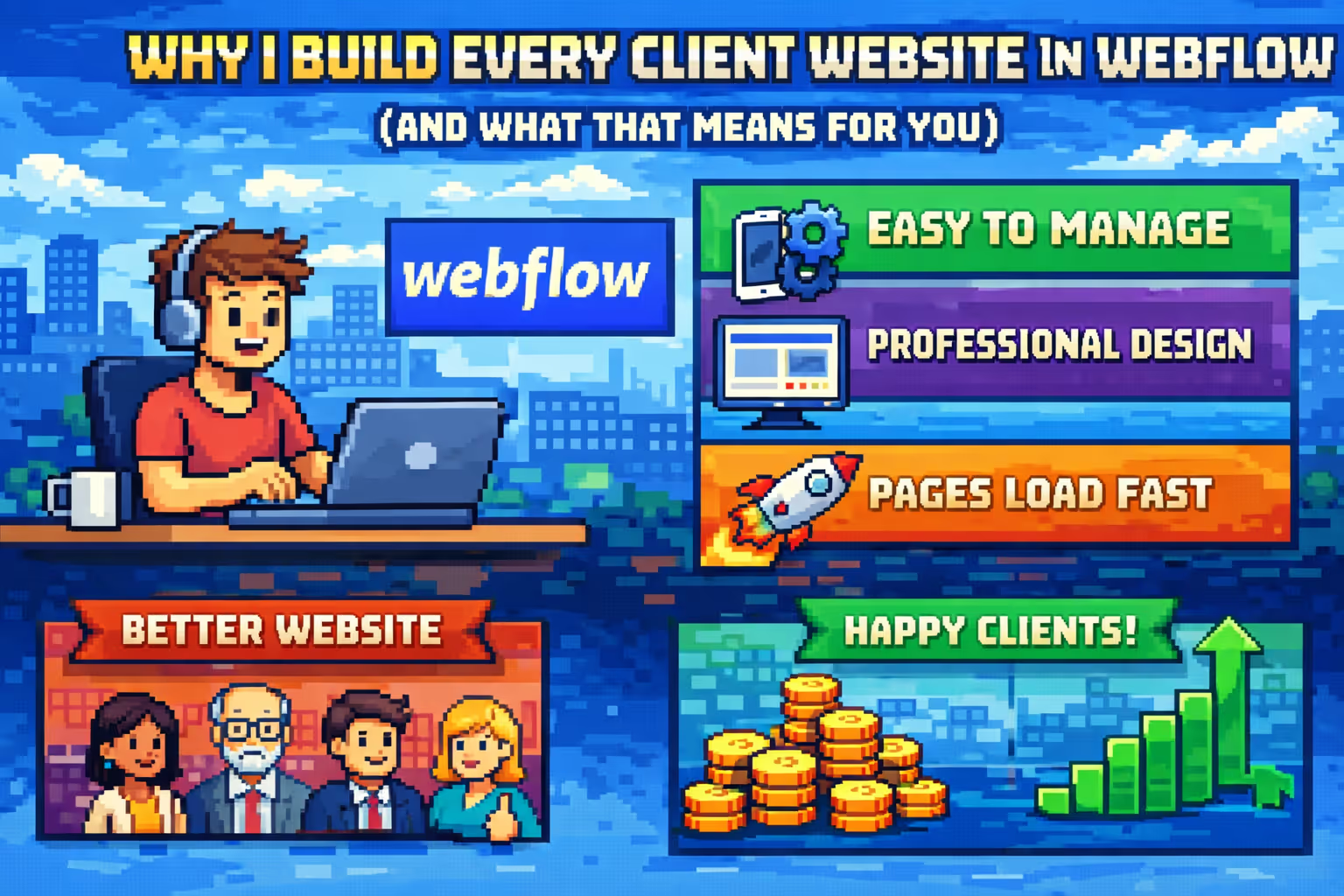
Why I build every client website in Webflow (and what that means for you)

Why I build every client website in Webflow (and what that means for you)

There are dozens of platforms to build a website on. Here's why I use Webflow for every client, and what you actually get as a result.

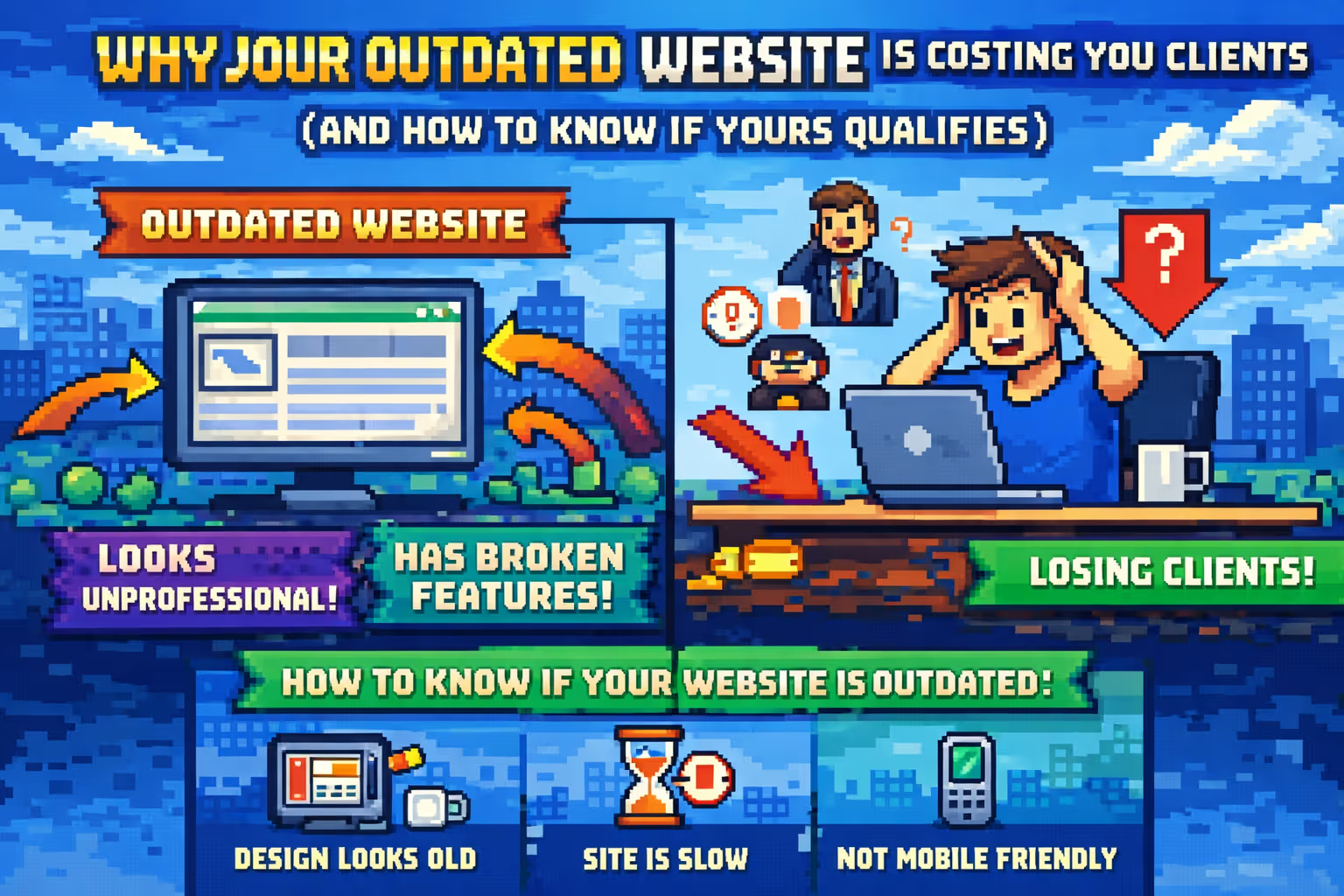
Why your outdated website is costing you clients (and how to know if yours qualifies)

Why your outdated website is costing you clients (and how to know if yours qualifies)

60% of small businesses lose customers because of website issues. Most of them don't even know it's happening. Here's how to tell if your site is one of them.

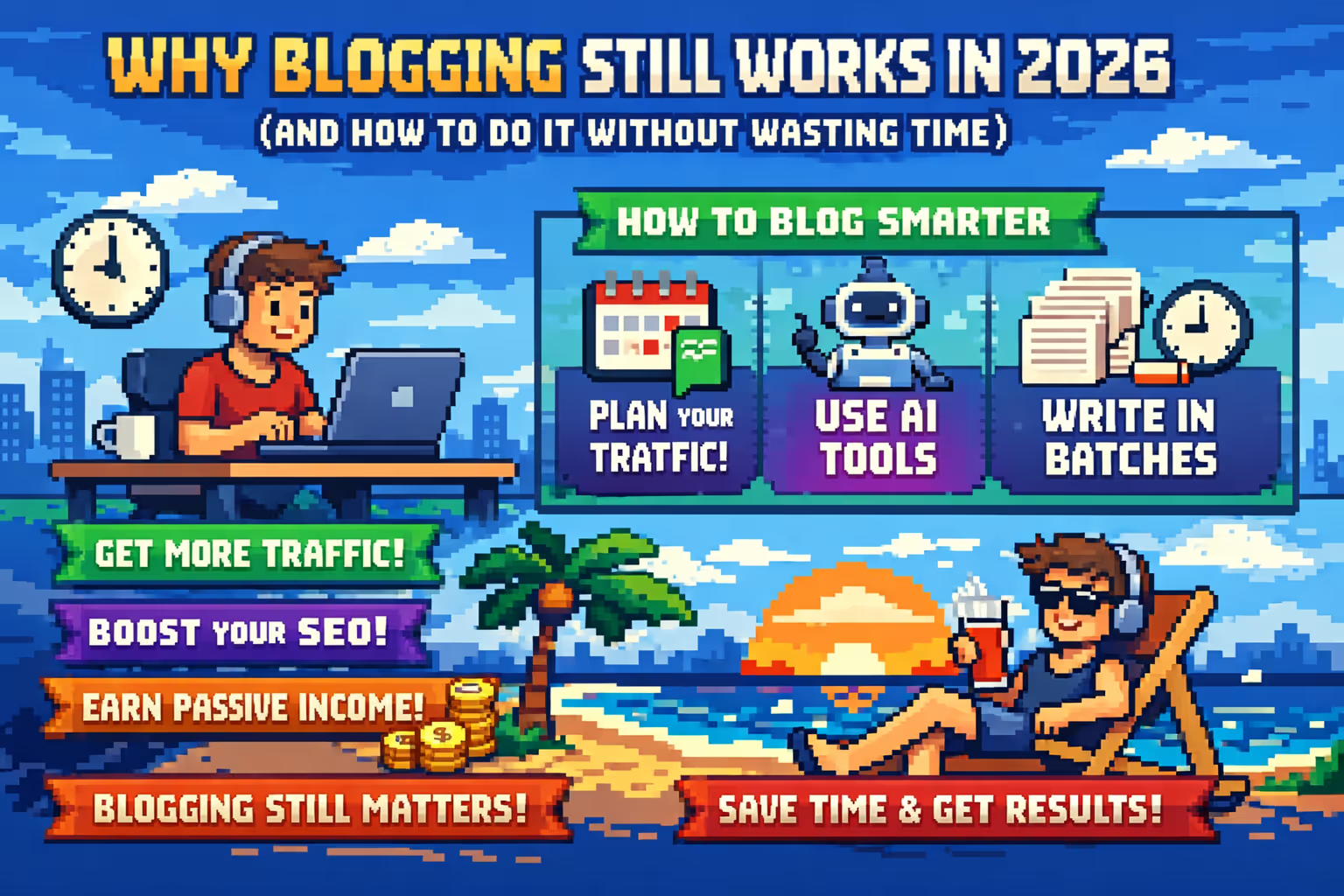
Why blogging still works in 2026 (and how to do it without wasting time)

Why blogging still works in 2026 (and how to do it without wasting time)

Over 60% of internet users read blogs regularly. 81% of marketers say it still delivers results. So why does every small business owner I talk to have a blog they haven't touched in a year?

How to Use the Webflow Connector in Claude (Complete Guide)

How to Use the Webflow Connector in Claude (Complete Guide)

Learn how to set up the Webflow connector in Claude, what you can automate, and where the real limits are.

What is Webflow?

What is Webflow?

Learn what Webflow really is, why it's not just another website builder, and how it works.

What is Schema Markup? The Secret Language of High-Ranking Websites

What is Schema Markup? The Secret Language of High-Ranking Websites

What exactly is Schema markup? Learn how structured data helps Google understand your content and why it's the most underused growth asset in technical SEO.

How to Get a 100/100 Lighthouse Score on Webflow Mobile: A Full-Service Guide

How to Get a 100/100 Lighthouse Score on Webflow Mobile: A Full-Service Guide

Achieve a perfect 100/100 Lighthouse score on Webflow mobile. Learn expert strategies for AVIF images, font preloading, and script delays to boost your SEO ranking.

The Ultimate Webflow Migration Checklist for B2B & SaaS: A Stress-Free Guide to Scaling Without Losing SEO Juice

The Ultimate Webflow Migration Checklist for B2B & SaaS: A Stress-Free Guide to Scaling Without Losing SEO Juice

Moving your SaaS site to Webflow? Use this technical checklist to protect your SEO, automate CMS migration, and sync your CRM. Migrate without the stress.

The Ultimate Guide to Webflow SEO in 2026

The Ultimate Guide to Webflow SEO in 2026

Master Webflow SEO in 2026. Learn how to leverage AI, optimize for zero-click searches, and boost site speed with Webflow’s built-in tools. Start ranking higher!

From Figma to Webflow: The Definitive Guide for 2026

From Figma to Webflow: The Definitive Guide for 2026

Turn Figma designs into high-performance Webflow websites with a structured workflow, clean architecture, and modern best practices.

How much does a business website cost in the US?

How much does a business website cost in the US?

Learn how much a business website really costs in the US. A clear breakdown of pricing for small businesses, startups, landing pages, and larger projects.

Webflow vs Lovable: a platform comparison. Which one is better?

Webflow vs Lovable: a platform comparison. Which one is better?

A practical comparison of Webflow and Lovable. Learn which no-code platform is better for design flexibility, SEO, scalability, and long-term website growth.

Best No-Code Platforms for Websites in 2026: A Complete Comparison

Best No-Code Platforms for Websites in 2026: A Complete Comparison

A complete comparison of the best no-code platforms for building websites in 2026. Compare Webflow, Framer, Wordpress, and more to choose the right platform for your project.

Webflow and Framer: A Practical Comparison for 2026

Webflow and Framer: A Practical Comparison for 2026

Full 2026 Webflow vs Framer comparison covering CMS power, pricing, SEO tools, AI features, and which no-code platform fits your project.

Webflow App Gen: A Complete Guide to the AI Revolution in Web App Generation

Webflow App Gen: A Complete Guide to the AI Revolution in Web App Generation

Learn what Webflow App Gen is and how it uses AI to generate production-ready web applications directly inside Webflow. Features, CMS integration, and deployment explained.

Webflow Migration Guide: How to Move Your B2B Website Without Losing SEO Rankings

Webflow Migration Guide: How to Move Your B2B Website Without Losing SEO Rankings

Learn how to migrate your B2B website to Webflow without losing SEO rankings. A practical guide covering redirects, CMS structure, performance, and post-launch checks.

SEO, AEO, and GEO: what should you focus on in 2026?

SEO, AEO, and GEO: what should you focus on in 2026?

Learn the difference between SEO, AEO, and GEO, how search is evolving, and what to focus on in 2026 to stay visible in AI-driven and traditional search.

The difference between award-winning and high-converting websites

The difference between award-winning and high-converting websites

What’s the real difference between award-winning and high-converting websites? Learn how design goals, usability, and strategy impact business results.

How to fix conversion issues when you already have traffic

How to fix conversion issues when you already have traffic

Your website gets traffic but no leads? Learn why visitors aren’t converting and how better design, messaging, and structure can turn traffic into real business results.

Migrating to Webflow from other platforms

Migrating to Webflow from other platforms

Learn how migrating to Webflow from WordPress or other platforms works, what the real process looks like, and how it affects performance, scalability, and SEO.

Why SaaS companies should move to Webflow in 2026

Why SaaS companies should move to Webflow in 2026

Discover why SaaS companies are moving to Webflow in 2026 for better performance, SEO control, scalability, and faster marketing workflows.

Is Webflow Good for SEO? What Actually Matters

Is Webflow Good for SEO? What Actually Matters

Is Webflow good for SEO? Learn what actually affects rankings, from content and structure to technical setup, and why Webflow isn’t the problem.

Webflow vs WordPress which platform is right for your website

Webflow vs WordPress which platform is right for your website

This article breaks down whether Webflow is a better alternative to WordPress.

Should designers understand Webflow frameworks for smoother projects?

Should designers understand Webflow frameworks for smoother projects?

Learn why designers benefit from understanding Webflow frameworks and how shared structure improves collaboration, reduces friction, and keeps projects running smoothly.

Why the right Webflow framework matters for scalable websites?

Why the right Webflow framework matters for scalable websites?

Learn why the right Webflow framework is key to building scalable, consistent, and easy to maintain websites.

A closer look at Webflow components

A closer look at Webflow components

Learn why Webflow components are essential for scalable websites and how a component based approach improves consistency, speed, and long term growth.

When design breaks the development process and slows growth

When design breaks the development process and slows growth

Learn how poor design decisions create friction in development, introduce technical debt, and limit long term website scalability and growth.

Why marketing teams struggle to maintain Webflow projects on their own?

Why marketing teams struggle to maintain Webflow projects on their own?

Learn why marketing teams often struggle to manage Webflow websites, the structural mistakes behind it, and how to build a site that supports growth.

Why most Webflow websites do not scale well?

Why most Webflow websites do not scale well?

Learn why many Webflow websites struggle to scale, the structural mistakes behind them, and how to build a Webflow site that supports long term growth.

Webflow vs Custom code: How to choose the right approach for your website?

Webflow vs Custom code: How to choose the right approach for your website?

A clear comparison of Webflow and custom code, focused on choosing the right solution based on speed, flexibility, and business maturity.