How to Run a Full AEO and GEO Audit on Your Webflow Site Using Claude and MCP
SEO audits have a clear checklist. Meta titles, heading structure, alt text, slugs. Most teams run them at least occasionally. AEO and GEO audits are different. There's no established checklist yet, most teams haven't run one at all, and the signals that matter are less obvious than a missing meta description.
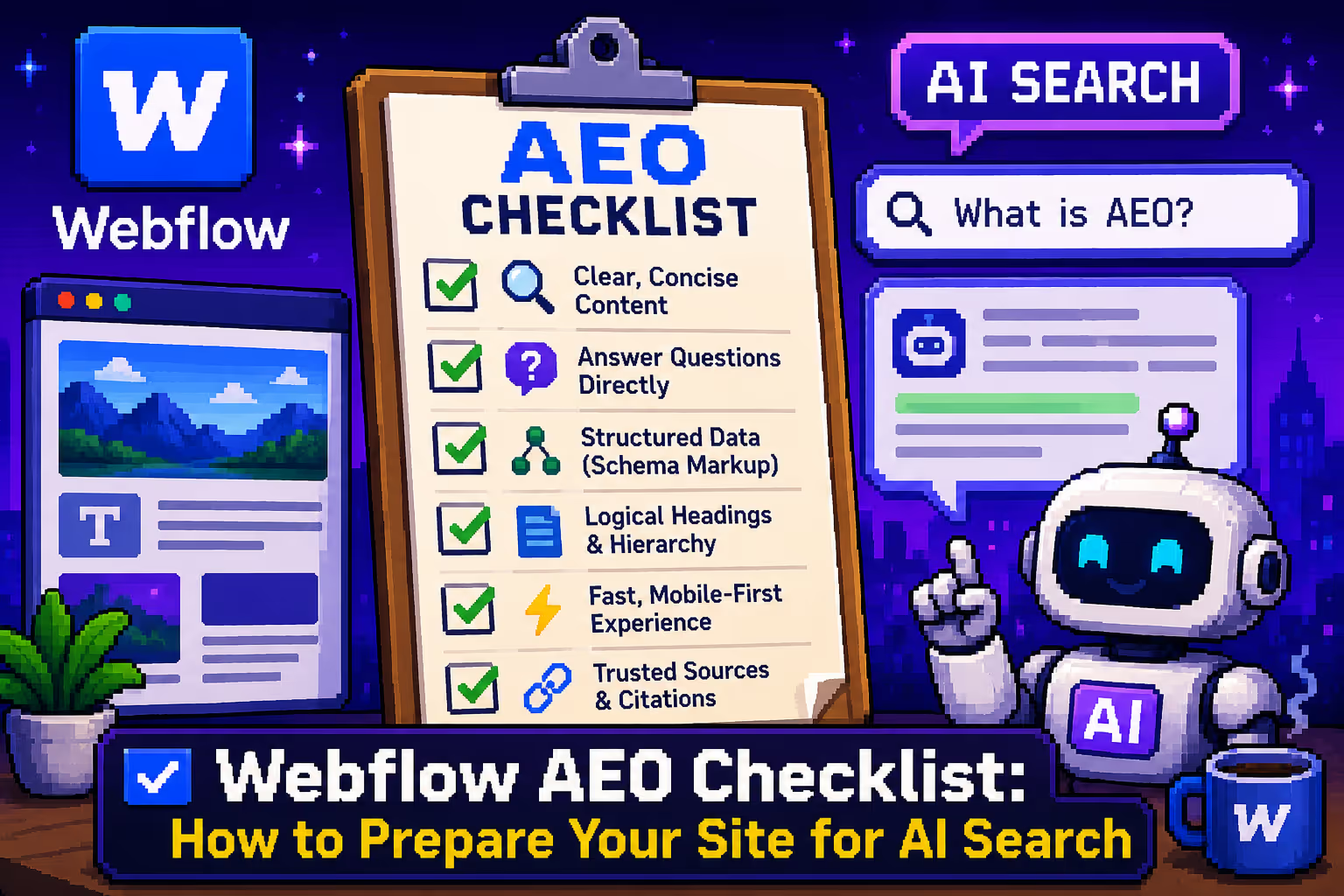
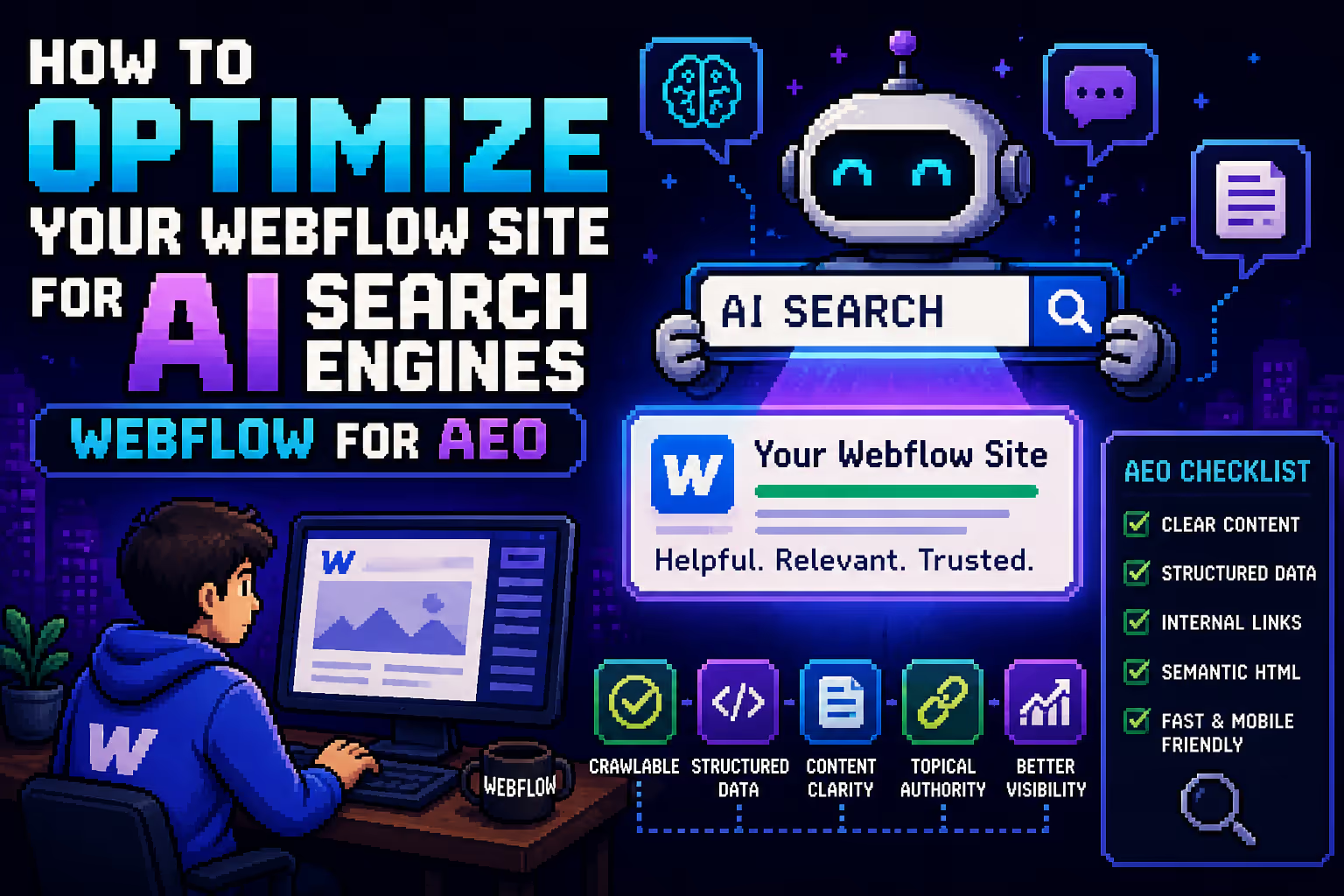
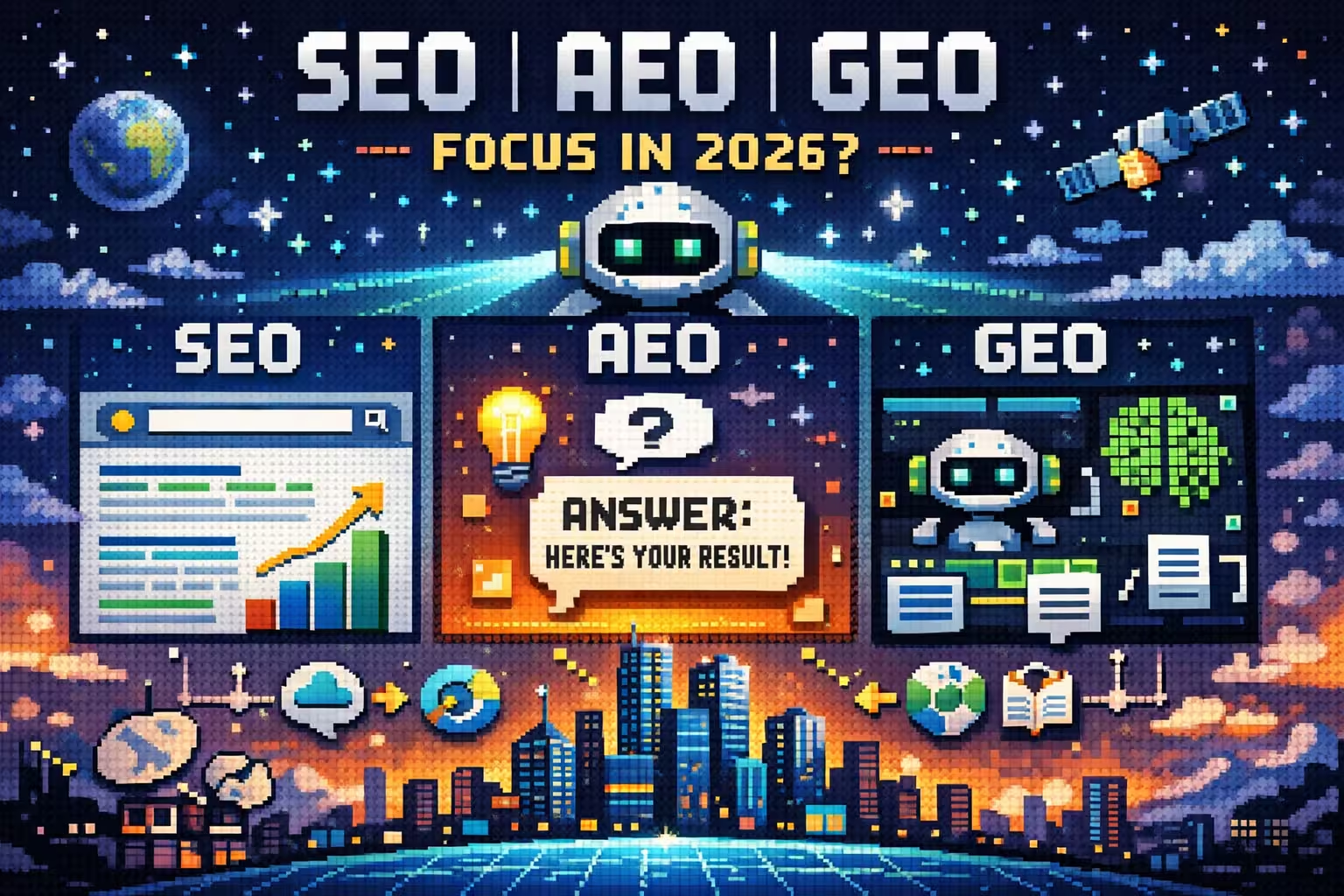
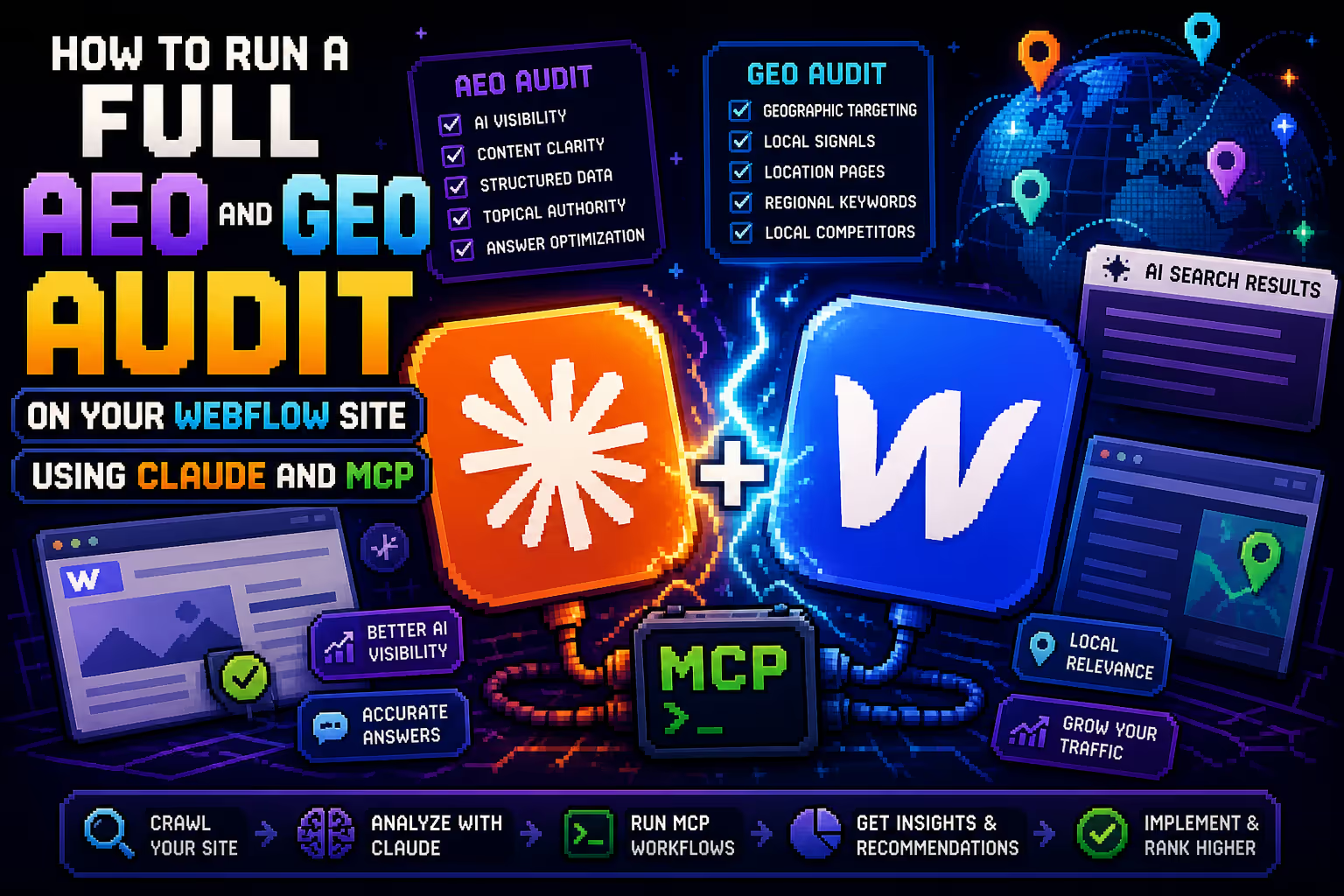
AEO, Answer Engine Optimization, is about whether AI tools like ChatGPT and Perplexity cite your content when answering relevant questions. GEO, Generative Engine Optimization, is the broader practice of making your content understandable and trustworthy to AI systems across all generative platforms. They overlap significantly, and you can audit both in a single session using Claude connected to your Webflow site via MCP.
Here's how to do it.
What You Need Before You Start
Same setup as a standard SEO audit. A paid Claude plan (Pro at $20/month or Team), and the Webflow connector activated through the Connectors menu in Claude. Authorization takes under three minutes via OAuth. The Webflow Designer doesn't need to be open for any of the steps below.
Step 1: Check Whether Your Content Is Structured for Extraction (5 minutes)
AI models extract answers from content that gives them clear, direct statements. Long paragraphs with buried conclusions, vague introductions, and meandering structure all reduce the likelihood of citation.
Use this prompt:
"Review my Webflow blog CMS collection. For each post, check whether the opening paragraph gives a direct, clear answer or definition to the topic the post covers. Flag any posts where the opening paragraph is more than four sentences, starts with a question rather than an answer, or uses vague introductory language like 'in today's world' or 'many businesses face'. List the flagged posts with a brief note on why each one needs restructuring."
Posts that fail this check are your highest-priority rewrites for AEO. The opening paragraph is the most frequently extracted content section across all major AI models.
Step 2: Audit FAQ Coverage Across Key Pages (5 minutes)
FAQ sections with FAQPage schema are the single most extractable content format for AI models. If your high-traffic pages don't have them, you're leaving citation opportunities on the table.
Use this prompt:
"List all pages and CMS items on my Webflow site. For each one, identify whether it contains a FAQ section or question-and-answer formatted content. Also check whether any FAQ schema (FAQPage structured data) appears to be implemented via custom code. Flag any pages that cover a topic where users would naturally have follow-up questions but currently have no FAQ section."
Then follow up with:
"For each flagged page, suggest three to five FAQ questions that a user searching for that topic would realistically ask. Base the questions on the existing page content."
You now have a ready-to-use FAQ expansion plan, generated directly from your existing site content.
Step 3: Check Schema Markup Coverage (5 minutes)
Schema markup tells AI models exactly what your content is, who wrote it, and what it's about. Without it, they're inferring. With it, they have explicit signals.
Use this prompt:
"Review the custom code on my Webflow pages and CMS collection templates. Identify which pages have structured data implemented (any schema type), what types are present, and which key pages are missing schema entirely. Specifically flag: blog posts without Article schema, pages with FAQ sections but no FAQPage schema, the homepage if it lacks Organization schema, and any author or team pages without Person schema."
This gives you a gap map. You can then ask Claude to generate the JSON-LD code for each missing schema type, ready to paste into Webflow's custom code injection fields. For a detailed breakdown of which schema types matter most and how to implement them, see the guide to schema markup and structured data for Webflow.
Step 4: Audit Author Attribution Across Content (5 minutes)
Anonymous content is consistently ranked lower for authority by AI models than content tied to named, credentialed humans. This is one of the most overlooked AEO signals.
Use this prompt:
"Check all items in my blog CMS collection. For each post, identify whether an author name is present and displayed on the page. Also check whether there are any author bio pages on the site, and whether blog posts link to them. Flag any posts that have no visible author attribution, and note whether the site has an Authors CMS collection or individual author profile pages."
If author attribution is missing across the board, the fix is an afternoon of work in Webflow's CMS: create an Authors collection, add a reference field to your blog template, and populate it. Claude can walk you through the exact field structure if needed.
Step 5: Test Your Brand's Current AI Citation Status (5 minutes)
This step happens outside Claude's Webflow connection. It's a manual check but an essential one.
Open ChatGPT, Perplexity, and Gemini separately. For each, run the following types of queries and note whether your brand, your site, or your content appears in the answers:
Queries to test: the main service you offer plus your city or region, "best [your category] for [your target client type]", the title of your most important blog post, comparison queries where you'd want to appear, for example "Webflow vs WordPress for small businesses."
Document which queries cite you and which don't. The ones where you don't appear despite having relevant content are your AEO content gaps. Take that list back to Claude and use it to identify which existing pages could be improved and which new content should be created.
Step 6: Review Internal Linking for Topic Cluster Depth (5 minutes)
AI models assess topical authority by looking at how deeply a site covers a subject. A single blog post on a topic signals less authority than a pillar page supported by multiple linked posts covering every angle of the subject.
Use this prompt:
"Look at my blog CMS collection and identify the five topics that appear most frequently across posts. For each topic, list all the posts that cover it and check whether those posts link to each other internally. Flag any topic where there are multiple posts but little or no internal linking between them. Also flag any topic where there appears to be a natural pillar page opportunity but no single comprehensive post exists yet."
This surfaces both quick internal linking fixes and longer-term content gaps that would strengthen your topical authority for AI citation.
Step 7: Review and Prioritize (5 minutes)
By this point you have findings across six areas: content structure, FAQ coverage, schema gaps, author attribution, citation gaps from manual testing, and internal linking. Ask Claude to consolidate:
"Based on the audit findings so far, give me a prioritized list of the ten most impactful changes I could make to improve how AI answer engines discover and cite my Webflow site. Order them by expected impact, highest first, and note roughly how long each change would take to implement."
This turns the audit into an actionable sprint list rather than a pile of findings.
What This Audit Doesn't Cover
This workflow addresses the on-site structural factors that influence AEO and GEO. It doesn't measure your actual citation frequency over time, track whether specific prompts are generating traffic to your site, or benchmark you against competitors in AI search. For ongoing measurement, Webflow AEO (currently in private beta for Enterprise customers) handles this natively. For a full picture of how AEO fits into your broader Webflow SEO strategy, the Webflow AEO guide covers the complete framework. And if you haven't run the standard SEO audit yet, start with the Webflow SEO audit using Claude and MCP before tackling this one.
The AEO and GEO audit is newer territory than standard SEO. Running it once a quarter puts you ahead of the majority of Webflow teams who haven't started yet.

Milan Kostic
Freelance Webflow Developer